
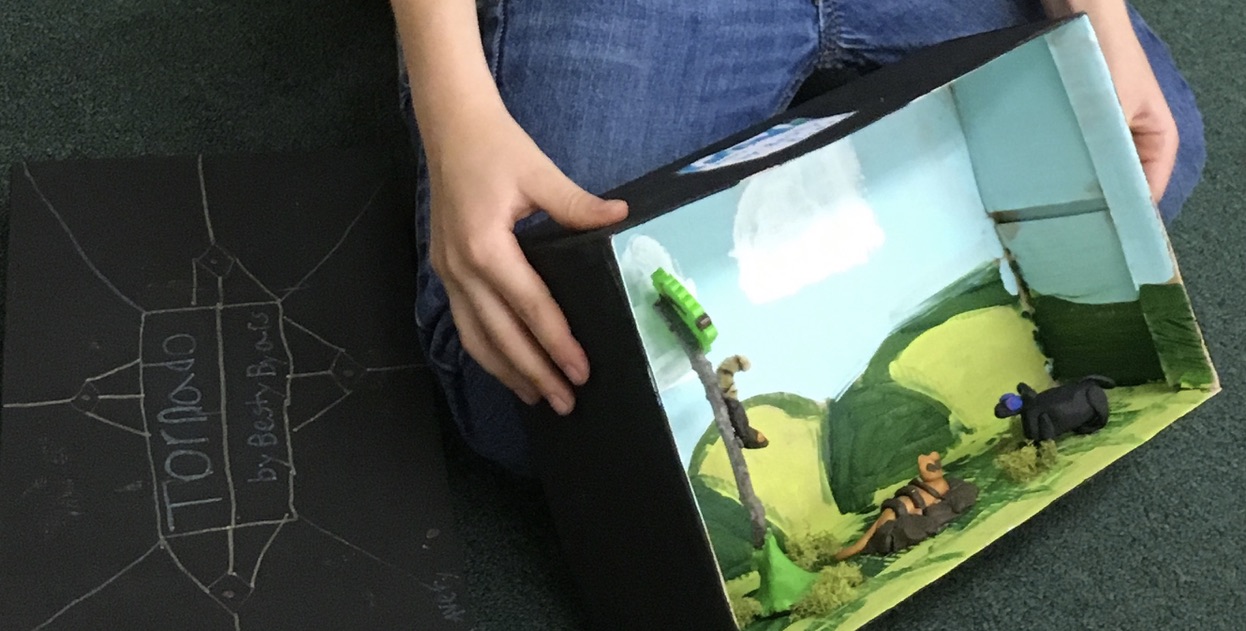
Every time you finish reading a book, think tinker.
The word “tinker” comes from the middle English referring to people who engaged in the work of patching worn tin kettles. When I was young, tinkering was a crude, quick fix of any object regardless of the medium, be it tin, wood, brick, or fabric. My great-grandpa Ted was a tinker. I loved exploring the bits and bobble in his shop, creating assemblages of junk while he merrily tinkered. Back then tinkering was not considered an art form, it was something more akin to the household junk drawer. When I was young, tinkering was pretty much DIY before the acronym came to be.
Fast forward, I LOVE how the growing maker movement has brought a deeper meaning to this wonderful word. Nowadays, “to tinker” is recognized (rightfully so) as a significant step in the process of making, in the process of bringing shape to ideas.
What better way to deeply integrate and apply knowledge gleaned from great stories than to thinker an idea to shape?
So how to begin?
Think shoebox. Think wire. Buttons. Tags. Cork. Think ric rac and ribbon. Paint Glue. Hooks and chain. Clothespins and pompoms.
Think junk drawer and you are moving in the right direction for a tinker project.
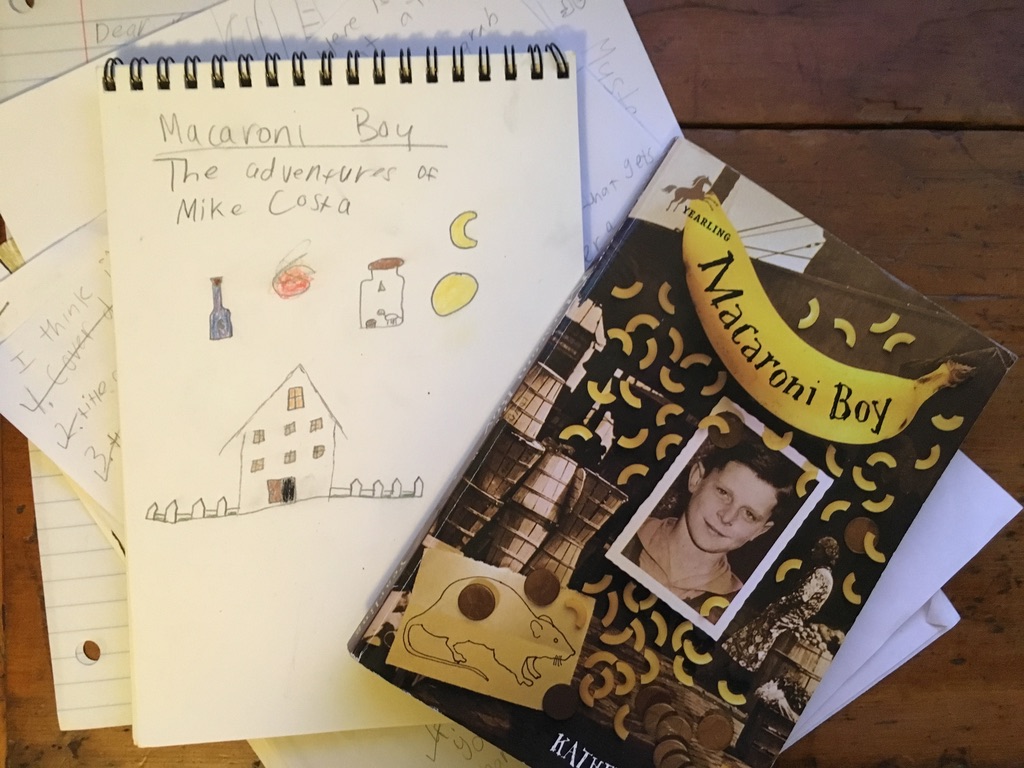
So the next time your child reads a book, when it’s time for Section 5, download a planning sheet and think tinker time!
-Kim