
The word essay has its roots in the old English word “assay” tied to science in the 1400s. Think metallurgy. In the lab, scientists hypothesize and try ideas out.
As a writer, I am often saddened by what has become of the essay. Quoting “Introduction to Poetry” by Billy Collins, I have to say, I agree:
But all they want to do
is tie the poem to a chair with rope
and torture a confession out of it.
Swap the word “essay” for the word “poem” and we are understanding what has happened to this rich form. We need to land at Form Follows Function—ideas must always lead. Form will follow.
The true purpose of the essay is for the writer to bring shape to an idea in a particular scaffolded form. With the literary essay, we begin in a story. Imagine the reading like meandering down the shore of a lazy river gathering tumbled stones and other treasures. At the end of the reading, the writer examines what was collected and writes about a significant discovery. This discovery is shaped the essay, Yesterday I shared one such essay tied to S.E. Hinton’s seminal novel, The Outsiders.
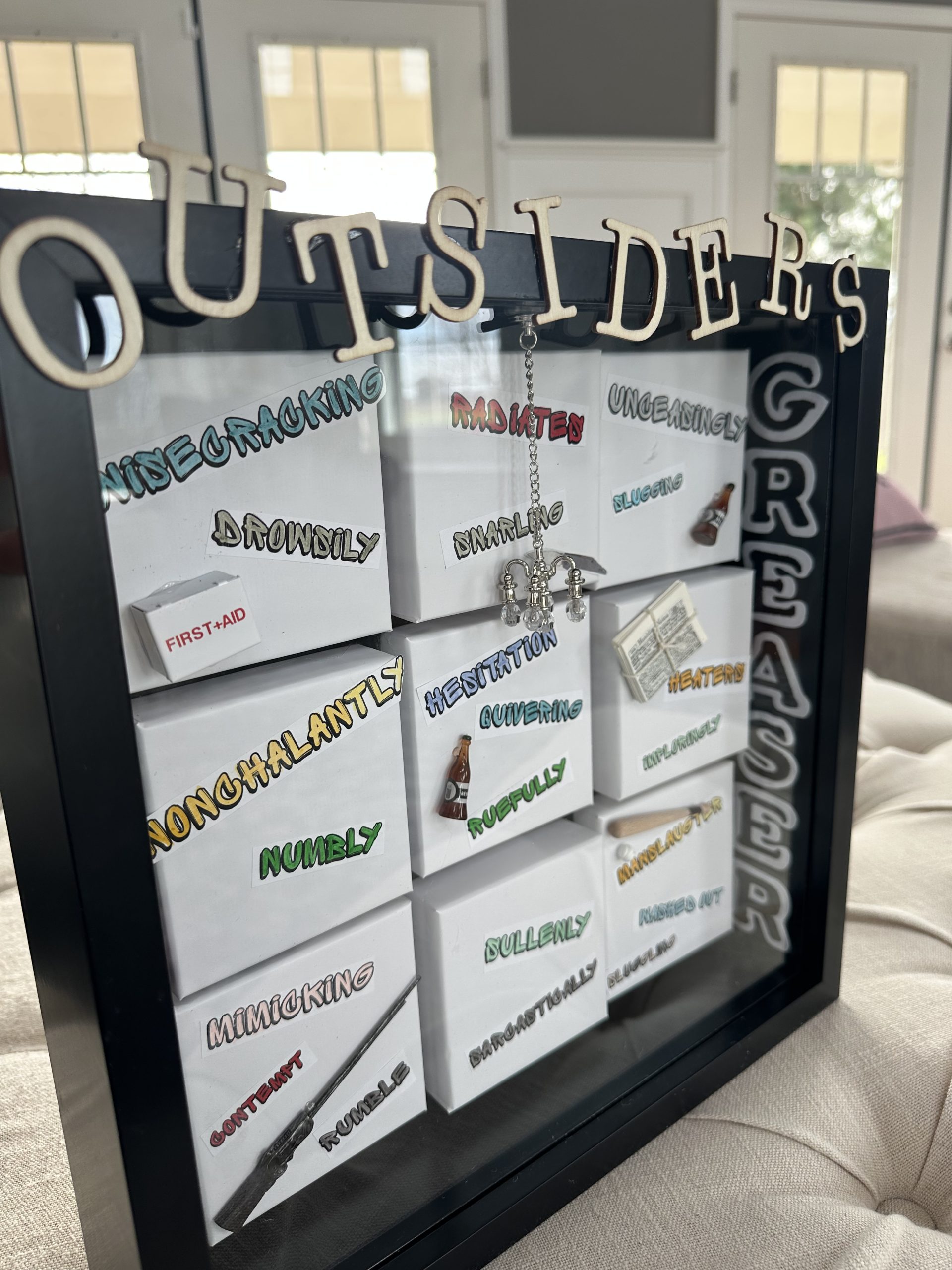
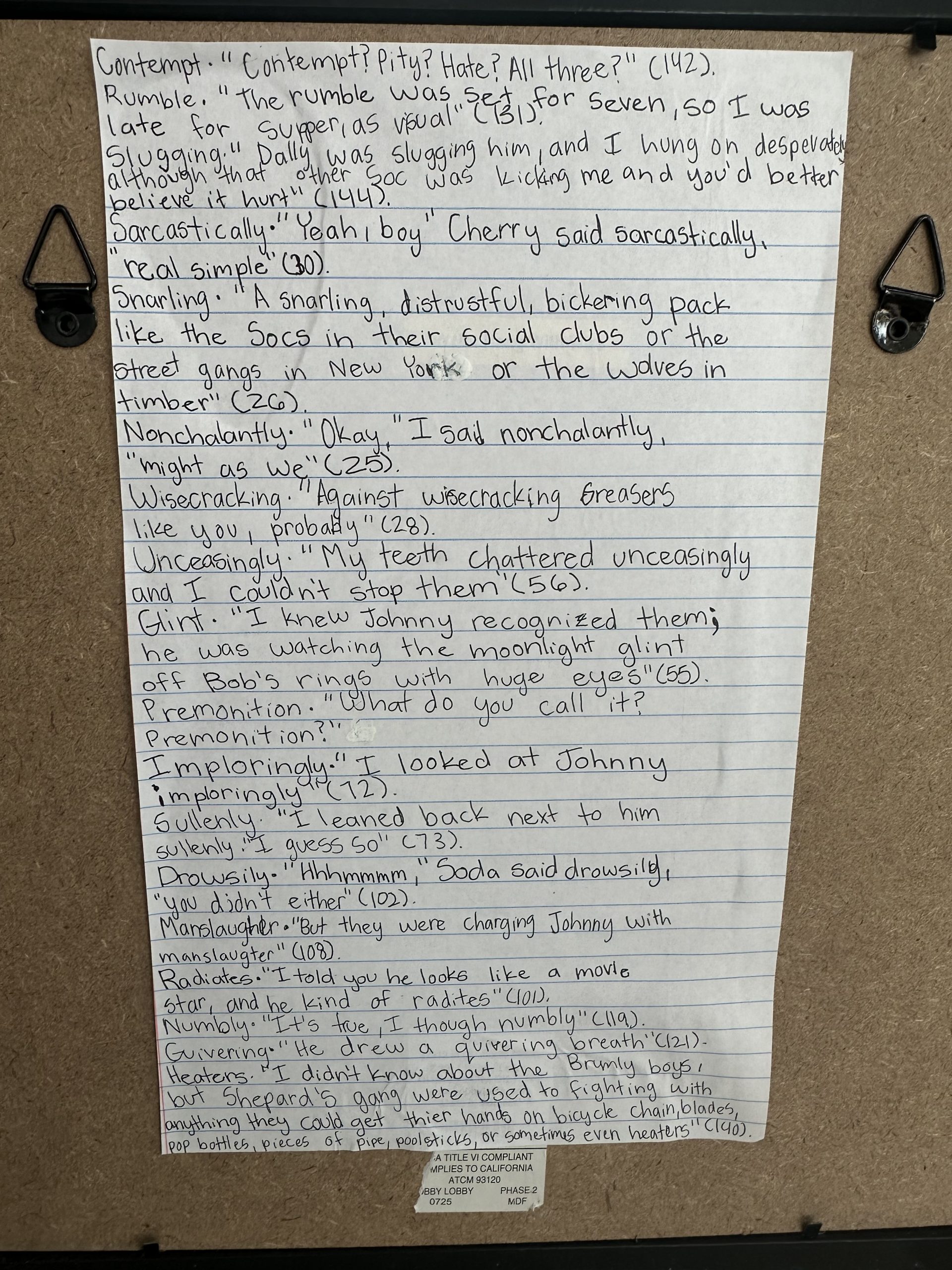
Today I want to share another way that readers “assay” ideas gleaned from great stories—Art. Every one of our Integrated Literature and Writing units includes a culminating 5th week of study, what we call the Section 5 Project. Here Kate, the essay writer from yesterday’s post, has created a beautiful Lexicon of Outsiders. Her assemblage gathers and immortalizes words and symbols from the book in a brand new, creative way. She supports her choices by providing actual quotations.
Powerful (and lovely).
Am I right?
~Kimberly
DON’T FORGET TO PLAY BINGO!
Download your Summer Bingo for free on Printshop HERE and submit a picture of your completed bingo sheet below to enter the raffles. Bingo will run June 1st through August 31st—so print out your bingo sheet and get to crossing off squares!