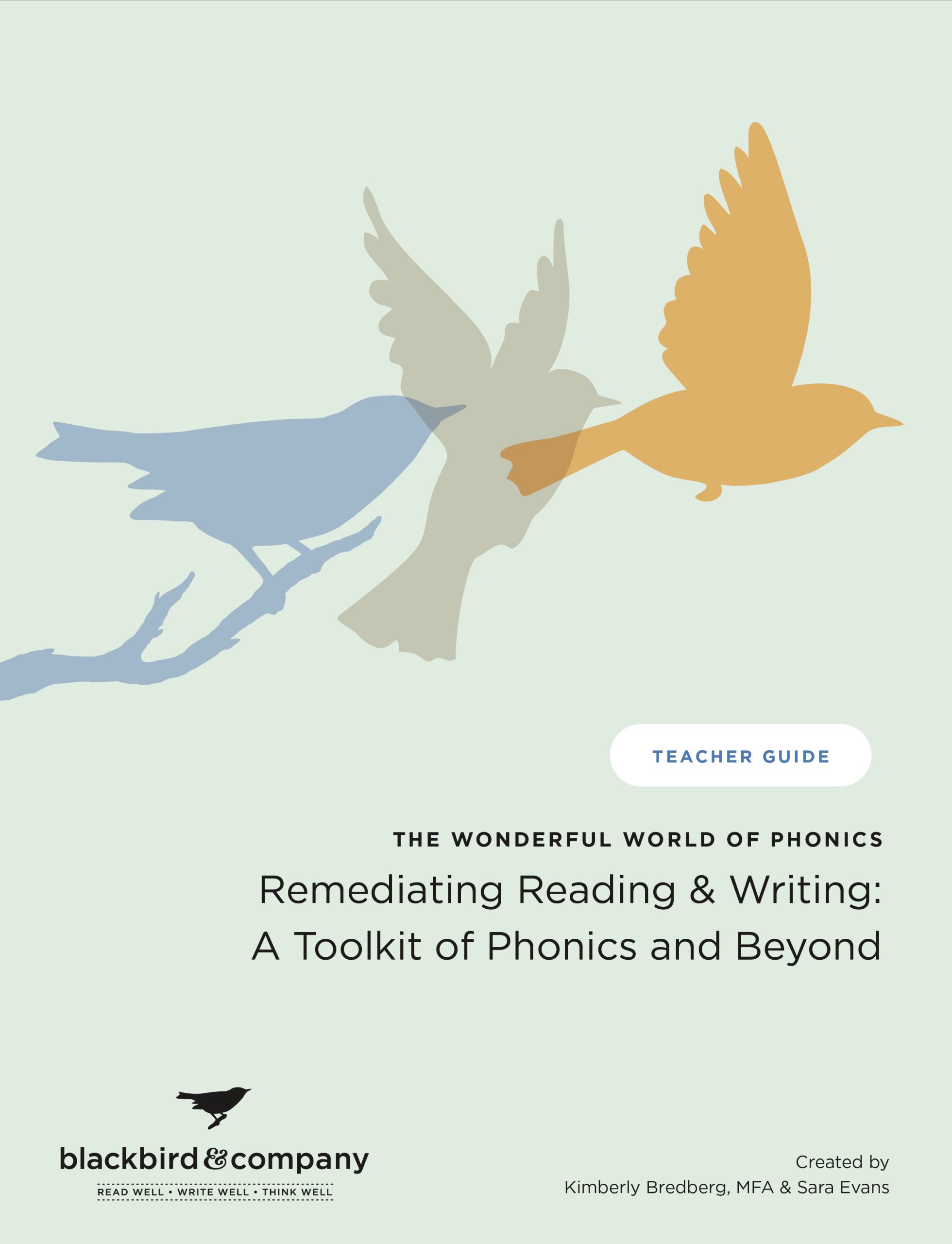
Coming this APRIL: The Wonderful World of Phonics

Observation begins with a question: What am I seeing? In a world filled to the brim with stimulation, it is easy to take our senses for granted. Though we are usually quick to have thoughts on things that we taste and smell, sight (of all things) can often be overlooked. We see so many things on a daily basis that it’s easy to forget to stop and really look.
You might assume that this is true for things we only see once, but oftentimes this overlooking occurs with things we see on a daily basis. Think about the patience of your front door. It’s waiting every single day for a passerby. Surely you walk by it and through it several times a day. But when was the last time you truly observed your front door? Are there new cracks? Has the paint faded? Has the metal of the hinges or doorknob tarnished? Most of us probably couldn’t answer these questions without going to have another look.
Observation is not just for the artist making masterpieces or the scientist performing meticulous experiments. It is for us to better understand and know the world we live in. It is for us to learn to move past assumptions and fill our minds with sighted knowledge. Our world with is briming with sights to see, so let’s dive into the art of observation.
There is nothing like art-making to engage students in active learning. Leonardo da Vinci, the quintessential Renaissance Man, made over 13,000 journal observations during the course of his lifetime, and as he did, he not only gained an enormous body of knowledge, but also created masterworks and made significant discoveries that he generously shared with the world. His influence is far reaching.

This intermediate unit is developed to teach high school students how to translate a BIG idea tied to a little story into an essay. Over the course of 5 lessons, students will be guided into the work of crafting 5 literary essays tied to great writers—Flannery O’Connor, Ernest Hemingway, Alphonse Daudet, Eudora Welty, and Gwendolyn Brooks.
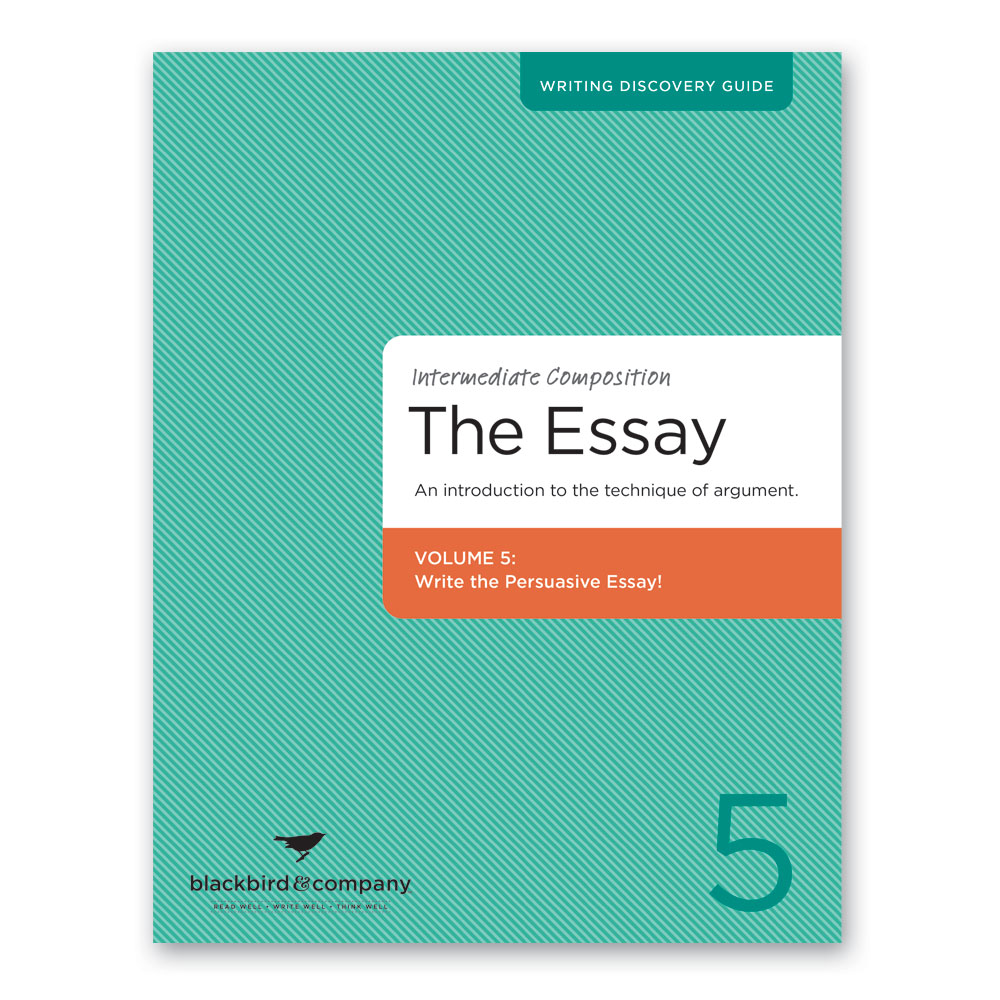
The persuasive essay is an opportunity to communicate a point of view on a specific issue. Over the course of 5 lessons, students will explore two sides of an issue, choose a side and then craft details that communicate a position in an effort to convince readers to think twice.
These intermediate courses for high school will focus on composing ideas building on the method middle school students experienced in our introductory units. This said, we’ve made sure that students new to Blackbird & Company curriculum will be supported to succeed in the work as well.
~Kimberly
Students may enroll in as many classes as they are interested in this coming year, but we will limit class size to a maximum of 10 students. Enfollment will begin July 5, so stay tuned for details.
Our recommendation, when it comes to our CORE offering, the Literature and Writing Discovery Guides, is that students complete 6 per year. We are offering 5 sessions which means students participating consecutively will only have to complete one more unit independent from Pages! But some students may only participate in one or two CORE classes, choosing to take what they learn from the group and complete the remaining units on their own.
Welcome to Blackbird & Company! If you’re looking for a fun and inspirational language arts program, we have everything you need. Whether you are in a classroom, a homeschool, or an independent study program, we want to empower you, encourage you, and give you confidence to Take Flight and begin the adventurous journey of literacy with one of our Grade Level Collections.
There are two types of things in the world: Living and Non-living!
Everything you can imagine is either…
We are pleased to announce a brand new addition to our selection of Research Discovery Guides: Taxonomy of Living Things: The Five Kingdoms.
All living things can be ordered according to their common biology. Classification allows scientists to explore levels of similarity, dissimilarity, and interconnectedness of cells, systems, and structures. The first level of classification is the Kingdoms. There are five: Protista, Monera, Fungi, Plantae, and Animalia. Over the course of 7 weeks, as students explore the diversity of the animal kingdom, they will gather knowledge that will connect to many corners of the field of biology.
During weeks 1 – 3 of this 8-week unit, our scaffolding will guide students independently through reading, gathering information, and thinking activities. Then, during weeks 4 through 8, students will engage in the deeper research of delving into the specifics of each kingdom. They research specific species, making an independent and observational entry as they acquire vital research writing skills.
Purchase now through October 1 for back-to-school and use the code FALL RESEARCH for a 10% discount!
-Kim
Today we’re packed up and headed to the first of our July shows, the 27th Annual CHEA Convention in Pasadena. The energy is great and we love catching up with old friends and meeting new ones! It’s a great opportunity to get inspired and stock up on everything you need for a new school year. If you’re planning on being there…make sure you come by to say hi and pick up a free bird whistle!
We’re very excited about our new product:
• Intro to Composition: The Essay Writing Discovery Guide*
• Discovering da Vinci Observation Art Pack
• Courage of Sarah Noble Level 1 Literature Discover Guide
• Patricia Polacco & Art Earlybird Literature Discover Guides*
• The Hundred Dresses & Lawn Boy Level 1 Literature Discover Guides*
• The Liberation of Gabriel King Level 2 Literature Discover Guides*
• Treasure Island, The True Confessions of Charlotte Doyle Level 3 Literature Discover Guides*
* Presales, ships October 2010.