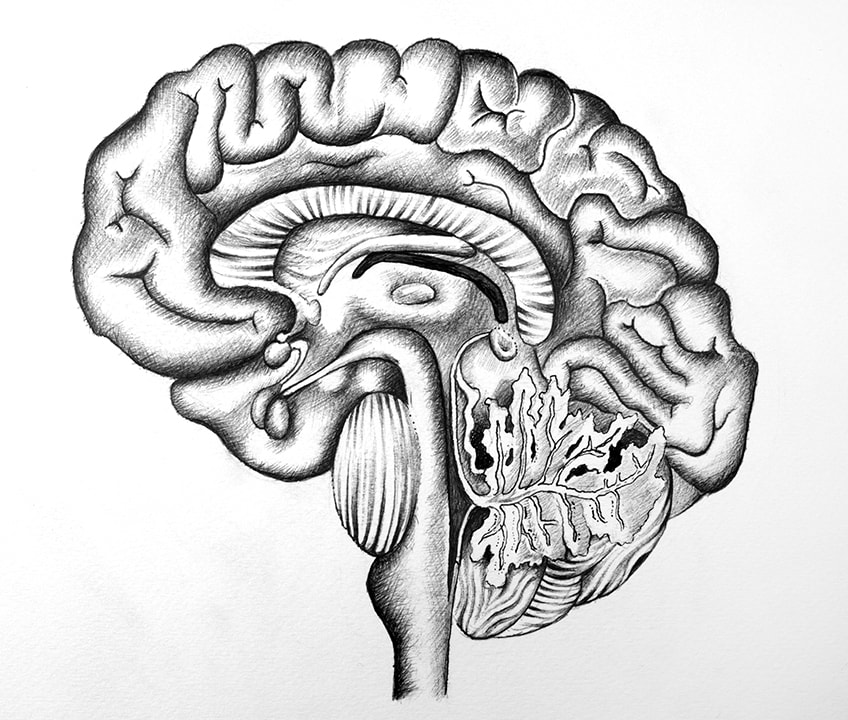
“One of the key practical lessons of modern neuroscience is that the power to direct our attention has within it the power to shape our brain’s firing patterns, as well as the power to shape the architecture of the brain itself.” ~Dan Siegel
As a sneak peak into our Introduction to Neuroscience unit, we will be focussing our attention this spring and into the summer on contemplative activities. Reflective learning is a terrific place to start!
Oftentimes throughout the school year, we rush rush rush to cover subjects—essays and grammar and poetry and literature and comprehension…and breathe a sigh of relief when we make it to summer. But the last thing we want after the school year wanes is to let our hard-won knowledge evaporate in the leisure and freedom of summer. So that’s why I hold up to you: reflective learning.
Reflective learning deepens learning by giving students a moment to pause and think about their experiences. They get a chance to identify their strengths, weaknesses, and goals for themselves, as well as situate their new knowledge amidst their overall understanding of the world. Reflective learning gives meaning to one’s studies—and making knowledge meaningful is a recipe for retaining that learning.
I’ll give you some background on one of the main theories of reflective learning. This model of reflective learning originated in 1988 with Professor Graham Gibbs, published in his book Learning by Doing: A Guide to Teaching and Learning Methods. This book outlines the Gibbs’ Reflective Cycle, which is meant to be used after a learning experience. The six steps of this cycle are: description, feelings, evaluation, analysis, conclusion, and action plan.
Here’s an example of how you might use this reflective learning strategy:
Eighth-grade student Timothy just finished the guide for Essay Volume 3: The Literary Essay. In this ten-week unit, he wrote five literary essays, a form he had no prior experience with. While he started out struggling to follow the essay form and would drop in quotes at random, by the fifth essay he was writing structured eight-sentence paragraphs and embedding quotes seamlessly. Timothy is growing as a writer!
As Timothy’s teacher, I would assign a reflection based on the Gibbs’ Reflective Cycle to give him a chance to cement his learning and recognize his growth. The activity would contain these six elements:
- Description. Describe your experience in Essay Volume 3.
- Feelings. How did you feel throughout this unit? What kinds of thoughts arose?
- Evaluation. Evaluate the best part of this experience and the worst part of this experience.
- Analysis. Analyze the situation. Why did some things go well and others go poorly?
- Conclusion. What did you learn overall? What might you have done differently?
- Action plan. Going forward, how will you approach similar situations?
My hope is that by reflecting on his growth over the past ten weeks, Timothy would retain his learning and internalize his success. His writing accomplishments are a big deal!
Reflective learning isn’t fancy. It doesn’t have to take long—but it sure pays off in the long run.
During the month of May we will hosting another Giveaway! A wonderful set of Just Right Readers by Kate di Camillo. Enter below daily to increase your chances of winning!
~Clare S.