Posted on

Sharpen Some Pencils

Writing is an art form.

Writing is an art form achieved via a series of steps:

1) It all begins with an IDEA. Without an idea, the writer will simply stare at the blank page.
2) Once there is an idea in the mind of the writer, the PENCIL steps in to translate thoughts to words on the page.
3) When the pencil’s work is complete, the job of the writer is to become a READER. Encourage your students to RE-READ everything they write.
4) Empower students to use the RED PEN as they re-read to REVISE. Teach them to use strong words, to fearlessly re-arrange, to make corrections, and to not be afraid to strike through.
5) Polish the draft, preferably in cursive by hand.

So how does this happen?

THINK Tortoise (not the hare).

Learning to write is a long journey. We know this to be true. And, on this journey, there is NO better technology than the PENCIL.

When it comes to literacy, much of the exceptional work that your students will accomplish is subjective in nature tied to their ideas.  As students read great stories, they make observations. These observations will inspire ideas. Cataloging ideas in writing—pencil on paper—over time builds confidence, develops voice, and promotes perseverance.

The PENCIL enables student writers to engage the brain in multisensory ways. When we write we 1) HEAR the idea stirring in our mind; 2) We SEE the letters and words we are forming; and 3) We engage HAND-EYE coordination.

Here are some ideas to inspire PENCIL work:

Mastering the art of handwriting fosters the ability to concentrate, to contemplate, and to communicate confidently. Download our FREE handwriting worksheets here and here. Cursive is not only a beautiful art form, it is a skill that promotes concentration.

Encourage your students to sharpen some pencils!

More than 15 years ago, my mother-in-law enlisted Liam with the task of sharpening fifteen dozen pencils that she would be taking to an orphanage in Uganda. I appreciate how she organized these perfect child-sized humanitarian activities for my children.

Liam got to work immediately. At one minute per pencil, 180 pencils, the task would take about three hours without a break! The task actually took Liam most of the morning. At one point he came in and asked me if he could use the manual pencil sharpener.

“The electric one might be faster.”

“But it’s clogged.”

“Okay Liam, sure.”

“Thanks Mom.”

***

A couple of hours later Liam came bounding into the kitchen with a pencil stained grin holding the sharpened pencils tucked tidily back into their original packaging.

“Wow Liam, all these sharpened pencils!”

“I hope the children in Uganda are happy when they write!”

I choked back the lump in my throat, “I hope so too Liam. Well done son.”

Later that evening I went into the studio to tidy up, and there it was, a brand new installation—our manual pencil sharpener had somehow been removed from its perch in the pantry and re-attached with screws to our antique Craftsman desk! After a moment of letting the shock settle, I let a little smile crackle. My son set up shop, got the job done, and I must admit, to this day I am super proud.

BIG ideas written beautifully by hand with a PENCIL on paper are a gift!


~Kimberly

Posted on

Stitch / Strengthen

Hands, fingers, eyes, oh my! When it comes to writing an idea, students are often thwarted by the complex activity of coordinating the minute muscle movements of the hands and fingers holding a pencil, with the sight of the eyes and the idea stirring in the mind’s eye!

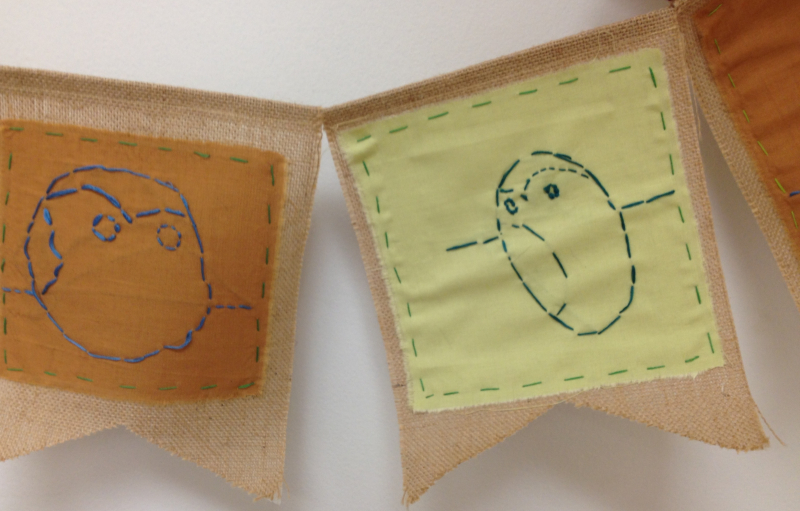
Stitching is a wonderful way to switch it up, setting the pencil aside (temporarily) to strengthen small motor ability.  Not only does sewing by hand require the pincher grasp that requires coordinating the thumb and pointer, but it requires coordinating the eyes in the process. Stitching by hand is a quiet, slow activity that requires patience.

Stitching leaves strengthen’s fine motor skills.

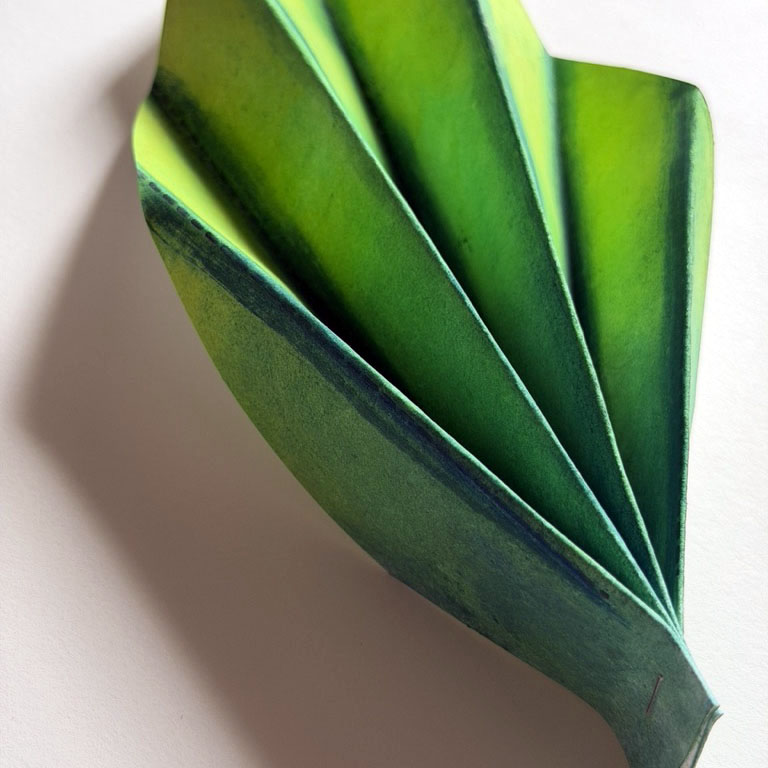
Many years ago I cut some very simple pinnately parallel, leaf-like shapes in calico fabrics. I popped the raw “leaves” into  a little basket with pre-threaded (with embroidery floss) needles and carved out time during fall for leaf stitching—half an hour would easily stretch to an hour with my little ones contentedly choosing two leaf shapes and stitching them together tenaciously. This seasonal tradition began with me teaching the running stitch, re-threading all the needles and moving quickly to my children confidently whip stitching and blanket stitching, even threading their own needles!

And guess what? Writing an idea became less painful. Skills gained during sewing transfers directly to the stitching of ideas crafted with pencil on paper.

Check out our brand FREE new Letter Forms worksheet!


~Kimberly

Posted on

A Reason for Handwriting

Hadwriting
About a dozen years ago, a friend shared with me that she decided to bypass teaching her children the art of penmanship. Her children would jump straight to keyboarding: “This is the computer age. Cursive handwriting is archaic. Why do the work?”

What about beauty?

When I pressed her, my friend agreed that handwriting is an art form. She simply did not see the value of her young children expending effort to master an art form that would not be useful in college a decade or so in the future. This was my first encounter with creative illiteracy.

Mastering the art of handwriting fosters the ability to concentrate, to contemplate, and to communicate confidently.

Let’s face it. We are a distracted people. We are technology-centric, and our children are at risk. We are obsessed with digital signals that tickle our attention.

But we all, somewhere deep down, appreciate ideas that are beautifully inked by hand. I, for one, long for this personal touch. Of course, there are countless typographical fonts that mimic hand-written text. We download them for free. Sometimes we even pay for these fonts. But can the illusion of written-by-hand really fill the void?

Technology is here to stay. We all need to be technologically literate. I’m connected to my iPhone because I value the many benefits this technology offers.

But what if a technological world without the balance of human artistry is shrinking individuality?Taymusic copy
My eldest son is a composer. Until recently, he composed all his pieces by hand on archival paper. When he was a college student, his professor pulled him aside and praised his melodic compositions that are equally beautiful to the eye. However, while he crowned Taylor one of the last “by-hand” composers, he suggested that purchasing a notation program such as Sebelius would be imperative. This is not because the program will make Taylor’s work easier, but because most musicians who will read his work have never played music that is handwritten and the foreign individual nuances are challenging to interpret. Taylor purchased the program, but assured the professor that he will always begin the process of composing by hand hoping to, in the end to also be known for the individuality of his hand on the page.

This got me to thinking, how many times do children come to me and say, “I can’t read cursive.”

Handwriting is an extension of the writer’s voice. Lettering by hand—whether it’s verbal or musical—is beauty, is unique voice. C.S. Lewis and J.R.R. Tolkien encouraged one another as writers, still, their voices on the page are vastly different. Voice is the fingerprint of the writer, that one-of-a-kind something that no two writers have in common.  Our handwriting is a beautiful extension of that voice. We are known by the whisper of our loops on the page.

Remember, “All you have to do is write one true sentence. Write the truest sentence you know.” That’s Hemingway, of course, from A Moveable Feast. I want to add:  Ink your one-true-sentence by hand onto paper in the most beautiful way you can!

This month, try carving out fifteen minutes a day to compose one true sentence, but not just the truest sentence you know, the truest-most-beautifully-handwritten sentence you know!

Begin with these things in mind:

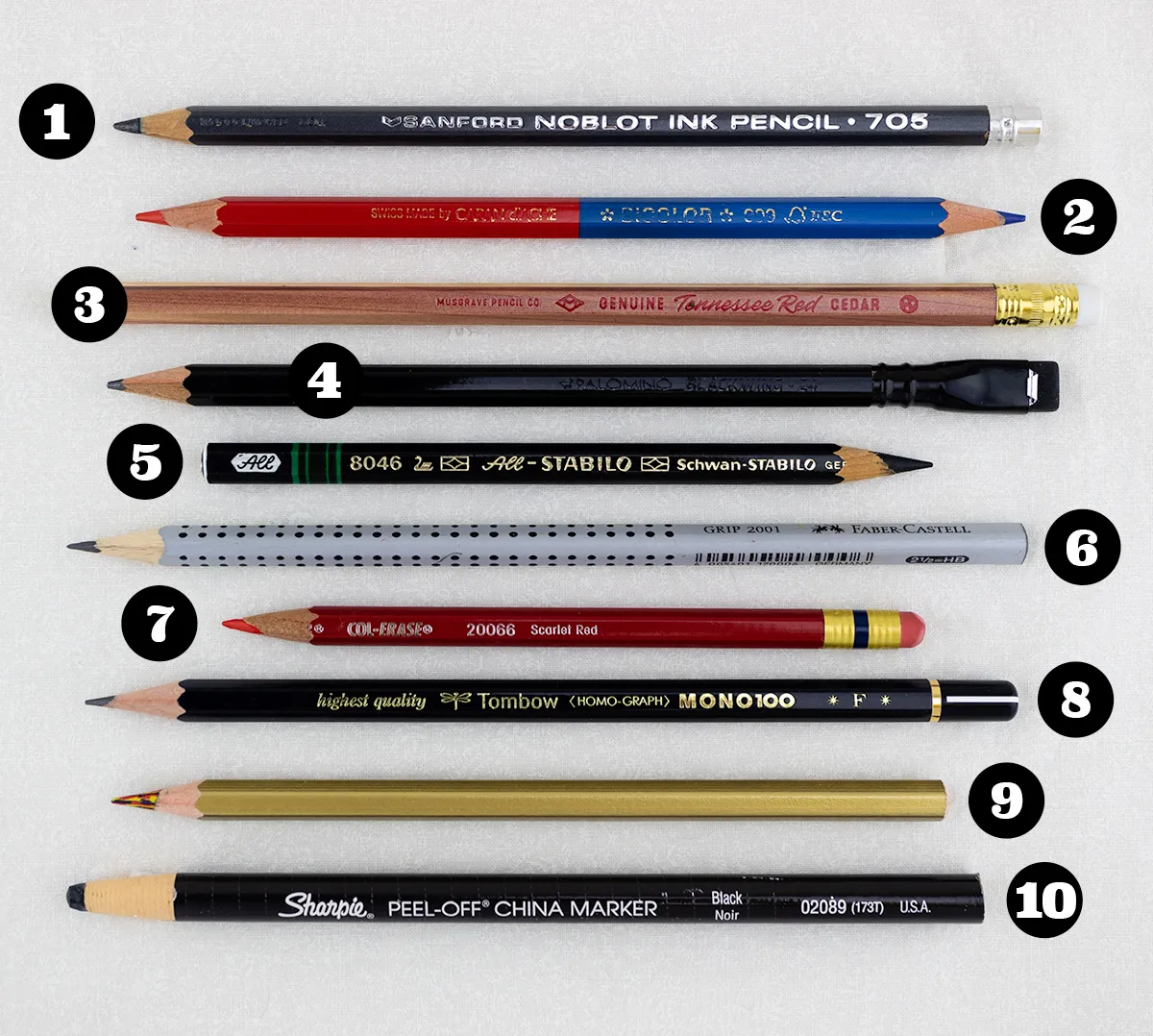
Choose the right writing implement and the right
paper
. The feel of the pencil or pen on the page is a personal choice. The balance of resistance and flow has to be just right. Take time to explore the options.

Consider grip and posture. While I don’t believe there is a single right way to grip the writing implement, I do believe the pressure of the grip matters. The grip should always be relaxed, not cramped. The posture should be upright, comfortable, and the arm should rest on a table so that the arm directs the stroke, not the wrist.

Beautiful handwriting begins with beautiful lines. Remember, our alphabet is a set of symbols developed by human beings to represent spoken sound. The symbols, from an artist’s standpoint, are arbitrarily looped and curved lines that
represent the spoken word. There are many letter forms in the world. You might even add one of your own!

Be the tortoise. Slow handwriting is nimble. Slow and steady is non-chaotic. Fast handwriting is mindless, awkward. Fast and rickety is chaotic. Consider the metaphor. An investment of time practicing the art of handwriting will generate much more than beautiful strokes on the page.

Click through to access our FREE lettering by hand activity to get the tradition started.


~Kimberly

Posted on

So much gratutide!

Fall is a cozy season. It’s the season of turning leaves 🍂🍁, of imaginary forests and fairy stories, of bundling up with mugs simmering cider for long meandering walks, of collecting pinecones and spying animals readying for the long winter nap. Most of all, fall is the season of gratitude! And this means GIVEAWAYS!

TWO, to be exact…

ONE.

Recently we stumbled upon an amazing trilogy of board books created by artist and speech pathologist, Tabitha Paige, CCC-SLP designed to help little ones celebrate one of our very favorite things—words! These delightful stories will jump start the young child’s vocabulary and introduce them to early language concepts! 

Lessons include:

  • Spatial Words: Follow along with Little Fox as he plans a surprise picnic for his friend Owl in A Trip to the Farmers Market.
  • Quantity Words: Follow along with Little Hedgehog as he helps his friend Squirrel search for missing acorns in A Trip to the Forest.
  • Colors and Counting: Follow along with Little Rabbit as she gathers wildflowers to cheer up her friend Mouse in A Trip to the Wildflower Meadow.

We love that this little set that captures the magic of language and offers practical tips for this most important pre-reading stage. Mostly we love that these books do this the beautiful way! These stories are a perfect opportunity for older siblings to read aloud to younger siblings.

TWO.

Puzzles are a perfect way to snuggle in to the coziness of fall. When we stumbled upon this puzzle, we thought: “HOW PERFECT!” Celebrating two of our favorite things, words plus the best technology when it comes to writing—the humble pencil. This promises to be an activity the whole family (and extended family too) will enjoy.

XX GIVEAWAY CLOSED XX

Click here to check out our December Giveaway!


~From all of us at Blackbird & Company to all of you: So very thankful 🍂🍁🧡

Posted on

Written by Hand

Writing with a pencil by hand is a foundational skill. But it’s also a beautiful endeavor. I have fond memories of learning to form the ABCs. This work was quiet, slow, and mysterious. Yes, mysterious. My grandmother, who raised me, wrote little notes by hand and left them in various places around the house to my great delight. Her hand was one of a kind, a lovely extension of her loving self.  It was not like any other by-hand note I’ve ever encountered in life. That’s the thing about penmanship. Penmanship is personal.

Sadly, digital teaching tools have pushed handwriting instruction to the back seat. But writing by hand is multi-sensory, connecting hand-eye coordination and memory. Writing by hand, the art of encoding language, strengthens the ability to read (decode) language. Writing by hand slows us down so that we might engage with and bring shape to our ideas.

This past Sunday, January 23, was the birthday of John Hancock—the first person to sign the Declaration of Independence. I can see his strong, courageous calligraphy in my mind’s eye. His is the one famous signature that my elementary classmates and I committed to memory. So it is fitting that here at the end of January each year we celebrate the art of handwriting connected to this larger than life signature!

So at the dawn of 2022, may you pick up a pencil, craft your very own John Hancock, marveling at each individual stroke that defines your hand.

Want to learn more about printed letterforms?

Take a look at our free worksheet: Typography 101

Typography 101

Posted on

Sharpening Pencils


Picnic-table_crop

When Hannah was five her best friends were twin boys. The trio devised all sorts of amusing
activities. One sunny afternoon I noticed they were spending a significant
amount of time gathered round the child-sized picnic table that Hannah’s father
built. “How cute, they are conversing,” I thought to myself as I went for my
camera to capture the moment.

Wrong.

When I zoomed in I spied a couple Willie’s screwdrivers and
a little pile of screws in the grass. I zoomed in closer. Yep, the trio was seated
around what would soon be the once-upon-a time-child-sized picnic-table. They
had spent the better part of the afternoon disassembling not conversing. Still,
they were so focused, such dedicated little carpenters, that I didn’t have the
heart to stop them. Instead I rehearsed the speech I would deliver to my
husband, “…it was all very, well, Montessori …and after all we can easily
re-build, right?”

IMG_4162
Okay fast-forward about fifteen years. Last week my
mother-in-law assigned Liam the task of sharpening fifteen dozen pencils that
she would be taking to an orphanage in Uganda this summer. I appreciate how she organizes these
perfect child-sized humanitarian activities for my children.

Liam got to work immediately. At a minute per pencil, 180
pencils, the task would take about three hours without a break! The task took
Liam most of the morning. At one point he came in and asked me if he could use
the manual pencil sharpener.

“The electric one might be faster.”

“But it’s clogged.”

“Okay Liam.”

“Thanks mom.”
IMG_4164

A couple of hours later Liam came bounding into the kitchen
with a pencil stained grin holding in the sharpened pencils safely tucked back
into their original packaging.

“Wow Liam, all these pencils!”

“I hope the children in Uganda are happy when they write!”

I choked back the lump in my throat, “I hope so too Liam, a
job well done son.”

Later that evening I went into the studio to tidy up, there
it was, a brand new installation: The manual pencil sharpener had somehow been
removed from its perch in the pantry and re-attached with screws to our antique
Craftsman desk. I caught my
breath, mortified, then after a moment of letting the shock settle, enjoyed the
smile cracking. My son set up shop, got the job done and I must admit, I’m
proud.

IMG_4183
I pulled out the speech and began rehearsing, “…very
Montessori and after all…”