Posted on

Big Reveal: Giving Thanks for Community

A crisp nip in the air, leaves dancing from green to yellow to orange, the scratch of claw on earth as squirrels dig hiding places for acorns—this can only mean one thing: Thanksgiving fast approaches!

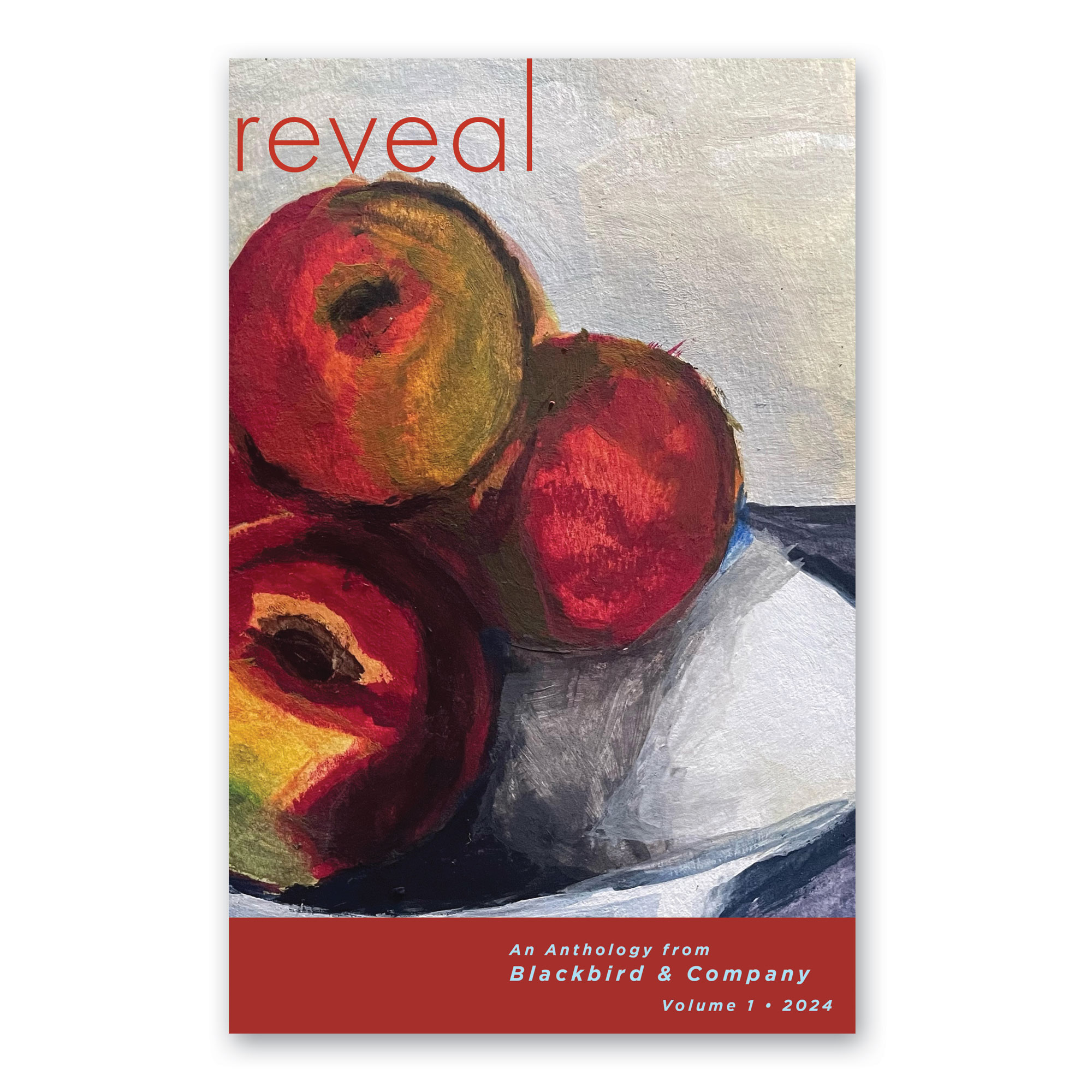
If you ask me what I’m thankful for during this season, and if I had been reflecting on Reveal (Blackbird & Company’s annual student anthology), I would probably say, “amalgamation.”

What a pretentious answer, you think but are too polite to say aloud.

I would explain: an amalgamation is a combining of multiple elements to create a new, unique blend. When the elements come into contact with each other, they change to create something new, like iron and carbon superheating together to form steel. Or a slightly different but related concept—as Aristotle said, “The whole is greater than the sum of the parts,” which emphasizes the power of unity over individual strength.

How does all of this relate to Reveal? Reveal represents an amalgamation of Blackbird & Company writers, a combination of work that elevates each piece to form an inspiring whole. Reveal doesn’t represent one person’s foray into the literary world—rather, Reveal is a communal effort on the part of young writers and scholars who insist that their voices matter, that they have big ideas worth sharing. Encourage your students to submit their Blackbird & Company work here!

By combining our talents in ways that compliment and inspire each other, we can together create something greater than any of us could accomplish individually.

So what am I thankful for?

I’m thankful to be a part of a community that uses writing as a medium for connection, as a way to give voice to the whisperings of the soul. When we all bring our talents to the table, the amalgamation of our art is greater than what any of us could create alone.


~Claire S.

Posted on

Start the New Year with Pages

January 2026 is right around the corner!

Pages classes are designed to foster competence, creativity, and confidence in students as they press into the important work of becoming literate.  Being able to communicate an original, BIG idea is the ultimate goal of English Language Arts.

Get the most out of Blackbird & Company’s materials and methods! Classes run in 5-week sessions, and will kickstart your student’s work with skills, tips, and tricks to help them succeed. We offer a wide range of humanities classes, all designed to explore the art of idea making:

  1. CORE – Read and Write and Discuss! These classes are tied to individual Literature + Writing Discovery units (2nd grade through 12th grade). Students will receive weekly feedback on their writing via the one-on-one conference!
  2. The History Opt-in – These classes will provide extra historical background tied to specific CORE Level 3 (middle school), and Level 4 (high school) units. Students must be enrolled in CORE to participate.
  3. Research – Learn to explore the life of a famous person, extract facts, and write a unique biographical essay. Students are supported each step of the way.
  4. The Essay – Explore and construct topical essays and inspire your students to communicate big ideas.
  5. Poetry – Each session we are offering short thematic classes that will apply writing skills in beautifully creative ways.
  6. Visual Arts – Explore great works of art and their makers. Students will learn about and practice art making while gaining skills that will transfer to all areas of academic pursuit, especially the art of writing.
  7. Music – Explore the works of great composers and the language of music. Students will gain skills that will transfer to all areas of academic pursuit, especially the art of writing.

Enroll today!

What parents are saying about Pages:

“Thank you for making class so enjoyable and personal. My daughter’s writing has really expanded since being in classes with you.” ~Brit Riddle

“I really appreciate you going through the different areas of reading and writing in class as opposed to having him do it all on his own at home. It sets a good example of what to do (i.e. what to look for and pay close attention to as he reads) and how to do it (i.e. organize his thoughts and get ready to write into paragraphs).” ~Paulina Yeung


~Kimberly

Posted on

How to Find What you Need

Alphabetical Annotations are HERE!

A is for About Authors

All About Blog Categories – You are HERE!

Announcing – Click through to find out what’s new and happening at Blackbird & Company.

Arts Guild – All things visual and musical and pertinent to learning.

Campfire – Join us in January for inspiration and offerings to start the long leg of the school year off right.

CORE ELA – Tips and Tricks and Tools

Discovery – Key insights into the important work of building the fund of knowledge.

Hatching & Earlybird – Insights and inspiration for little ones in Kindergarten, 1st, and 2nd grade.

First Post

Habits of Being – Foster perseverance and you will weave a habit.

Operation Lexicon – Words, words and more words to grow a vibrant vocabulary.

Litropolis – Read Well = Well Read

Maker – Made by hand is an essential skill.

Momologue – Philosophical musings from the women of Blackbird & Company.

Observation – Da Vinci said it best: “All our knowledge has its origins in our perceptions.”

One True Sentence – Let’s follow Hemingway’s advice and write one true sentence.

Pages – Learn about our LIVE online classes.

Pencils – When it comes to technology, the pencil rules.

Print Shop – Downloadable mini-lessons to enrich ELA learning.

Remediation – Strategies for students who need to strengthen reading and writing skills.

Wax Poetic – All things poetic.

Write Ideas – Ideas are the foundation of all written work: Form Follows Function.

Writing Resources – Helps for the writing teacher or parent-teacher to mentor students in the art of writing well.


A) CORE Integrated Literature & Writing (Phonics, Reading, and Writing for K and 1st grade),

B) APPLICATION: Grammar, Mechanics & Style

C) APPLICATION: Research, Composition, Creative Writing.


CORE ELA

Pencils

APPLICATION

  Operation Lexicon

  One True Sentence

Posted on

Print Shop Coming Soon!


Come January, Blackbird & Company will be launching Print Shop!  Our awesome collection of downloadable Discovery activities are designed to engage students, Kindergarten through 8th Grade, in focused, independent work pinpointed on specific academic skills with opportunities to build upon the fund of knowledge.

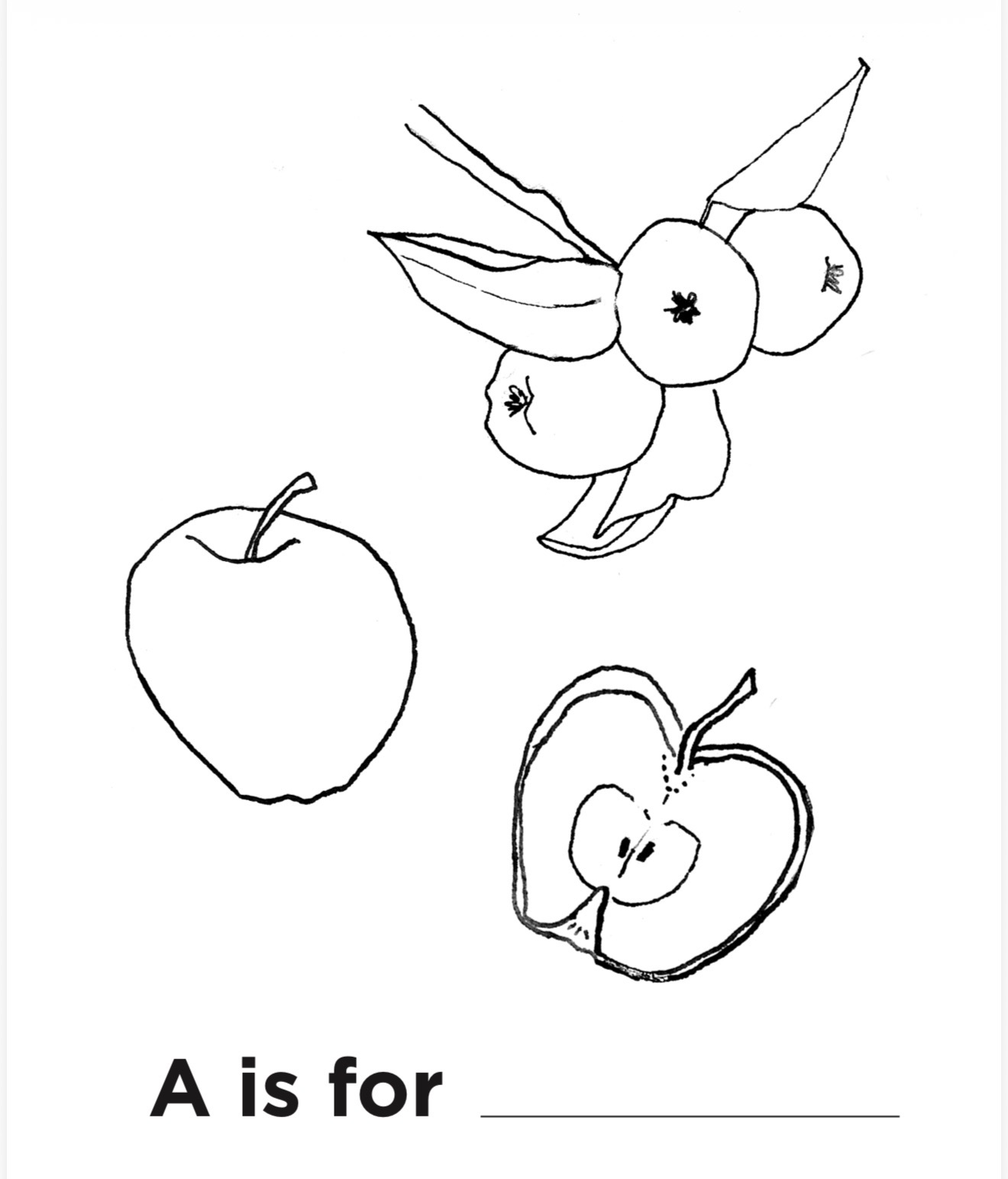
This month we are releasing a sneak peak, three great Print Shop activities for primary students tied to the letter P for FREE! What is more quintessentially Fall than pumpkins? These multi-sensory activities are sure to engage and enrich learning.

Simply click through, print, and let the Discovery begin!

And, please stay tuned for  more details during our January Campfire 2026.

Posted on

Read a Book / Solve a Problem

“Mom, I sat by myself today at the park. Nobody was playing anything I was interested in. I tried to talk to Luis but he never listens; the game always has to go his way. Mom, Tommy says he has been playing football for 10 years, but he just had his 8th birthday. I don’t understand why he won’t just pass the ball. Gabby kept taking Carlos’s hat. She said it was a game but Carlos didn’t seem to like it.”

When Grady is driving in the car with me or sitting at the dinner table or when his head hits the pillow at night this is the usual conversation or maybe I should say download. I realized during this time how much I just needed to listen. Grady needed time to process these different situations and relationships that came across his path during his day.

How confusing, mystifying, uncomfortable human relationships can be—whether we are 8 or 80.

I was recently introduced to an author named Jon Klassen. The words and the pictures are very simple yet carry a lot of wisdom concerning human relationships.

Three books I read Grady over the course of nights were:

1 ) I want my Hat Back

 2) This is not my Hat

 3) We found my Hat

Grady would smile and laugh out loud. In I want my Hat Back, the main character, a bear, is running around asking other animals if they have seen his hat. He asks another character, a rabbit, (who, by the way, is wearing the bear’s hat) and the rabbit, in a suspicious way, says he hasn’t seen the hat. The bear continues his search until he realizes he has seen the hat… that rabbit was wearing it! He goes back to confront the rabbit, “You stole my hat!” There is a long look between the two. Then comes a picture of bear sitting down, saying he loves his hat, wearing it on his head. Then a squirrel comes passing by asking if he has seen rabbit. Bear answers in a suspicious way, “Who me?” “Why are you asking me? I wouldn’t eat a rabbit, don’t ask me anymore questions.” This story ends with no clear ending. Could the bear have sat on the rabbit? Ate the rabbit? Could the rabbit have run off? Really anything is possible.

I read an interview with Jon Klassen and he discussed these micro-dramas from childhood. He used the example of Frog and Toad books. How these two characters had unresolved, uneven relationships, where one of them needed one of them more than the other. The underlying thoughts, “I have friends who could leave me or I have friends I could leave. I don’t like them as much as they like me or vice versa.” I researched the author of Frog and Toad after reading Jon Klassen’s interview. Frog and Toad happened to be my childhood favorite as well. It was interesting to find that Arnold Lobel wrote Frog and Toad based on his experiences from second grade. Lobel was sick and out of school for most of that school year and kept himself busy by drawing. He used his animal drawings as a way of coping with the insecurity of his return and making friends. He used these experiences to write Frog and Toad.

Kids don’t want to analyze these relationships. In stories, like in life at this young age, they want to watch them play out—Jon Klassen reminds: validate that they exist.

Isn’t this part of human nature, to want to feel we are not alone in our experiences?

Jon Klassen goes on to explain that children don’t need to know the motivations of characters and can understand questionable behavior in an unexamined way. Kids don’t ask “why did he do that”, like us adults who like to analyze and pull out the meaning or morality.

How would an author answer the why?

Isn’t that for the reader to get too or not get too?

Is there really only one answer to what motivates human behavior?

Children don’t have to ask all of the whys to understand it can happen. Grady didn’t need to ask why the bunny took the bear’s hat or how the bear got the hat back. He related in the human experience, of having something taken and wanting it back, of finding it and getting it back. This is Not my Hat, shows a small fish taking a hat from a big fish and all his internal thinking about it why he does it. What a beautiful example of what we do as humans when we want something and dance into our internal justification. We laugh while reading because we all relate on some level. No story needs to be added to why stealing is wrong. We can all understand the higher moral value but also total relate with the very human behavior.

We Found a Hat, beautifully demonstrates the inner conflict when two friends find something they both want but there is only one. Our desire for something for ourselves mixed with our feelings of wanting to share and be honest is, again, common human nature. It is rarely just a clean action of what’s right.  It’s a pull and push to serve ourselves and someone we care about.

And then there is Jon Klassen’s book, The Rock from the Sky, that pushes us adults right off the ledge! The book is about what we cannot control.

Where a rock will land. What could happen in our day. What the future might bring. How things we can imagine will change and all the things we can’t imagine and all the questions that go with it, the what, why, how, when and where! There is SO much we can look up for children now, so much on-the-spot-access to information. We can know a lot of interesting facts. But in the case of our lives, the unknown is our future and the daily things that can happen that are out of our control. This book is addressing the fact we don’t know everything and we are not supposed to know. Part of life happenings are luck, timing, paying attention, listening, trusting, asking for help, admitting we don’t know!

So when I sit down to read Grady a book, especially a Jon Klassen book, I remember that Grady has had a full day with really big experiences. When Grady talks I listen. When we read I let the story be felt. I don’t have to pull the moral or give him instruction on who he should be. I watch him smile and laugh and I let the moment be. I give up my adult longing to know why and I sit on the ledge with the unknown. I become friends with the right now and that is enough.

-Clare Bonn

Posted on

Moving BEYOND the Topic Sentence

Squirrels are everywhere. That’s for sure! Most young writers have had a squirrel encounter or two. Tapping into a rich storehouse of knowledge is a great place to learn to craft a HOOK—not a topic sentence, a HOOK! The best place to begin a writing lesson is to tap into what the writer knows and to read a book.

Nuts to You by Lois Ehlert is a gorgeous and simple story of a quintessential city squirrel who, naturally, zips mischievously through life. Told in lively rhyming verse with beautiful collage illustration, the book is sure to capture the attention of students. At the back of the book the author includes some terrific facts about squirrels. We chose five facts to focus on:

Five Facts About Squirrels

1. Squirrels are rodents

2. They have front teeth—incisors—that NEVER stop growing.

3. They live in big nests or hollow trees.

4. They have five toes on their front feet, four on their back.

5. Their bushy tail is as long as its body.


Often times, when facing the blank page, students are intimidated and resort to simplistic, and, well, let’s face it, BORING solutions! Young writers resort to what they have been taught: Open your paragraph with a topic sentence. This is not technically wrong. But we can BETTER equip them!

For example these perfectly fine topic sentence are boring:

Squirrels are cute animals.

Squirrels are everywhere.

And my least favorite topic sentence of all:

I am going to write about squirrels.

So how do we teach our students to make topic sentences sparkle and shine?

We teach the to transform the topic sentence into a HOOK!

To help them get there, I gave them a BIGGER squirrel fact: Did you know that squirrels are everywhere in the world except Madagascar and Australia? We looked at a globe together and marveled at this interesting fact!

Next, I asked them what kinds of noises squirrels make. I got some very fun responses, too! I told them that we writers like to create words that represent sounds and, when we do it’s called: onomatopoeia. They liked that word! Now it was time to craft a HOOK for our paragraph about squirrels.

“Let’s imagine what it would sound like if we could hear all the squirrels all over the world.”

We generated a significant list:

Barking, Chirping Squeaking Squawking, Whistling Scampering Scratching Gnawing Grinding, Rattling, Buzzing, Crying

Next I said, “Let’s include our BIG fact via an Em Dash,” and went on to remind them that this special punctuation mark helps the reader take a long pause while adding some important information to the sentence.

Now we had our fodder and were ready to craft a HOOK! Here’s were we landed:

They are chattering, chirping,  squawking  all over the wide world—everywhere except Madagascar and Australia.

That’s the way to open a paragraph about squirrels!


~Kimberly

Posted on

Crafting a Wonder-FULL Sentence is Courageous

Staring down the blank page is a courageous endeavor.

Where to begin?

We say: Begin with a BOOK!

BIG ideas are sparked by knowledge + curiosity.

“All you need to do is write one TRUE sentence,” so said great American author,  Ernest Hemingway. But what exactly did he mean? Let’s face it, accuracy of expression may be learned in a grammar book, but depth of expression begins when a writer decides to pick up a pencil and scratch an original idea onto a blank sheet of paper. The first, BEST lesson, is to teach your students that writing about wonder leads to wonderful writing.

Here are four ways to compose a wonder-FULL sentence about owls.

First let’s gather information.

When faced with the blank page, first things first, press into food for thought. For this lesson, we dove into  Animalium for Kids, by Kate Scott and Jenny Broom. With over 160 specimens to explore in this wonderful biological compendium, we are narrowing our focus to Owls. We don’t need an exhaustive study here—this is a sentence writing exercise after all. We need just enough information to become curious and inspired to write. Getting ready to focus on composing even a single sentence requires gathering intriguing information.

The owl entry in this book is just enough to spark curiosity.  After reading, focusing in on the amazing illustrations, sharing what we found amazing about owls—storing new facts in our memory, adding to our growing knowledge of owls—we made a list:

  1. There are two main families of owls within the order Strigiformes: Tytonidae (barn owls) and Strigidae (typical owls).
  2. Huge owl eyes are stationary, fixed in their sockets—no eye rolling!
  3. Owls can rotate their head 270 degrees.

Next, let’s review the four types of sentences:

Statements are declarative. Statements tell us something.

Are questions interrogative? (Yes.) Questions ask.

Commands are imperative. Commands demand action.

Exclamations are exclamatory! Exclamations roar!

Now, let’s get writing.

A our first attempt at “NOW, let’s write a statement together,” I listened and wrote the group consensus on the board:

There are two types of owls, typical and barn owls.

Here’s where writing get’s fun! Add details, rearrange, think about word choice to make the above statement a tale that will turn heads. Follow the W Rule:

WHO, WHAT, WHERE, WHEN, WHY, to WOW the reader!

For this sentence, I had a basket of blocks all different shapes but only two colors that I poured out onto the floor, asking my students to quickly sort by color. We, obviously, ended up with two colors. Then I gave them another fact about owls—there are 200 species in the world—and asked them to help me add this detail to our statement. Here’s what the group came up with:

All 2 million owls in the world (200 species) can be sorted into two BIG piles—Strigidae (typical) and Tytonidae (barn owls).

Finally, let’s translate the statement to a question, command, and an exclamation:

Statement:

All the owls in the world (all 200 species) can be sorted into two BIG piles—Strigidae (typical) and Tytonidae (barn owls).

Question:

Isn’t it amazing that all 2 million owls in the world (all 200 species) can be sorted into two BIG piles—Strigidae (typical) and Tytonidae (barn owls)?

Command:

Please sort the 2 million owls, all the owls in the world (all 200 species) into two BIG piles—Strigidae (typical) and Tytonidae (barn owls).

Exclamation:

All 2 million the owls in the world (all 200 species) can be sorted into two BIG piles—Strigidae (typical) and Tytonidae (barn owls)—Wow!

There you have it, all four sentence types in one fell swoop! Once you’ve tackled this exercise a few times as a group, it’s easy-peasy to make it an independent activity—from gathering information to four TRUE sentences!  Ernest Hemingway would be proud.


~Kimberly

Posted on

Flourishing an Idea: Before & After

Mozart Season Bundle

Aesthetics is a set of principles that inform the outcome of a work of art. Aesthetics taps into that part of our being that connects with beauty. After reading The Mozart Season,  students knew right away the section of the story that would inspire the most creativity. I saw this in action. And when readers stumble upon this three-page passage, well, Section 5 happens.

As the story goes, when Allegra and her mother’s friend, Diedre spend an afternoon in the Rose Garden, well, music happens. Nestled atop a hill in the park is a silvery aluminum sculpture. There are tall columns and arched columns, smaller columns and water uniting them all.

“It was Diedre who started the song. She began slowly, BONG bong Bong bong with her knuckles on the three big columns, walking between them.”

Now I’ve seen some fantastic creative responses to The Mozart Season (some that have won awards), but when this past year, one of my students finished the book and brought in her Section 5 project to share, I marveled that, yet again, it was in response to this specific music-making passage.

And the project she brought in was not only “nique” (as Allegra and her friends would say), but also a perfect opportunity to share some tips to elevate the Section 5 project artistically.

With a cardboard box, some discarded bottles, aluminum foil, a few scraps of notebook paper, one green marker, Scotch tape, and a pitcher of water, my student made a musical instrument! While I have seen many musical instruments (even musical compositions) inspired by this little section of The Mozart Season, this one captured my imagination. Think “don’t judge a book by its cover” for a moment. This homely little project surprised me with rich sounds made from filling the bottles with different levels of water and blowing gently across each the neck. Oh! I was simply tickled, “My favorite Mozart invention so far!”

But the poor dear was in desperate need of a makeover. So I gave the maker a simple lesson.

So following is the simple make-over:

BEFORE


  1. To begin, if you are going to use a box (and boxes are a great way to begin), always paint the box! Give yourself a blank canvas upon which you can build your idea. A coat or two of gesso or acrylic paint will do just fine.
  2. Use more than one art medium. Here for example, using green marker and green paint on both folded and crumpled paper makes the viewer read ‘foliage” more clearly.
  3. Give the reader an anchor to the book where the idea originated by posting quotes around the project.

You don’t have to be an artist to make your idea beautiful. And, think about it, ideas are meant to be appreciated. So, go on, beautify.

AFTER

One last thought… There is a trend in all sectors of education to discount the reading of pure fiction. This is not wise. This quiet little story is, in my opinion, powerful proof why we all need to read across many genres, read all kinds of stories. Every time I’ve led students through this purely fictional story set in a very real setting (the competition that Allegra is working toward is a real competition that happens annually in Oregon), they read a few pages and groan. But by the time they get to the end, they have a deep appreciation for the rich story and significant fodder for their creativity to unfold.

~Kimberly Bredberg

Posted on

Coming this APRIL: The Wonderful World of Phonics

Do your students shut down at the mention of reading?

Do they cringe when you gently hand them a freshly sharpened pencil, suggesting it’s time to write an idea?

Some students need a little extra support to unlock the code that is key to engaging in the act of reading and the art of writing. Our targeted and systematic approach will bridge the gaps. The goal here is for students to overcome challenges, and to ultimately enhance comprehension and spelling skills.

Reading is the act of translating code on a page to speech—spoken aloud or silently to one’s self.

Writing is the act of crafting code to a page in order to communicate an idea.

                                 So let’s begin at the beginning:

Phonemic Awareness  is the ability to hear and manipulate the individual sounds that make words.

Phonics is the relationship between the sounds we speak and the alphabetic letters or combination of letters that represent those sounds.

Morphology is the study of how words are formed and possess specific meaning.

Etymology is the study of word origins and the way meaning evolves throughout history.

Fluency is the ability to read fluidly and with expression.

These five elements of literacy are the foundation of our remediation toolkit.

Once the student has worked through the initial placement, the journey begins. From assessment, through instruction, to mastery—our toolkit will guide your students every step of the way and beyond.

Posted on

Leonardo Coming Soon!

Look

Imagine

Create

“All our knowledge has its origins in our perceptions.”

                                                  ~Leonardo da Vinci

Observation begins with a question: What am I seeing? In a world filled to the brim with stimulation, it is easy to take our senses for granted. Though we are usually quick to have thoughts on things that we taste and smell, sight (of all things) can often be overlooked. We see so many things on a daily basis that it’s easy to forget to stop and really look.

You might assume that this is true for things we only see once, but oftentimes this overlooking occurs with things we see on a daily basis. Think about the patience of your front door. It’s waiting every single day for a passerby. Surely you walk by it and through it several times a day. But when was the last time you truly observed your front door? Are there new cracks? Has the paint faded? Has the metal of the hinges or doorknob tarnished? Most of us probably couldn’t answer these questions without going to have another look.

Observation is not just for the artist making masterpieces or the scientist performing meticulous experiments. It is for us to better understand and know the world we live in. It is for us to learn to move past assumptions and fill our minds with sighted knowledge. Our world with is briming with sights to see, so let’s dive into the art of observation.

There is nothing like art-making to engage students in active learning. Leonardo da Vinci, the quintessential Renaissance Man, made over 13,000 journal observations during the course of his lifetime, and as he did, he not only gained an enormous body of knowledge, but also created masterworks and made significant discoveries that he generously shared with the world. His influence is far reaching.

In our brand new interdisciplinary 20-week unit, students will research the life of the extraordinary Leonardo da Vinci, taking notes along the way in preparation for the culminating biographical essay. They will also learn to slow into the art of observation via weekly drawing exercises. All of the exercises will be supported by online videos that can be accessed at the convince of the student.  Watch our social media for our April website drop date.