Posted on

Big Reveal: Giving Thanks for Community

A crisp nip in the air, leaves dancing from green to yellow to orange, the scratch of claw on earth as squirrels dig hiding places for acorns—this can only mean one thing: Thanksgiving fast approaches!

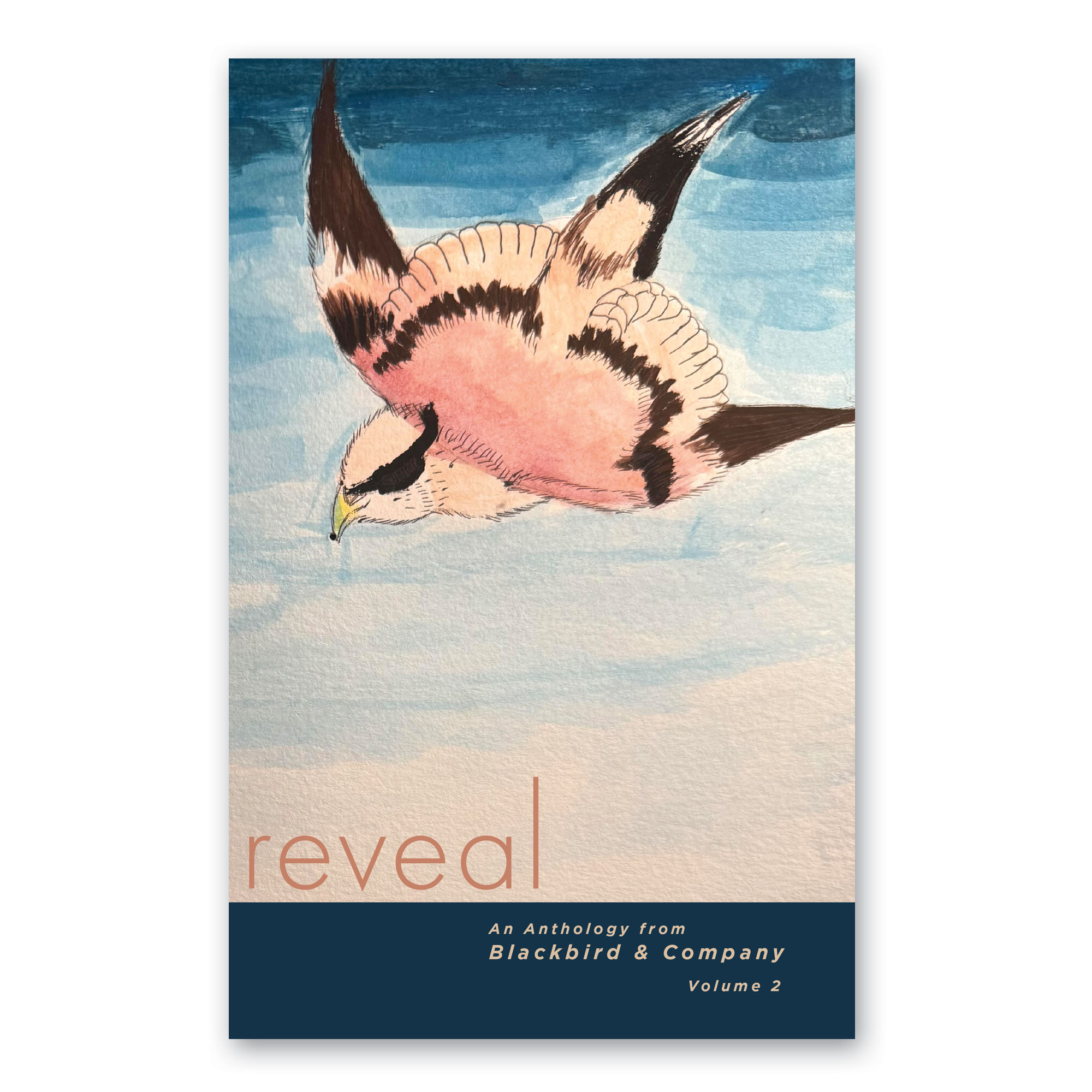
If you ask me what I’m thankful for during this season, and if I had been reflecting on Reveal (Blackbird & Company’s annual student anthology), I would probably say, “amalgamation.”

What a pretentious answer, you think but are too polite to say aloud.

I would explain: an amalgamation is a combining of multiple elements to create a new, unique blend. When the elements come into contact with each other, they change to create something new, like iron and carbon superheating together to form steel. Or a slightly different but related concept—as Aristotle said, “The whole is greater than the sum of the parts,” which emphasizes the power of unity over individual strength.

How does all of this relate to Reveal? Reveal represents an amalgamation of Blackbird & Company writers, a combination of work that elevates each piece to form an inspiring whole. Reveal doesn’t represent one person’s foray into the literary world—rather, Reveal is a communal effort on the part of young writers and scholars who insist that their voices matter, that they have big ideas worth sharing. Encourage your students to submit their Blackbird & Company work here!

By combining our talents in ways that compliment and inspire each other, we can together create something greater than any of us could accomplish individually.

So what am I thankful for?

I’m thankful to be a part of a community that uses writing as a medium for connection, as a way to give voice to the whisperings of the soul. When we all bring our talents to the table, the amalgamation of our art is greater than what any of us could create alone.


~Claire S.

Posted on

Start the New Year with Pages

January 2026 is right around the corner!

Pages classes are designed to foster competence, creativity, and confidence in students as they press into the important work of becoming literate.  Being able to communicate an original, BIG idea is the ultimate goal of English Language Arts.

Get the most out of Blackbird & Company’s materials and methods! Classes run in 5-week sessions, and will kickstart your student’s work with skills, tips, and tricks to help them succeed. We offer a wide range of humanities classes, all designed to explore the art of idea making:

  1. CORE – Read and Write and Discuss! These classes are tied to individual Literature + Writing Discovery units (2nd grade through 12th grade). Students will receive weekly feedback on their writing via the one-on-one conference!
  2. The History Opt-in – These classes will provide extra historical background tied to specific CORE Level 3 (middle school), and Level 4 (high school) units. Students must be enrolled in CORE to participate.
  3. Research – Learn to explore the life of a famous person, extract facts, and write a unique biographical essay. Students are supported each step of the way.
  4. The Essay – Explore and construct topical essays and inspire your students to communicate big ideas.
  5. Poetry – Each session we are offering short thematic classes that will apply writing skills in beautifully creative ways.
  6. Visual Arts – Explore great works of art and their makers. Students will learn about and practice art making while gaining skills that will transfer to all areas of academic pursuit, especially the art of writing.
  7. Music – Explore the works of great composers and the language of music. Students will gain skills that will transfer to all areas of academic pursuit, especially the art of writing.

Enroll today!

What parents are saying about Pages:

“Thank you for making class so enjoyable and personal. My daughter’s writing has really expanded since being in classes with you.” ~Brit Riddle

“I really appreciate you going through the different areas of reading and writing in class as opposed to having him do it all on his own at home. It sets a good example of what to do (i.e. what to look for and pay close attention to as he reads) and how to do it (i.e. organize his thoughts and get ready to write into paragraphs).” ~Paulina Yeung


~Kimberly

Posted on

Print Shop Coming Soon!


Come January, Blackbird & Company will be launching Print Shop!  Our awesome collection of downloadable Discovery activities are designed to engage students, Kindergarten through 8th Grade, in focused, independent work pinpointed on specific academic skills with opportunities to build upon the fund of knowledge.

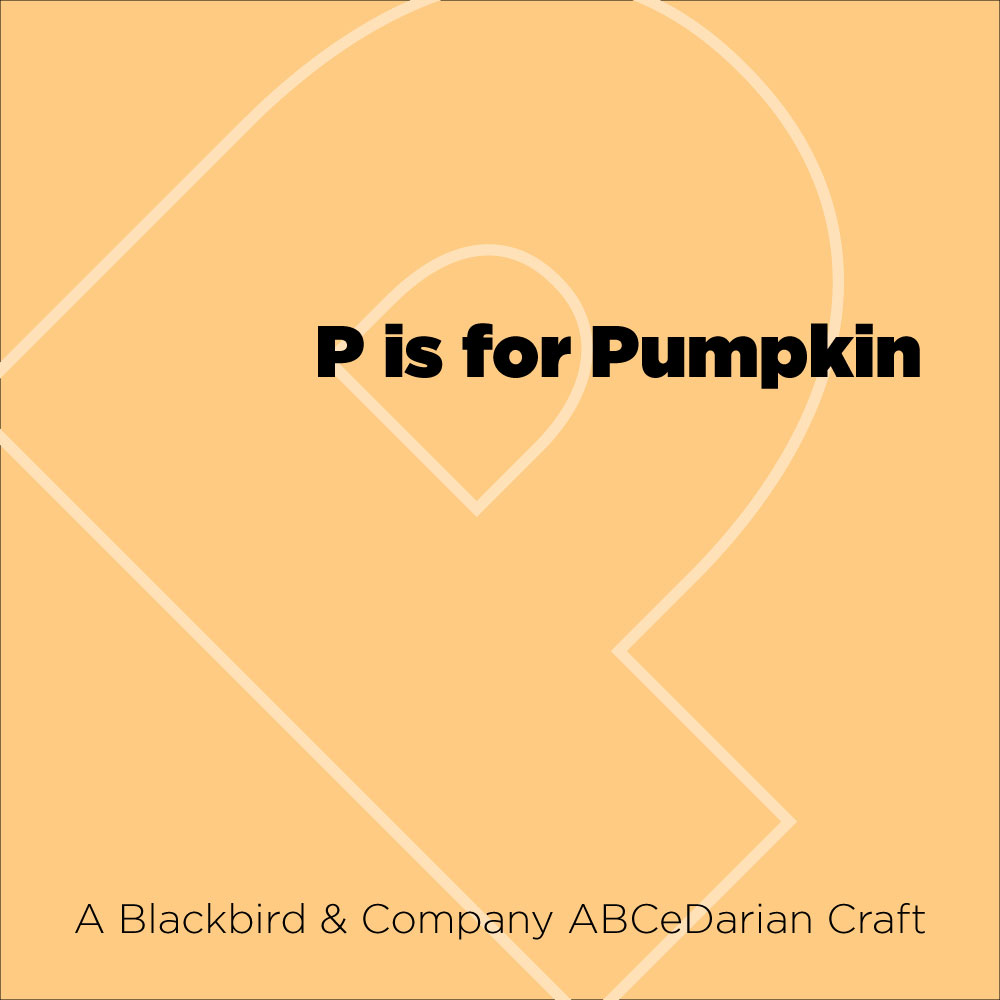
This month we are releasing a sneak peak, three great Print Shop activities for primary students tied to the letter P for FREE! What is more quintessentially Fall than pumpkins? These multi-sensory activities are sure to engage and enrich learning.

Simply click through, print, and let the Discovery begin!

And, please stay tuned for  more details during our January Campfire 2026.

Posted on

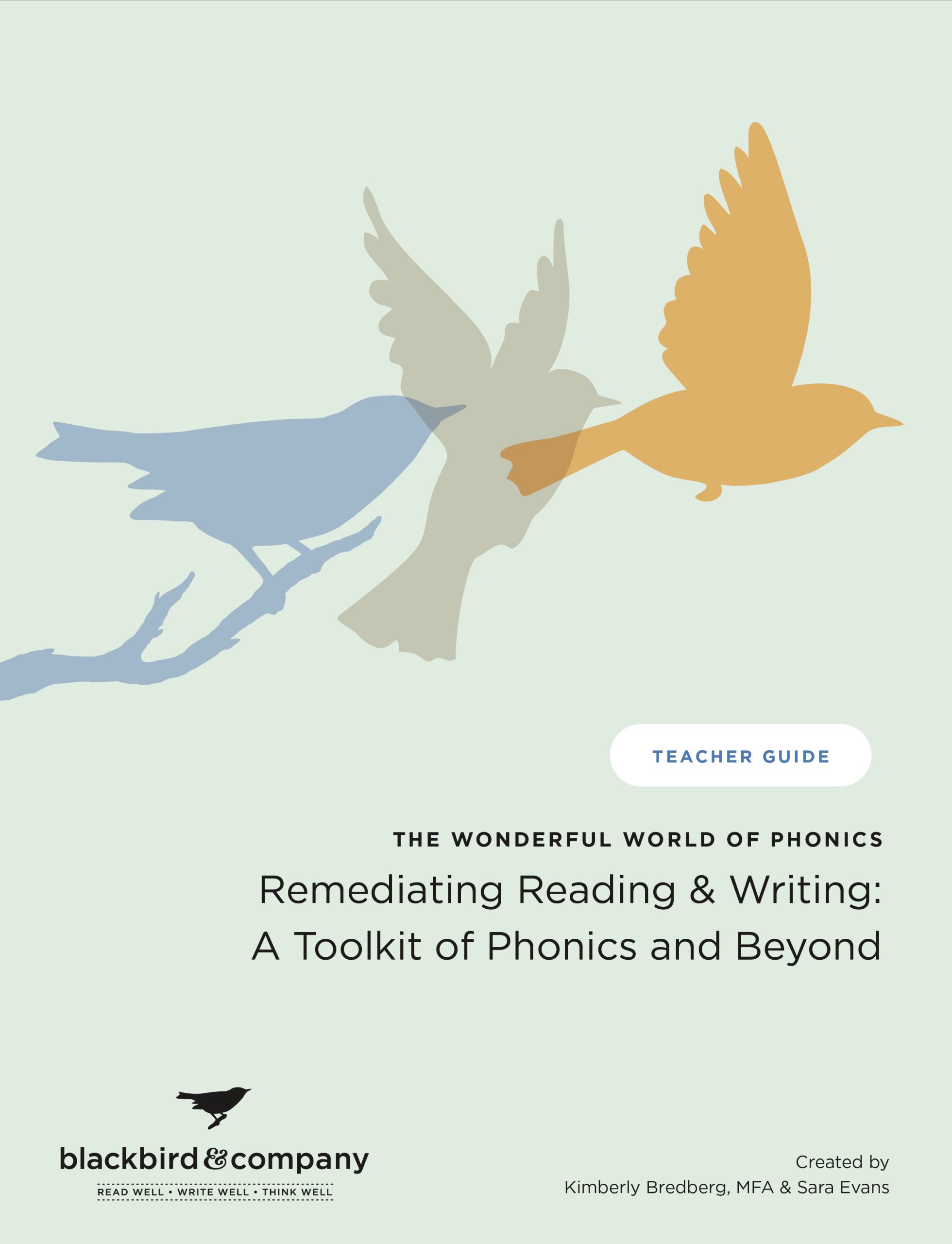
Coming this APRIL: The Wonderful World of Phonics

Do your students shut down at the mention of reading?

Do they cringe when you gently hand them a freshly sharpened pencil, suggesting it’s time to write an idea?

Some students need a little extra support to unlock the code that is key to engaging in the act of reading and the art of writing. Our targeted and systematic approach will bridge the gaps. The goal here is for students to overcome challenges, and to ultimately enhance comprehension and spelling skills.

Reading is the act of translating code on a page to speech—spoken aloud or silently to one’s self.

Writing is the act of crafting code to a page in order to communicate an idea.

                                 So let’s begin at the beginning:

Phonemic Awareness  is the ability to hear and manipulate the individual sounds that make words.

Phonics is the relationship between the sounds we speak and the alphabetic letters or combination of letters that represent those sounds.

Morphology is the study of how words are formed and possess specific meaning.

Etymology is the study of word origins and the way meaning evolves throughout history.

Fluency is the ability to read fluidly and with expression.

These five elements of literacy are the foundation of our remediation toolkit.

Once the student has worked through the initial placement, the journey begins. From assessment, through instruction, to mastery—our toolkit will guide your students every step of the way and beyond.

Posted on

Leonardo Coming Soon!

Look

Imagine

Create

“All our knowledge has its origins in our perceptions.”

                                                  ~Leonardo da Vinci

Observation begins with a question: What am I seeing? In a world filled to the brim with stimulation, it is easy to take our senses for granted. Though we are usually quick to have thoughts on things that we taste and smell, sight (of all things) can often be overlooked. We see so many things on a daily basis that it’s easy to forget to stop and really look.

You might assume that this is true for things we only see once, but oftentimes this overlooking occurs with things we see on a daily basis. Think about the patience of your front door. It’s waiting every single day for a passerby. Surely you walk by it and through it several times a day. But when was the last time you truly observed your front door? Are there new cracks? Has the paint faded? Has the metal of the hinges or doorknob tarnished? Most of us probably couldn’t answer these questions without going to have another look.

Observation is not just for the artist making masterpieces or the scientist performing meticulous experiments. It is for us to better understand and know the world we live in. It is for us to learn to move past assumptions and fill our minds with sighted knowledge. Our world with is briming with sights to see, so let’s dive into the art of observation.

There is nothing like art-making to engage students in active learning. Leonardo da Vinci, the quintessential Renaissance Man, made over 13,000 journal observations during the course of his lifetime, and as he did, he not only gained an enormous body of knowledge, but also created masterworks and made significant discoveries that he generously shared with the world. His influence is far reaching.

In our brand new interdisciplinary 20-week unit, students will research the life of the extraordinary Leonardo da Vinci, taking notes along the way in preparation for the culminating biographical essay. They will also learn to slow into the art of observation via weekly drawing exercises. All of the exercises will be supported by online videos that can be accessed at the convince of the student.  Watch our social media for our April website drop date.

Posted on

Introducing Intermediate Composition

WE ARE HAPPY TO WELCOME TWO BRAND NEW UNITS:

Intermediate Composition: Little Worlds

This intermediate unit is developed to teach high school students how to translate a BIG idea tied to a little story into an essay. Over the course of 5 lessons, students will be guided into the work of crafting 5 literary essays tied to great writers—Flannery O’Connor, Ernest Hemingway, Alphonse Daudet, Eudora Welty, and Gwendolyn Brooks.

And

Intermediate Composition: The Persuasive Essay

The persuasive essay is an opportunity to communicate a point of view on a specific issue. Over the course of 5 lessons, students will explore two sides of an issue, choose a side and then craft details that communicate a position in an effort to convince readers to think twice.

Great essays have the power to encourage, empower, and enlighten. For this reason essay writing should not be treated as just a mechanical endeavor, but rather, as a pathway for the writer to communicate the depths of the heart and mind.

These intermediate courses for high school will focus on composing ideas building on the method middle school students experienced in our introductory units. This said, we’ve made sure that students new to Blackbird & Company curriculum will be supported to succeed in the work as well.


~Kimberly

Posted on

Pages Enrollment is OPEN!

We hope your summer has been filled with joy and opportunities for continuous learning. We are thrilled to announce that registration is now live for our highly anticipated online workshops!

At Blackbird & Company, we understand the importance of providing resources that foster creativity, critical thinking, and a love for learning. Our carefully curated workshops offer an exciting opportunity for your child to explore a range of subjects while having fun engaging with their peers in a virtual environment.

Who are Pages classes for?

All students Earlybird through Level 4 (grades 2 through 12).

When are the classes?

Classes meet once per week and are scheduled Monday through Friday at various times for convenience. No matter the level, you will be able to find a class that works perfectly with your schedule.

  • Session 1 | 9.11.2023 – 10.13.2023
  • Session 2 | 10.16.2023 – 11.17.2023
  • Session 3 | 1.8.2024 – 2.8.2024
  • Session 4 | 2.19.2024 – 3.22.2024
  • Session 5 | 4.1.2024 – 4.29.2024

Class space is limited, so click through to reserve your space.

Register NOW!

Posted on

Meet Ms. Clare

I’ve been writing this summer about our amazing Pages staff and the classes they are teaching.

I’m truly honored to be a part of such a great team.

Some of you may have wondered, but what about you?


Clare Bonn

Don’t you also teach Pages classes?

Well, yes, I do!

It’s hard for me to know where to start since I’ve felt like I have shared so much about my classes over this year in my blog posts. I soon found my inspiration in my old dairy from 1984-85. I was in 5th and 6th grade at this time, so you now have an idea of how old I am!

My son Grady is into the book series, Diary of the Wimpy Kid, this year. We will snuggle on the couch and read the books together. On one of these days, I remembered that I had an old diary hidden away. I thought I would show my son so he could see a real diary. When I pulled it out and showed it to Grady, he was so impressed. It is really small—as big as my hand—and it is white with lavender hearts in lines and proudly says “Diary” on the front. It had an old lock that once-upon-a-time time required a tiny key. Now it’s so old it just opens on its own!

Inside, each entry was dated at the top and I wrote in beautiful, neat cursive writing. I forgot I could ever write like that! On June 7th 1984, the day before the last day of my 5th grade year, I talked about the teacher handing out awards. I received one award for reading and one award for creative writing. I don’t remember that day, or the awards, and I don’t remember what I read or wrote that year that triggered all the award giving! But reading that journal entry made me reflect back on my education and feelings about writing. As I got older, middle school, high School, college, I don’t ever remember loving to write. I do remember feeling it was easy. I was always grateful when the test or assignment was to write an essay. It always came easy to me and I was always graded well. What I do remember liking was when I had the chance to free write my thoughts or experiences in a poem or a letter. I enjoyed writing something that was meaningful, where I could express my intimate feelings.

I wrote for so long what was required that I forgot I enjoyed writing.

The hard part is finding the balance between writing free within constraint, finding freedom within all of vast writing domains!

Teaching Blackbird & Company curriculum helped me to remember what I enjoy about writing. I love reading good books, which I get to do with my students every time I teach a class. I love writing my own ideas and that is what I assign my students. Every section of every book we read has its own built in writing prompt.

When speaking at conferences, I’m often fielding the same questions: “How do I get my child to write? ” And, if the child writes, “How do I teach my child the form of writing, without turning them off of writing?”

First, what I have learned using Blackbird & Company is that students of all ages want to write or, may I say, have more motivation to write their own ideas. Most students don’t want to regurgitate information.

The second thing I’ve learned is that anything we learn that is hard requires discipline and encouragement. Writing can be personal and expressive and creative but in can still be a process that feels difficult. Learning to write and let your ideas flow without worrying about the rules helps to ease this difficult process. But the form does matter, it is important to communicate effectively. This hard process can be achieved with warmth, kindness, patience, and respect. This process is important personal work.

My son and I always start with connection before we read and write. We have our own cozy spot together that helps it feel less like work. We put a blanket over our laps, we have the dog curled up next to us. We tell each other what we are grateful for today, or what we are looking forward too, but the time is set aside for my son’s important work.

His ideas are important.

His words and thoughts are valued.

He is a storyteller.

When we encourage our students over and over in this way, they begin the process of believing. And this, in turn, helps the young writer dive into valuing  the work itself.

When we start our work, Grady knows what to expect. Blackbird & Company curriculum has helped me so much with this process, whether it’s my own son or students in class. The structure repeats every week, and at every level, just increasing with difficulty as they move up. Students start to know how to structure writing, “Today I complete Characters and Vocabulary, tomorrow, Setting or Plot. The following day they will dig into Comprehension questions. The other critical point that has helped our process is holding my son to this process. Free, creative writing, is beneficial and I do always leave a time for that, but writing based on great literature is important too. Being able to demonstrate not only comprehension, but to question, to dive deeper into meaning and characters, to write what you think or feel based-off of what you have read, is important work. If we value only one type of writing or learning we greatly limit ourselves, our learning, our thinking, our communication and our understanding of our world.

What I’ve learned from Blackbird & Company, is to set aside time for important work and to push, or lean into difficult things so we can learn, stretch, and grow into our great potential and uncover the gifts inside of each one us.

Now that I have let you know all that I have learned from teaching using Blackbird & Company curriculum, you may still wonder, “Miss Clare, what are you teaching!!!”

I’ve the pleasure of teaching Literature Level 2 and Level 3 again this year! Miss Lori will be teaching Level 2 and 3 as well, but only novels that are tied to a history add-on class. I will also be co-teaching many of the applicational classes with Mr. Søren! I’m very excited about this! We will be teaching Introduction to Composition, Intermediate Composition, poetry, creative writing tied to Operation Lexicon, and even letter writing (how fun)!

I love my job.  I’m consistently learning to read well, write well and think well, right along with my students!

~Clare Bonn

Posted on

Meet Miss Lori

“Those that fail to learn from history are doomed to repeat it.”

~Winston Churchhill, 1948 speech to the British House of Commons


I recently had the pleasure to talk with a new member of our Pages team. She is definitely not new to teaching, having taught for over 20 years and having worked with children her whole lifetime in some capacity. She has taught many subjects including language arts and has specifically used Blackbird & Company curriculum in the classroom. But her real area of specialty is history. We have expanded our Pages classes this year to include a history opt-in class to students participating in her Core Literature + Writing classes.  The opt-in classes will dive deeper into the time in History being discussed in the books that are set during a certain time period in history.

“History is all about people, and as a society, we like to know what people say, how people act, and interact. History is my passion.

~Miss Lori May, History Teacher

Miss Lori talked about the value of being introduced to history through great literature, “We can give students a more personalized account of a certain time period. History can be told through the eyes of a child, this is something we often don’t hear in a history class. History is often told through the eyes and perspective of adults.”

“History is written by the winner, by the person in power.”  ~Miss Lori

Miss Lori pointed out that we don’t often get taught history through the eyes of a child but we also don’t learn history through the point of view of people who hold less power. To really understand history we need to look at events through other people’s eyes. We need to look at our own preconceptions. History teaches us to critically think and ask important questions: Who? When? Why? was this written. Miss Lori pointed out the fact that there are nuances we need to shine a light on and ask, “What was the author trying to say?”

“Great Literature books are springboards into times in history we cannot comprehend.” ~Miss Lori


Miss Lori noted her biggest challenge teaching history is really having her students understand what the challenges were during that time. “Everything we teach is relative. Most people have experienced life with a home, and food–their basic needs met.” Miss Lori recently taught anchored to the book, Out of the Dust, to a class of 4th and 5th graders. This book takes place in Oklahoma during the time of the Dust Bowl, seen through the eyes of a young girl. Miss Lori had the chance to dive into the history of the dust bowl, the Who? Why? When? She recalls, “It was so hard for my students to really grasp how much dust was involved and how much covered their bowls, tables, and food. The process of covering all window sills and door jams took time. The face coverings and gas masks that were worn because the dust would fill people’s lungs.”

Miss Lori will start the first Pages Session of this coming school year teaching 1. Out of the Dust (once again) along with, 2. Macaroni Boy, set in 1933, Pittsburgh during the Great Depression, and 3. The Red  Umbrella, set in Cuba during Castro’s revolution.

If you are interested in Miss Lori’s classes, enroll soon because we know they will fill up fast—remember that you will enroll for TWO, both the CORE Literature & Writing class and the History Opt-in. Miss Lori has two sections available during each session for CORE classes (one on Monday and one on Friday). The History Opt-in is offered on Tuesday for both sections.


~Clare Bonn