Posted on

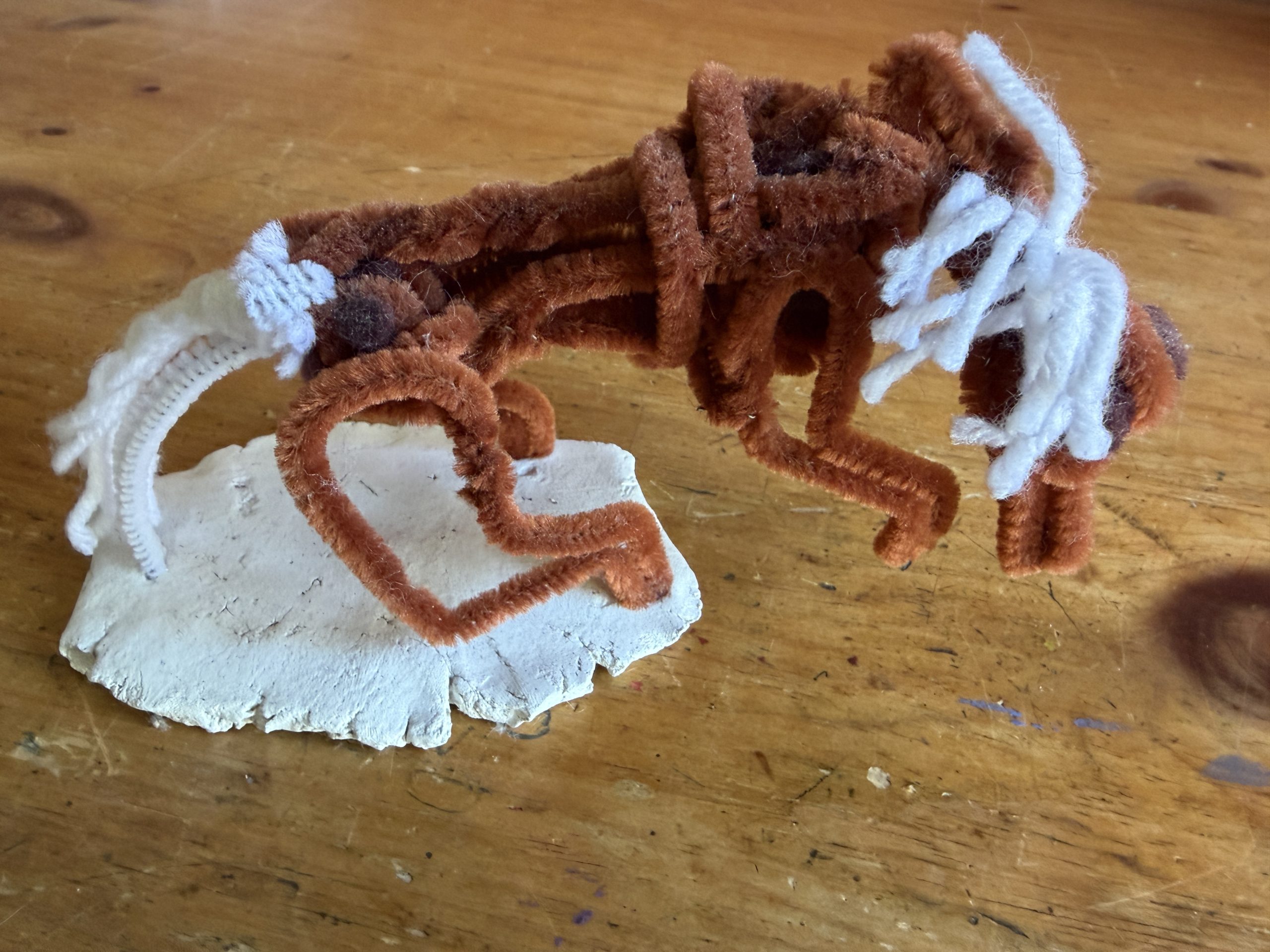
Look See: Poem of Spongy Bone

Sponge

Write a poem incorporating an interesting fact you’ve recently heard or read. It doesn’t necessarily have to be concerned with the physical sciences, although that is a great place to start. Andrea Gibson uses this device in her spoken-word poem, , using lines such as “‘Cause it is a fact that our hearts stop for a millisecond every time we sneeze / And some people’s houses have too much dust” and “It is a fact that bumblebees have hair on their eyes / And humans, also, should comb through everything they see.”


Example:

This Isn’t Happiness

They say that the average person laughs 15 times per day… each time I hear that, I wonder whether that includes the people whose cats have just died or who just spilled coffee on their blouse… I wonder whether if it includes those people who don’t really laugh, but exhale through their noses in unusually quick succession with laughter in their eyes… and I wonder whether those good laughs, the kind that rips your stomach raw and warms your eyes with saltwater, count as two (or maybe fifteen) of the kind of laugh you measure out during irritatingly semi-casual events.


Now, visit our . Can you spring from here to your poem?


-Constance

Posted on

The ABCs of Art and the Lively Lines of Picasso

Owl

Picasso was a master of line. Check out his . Try to make an owl of your own.

Now, think poetry. One of the significant ABCs of poetry is sound. Try to write a poem using only this one element. Try to repeat one sound throughout your poem, write a poem based on a singlular sound.

Example:


hoo of an owl

frosted stars twinkle

and the hoo of an owl whittles

 a tune on shadowy branches

-Kim & Constance

Posted on

The ABCs of Art and the Oeuvre de Léger

When I teach children to read and write, I begin with the ABCs—phonics to words to phrases to sentences and beyond. The possibilities are limitless.

When I teach children to appreciate and make art, I again begin with ABCs—line, texture, value, shape, and color.  Again, the possibilities are limitless.

When it comes to introducing the potential of shape in visual art, French artist, Fernand Léger (1881-1955) is always invited to the Guild. 

In art, we begin by looking. And for this Léger lesson we looked at one of his wonderful "studies" titled, Étude Pour L' Anniversaire, 1950 (pen and ink on paper):

Leger3

And after a thorough session of looking and discussing all the wonderful integrated shapes, the drawing began:


Leger1

The strokes were sketchy at first, until the apprentices were satisfied that their shapes echoed the original work.

Next, we inked in the drawing, erasing pencil lines as we went. 

Leger2

When the observing, sketching, and inking was completed, we stood back from our studies and discussed what happens next by exploring Léger works related to his study:

Leger4


L’ Anniversaire, 1950 (gouache on paper)

Leger5

Birthday, Two Women, 1950 (oil on canvas) 

Leger6

Birthday, Two Women, 1950 (oil on canvas) 


-Kim

Posted on

Moths of Summer

Moth2


In the scheme of biological classification, butterflies and moths fall into the Order we call Lepidoptera. Typically speaking, butterflies are brightly colored diurnal creatures. Moths are nocturnal and lackluster. But there are some exceptions. Leave it to Van Gogh to lend his artistic curiosity to the Great Peacock Moth that began with a sketch, and ended in a painting.

We began with a close observation of the artists palate, imitating each color with acrylic paint. We stored the colors in pint-sized mason jars knowing that the paintings could not be accomplished in one sitting.

The apprentice painters began by lightly sketching the composition in pencil on canvas, all the while marveling at Van Gogh’s marvelous composition.

Next came the brushes, the paint. The artists began with the lighter colors, blocking in the delightfully organic shapes, until layer upon layer, the moth began to emerge in its surroundings. The last colors to be painted were the deep blue-green outlines and the popping crimson accents.

I’d like to imagine Van Gogh smiling.

Metamorphosis is transformation.


Moth

-Kim


Posted on

The Tempo of Texture

Texture

Once again, I was inspired by the lovely textural drawings, especially, Tempo by artist, Vija Celmins as a starting point for exploring texture with my students:

"I really didn't fudge around or erase or smear. The graphite went on quite clear."

Texture in drawing translates the sense of touch into the sense of sight.

This particular series of drawings by Celmins  are drawing of the surface of the sea. While we did not have the luxury of sitting on the beach observing for hours and hours before diving into our drawings, we did close observations of photographs and film footage to explore the sea's texture. We used prints of the artist's work to study technique as we created our our own textural seas. 

Posted on

Observing Pumice

Observation

A few years ago Sara brought me a handful of pumice from Mount St. Helens and so I began the lesson with research of the volcano. We moved from there to the chemistry of carbon. When it comes to Observation, the possibilities are limitless. At last, directed the group of Observers to create a close observation drawing in conduction with the research in their Observation Journals—including a close focus section.

This little jar of fodder has proved more valuable than any textbook. This drawing by Marlo began with value—organic shapes of darks and lights. Once she was satisfied with the large shapes, she began to look for texture, began to mimic what she saw with varied lines on the page. Smaller still, she added dark marks to represent the deep bubbled areas on the volcanic stone. Most significantly, Marlo kept going—she kept looking. Perseverance is a skill that can not be be taught from a textbook.


Can anyone learn to draw like Marlo?

Indeed, YES!

Yes, yes you can. You can draw like Marlo, but first you must learn to observe.

Observation is a foundational academic. Learning to "look closely" across all domains of learning will strengthen the student's Creative Critical Thinking skills. For this reason, Observation exercises should be integrated into the weekly routine to transform this crucial skill to a Habit of Being. 

-Kim

Posted on

Worth 5-minutes of Your Time

DrawContour
Do you want your hands to learn to see?

Not possible you say?

Read on…

Wherever you are this very moment, look around, hone in on a cluster of objects.

First, look. Trace the edges with your eyes.

Next , grab a chunky marker and a piece of paper. Beginning with your eyes focused at the bottom of one of the objects, begin to follow the outline edges (very  s l o w l y),  moving the pen at the same speed and direction as the eyes. Do not look at the paper—keep your eyes off the page! No peeking! And, do not lift the pen! Try to make the pen in your hand "see" all the curves and bumps that your eye sees. 

Don't rush. Making a connection between the eyes and the hand is a slow motion exercise. Only when your eyes are back where you began can you lift the pen from paper to see with your eyes what your hand saw.

You might giggle the first time you try blind contour because it takes a few tries to sync the sped of eyes and the hand. But when you stop giggling, you will see that the lines achieved during a blind contour are unique, beautiful in their own way.

Remember, the ultimate goal of blind contour drawing is to practice "seeing" the world with your hands. If you practice often, you will begin to notice moments when these drawings are more realistic than the drawings you made using eyes only.  

DrawContour2

-Kim

Posted on

Lovely Lines

Matisse3

Did you know that, when it comes to art, every line has a personality? That the lifework of the master artist has a particular voice?

When it comes to the lines of Matisse, spare, weightless, whimsical, and articulate come to mind.

Line is a foundational element when it comes to the language of art.

For this reason we invited Matisse, virtually of course, into the Guild and invited the master artisan to help our apprentices explore the rich potential of line.

You can too.

Matisse


Matisse2


-Kim

Posted on

Added Value

Shell

“Drawing is based upon perspective, which is nothing else than a thorough knowledge of the function of the eye.”     -Leonardo DaVinci

We are designed to see and understand an object based on the relationship between the play of light and dark on its surface. Value is the term used to describe the lightness or darkness of an object. As light is reflected off objects, we interpret its attributes. When we draw a three-dimensional object in two dimensions, we are creating an illusion.

Over the years I’ve encouraged many a child to “look closely” by developing a specific Habit of Being—the Observation Journal. 

It is always best to begin observational drawing exercises by encouraging the Observer to see the contours or the “lines” of an object. To capture natural organic lines on the page is a lovely skill.

  Value1

As soon as this becomes a comfortable task, its time to encourage the Observer to look beyond lines that five the object its flat shape toward a close observation of the light and darks of an object. To accomplish this task, begin with a light contour adding a light value or tone by smudging then adding patches of medium darks and dark darks according to what the seer is seeing. The transformation is simple and stunning!

  Value2

And it’s never too early or too late to start. A six-year-old executed these drawings of the wonderfully sea-tumbled mollusk. Anyone can add value to an observation. 

-Kim

Posted on

I’m Thankful for Sandra. What about You?

Eggs

This is not a typical high school project.

This is a watercolor composition, a gift from a friend.

This is the prized possession that hangs in my kitchen with Mona Lisa’s ubiquitous gaze following my paces patiently, “Kim, you can.”

Lore has it that Sandra’s high school watercolor teacher offered an automatic “A” to anyone in the class who anyone who could paint an egg—a trememdously difficult task to accomplish well.

Now I’ve never imagined this teacher’s comment as a dare, but rather something more like an Eeyore-under-the-breath-utterance that he hoped might someday come to pass. I’ve never imagined snarky, or cynical, but more someting akin to longing, the longing to motivate.

And I’ve never imagined Sandra’s tackling of this teacher’s offering as anything other than a response to the Muse, a delighted response to the spark of imagination. Sandra simply said, “I can.”

The sheer whimsy of the composition is my proof. There is not one guile puddle in sight.

Thing is, you might look at this painting and respond, “No, I can’t.”

But you probably said that about tying your shoe, reading The Cat in the Hat, or adding five apples and three plums. But you can, right?

Not all children will grow up to paint like Sandra. Not all children will grow up to hypothesize like Einstein.

But many children who might have will not because they are not inspired to try. All children have precious potential. And this is why I spend my days encouraging children to press into their important work.

Children who are encouraged to engage in the right kind of practice over time develop Habits of Being and habits of being give us the gumption to say, “Yes! Yes, I can!.”

Who would have imagined that, all these years later, a teacher’s nudge and Sandra’s creative response would continue to resonate, “You can.”

I’m so thankful for my dear friend Sandra.

-Kim