Posted on

Out of Print

Three of the saddest three words are: out-of-print.

Perloo the Bold is a terrific fantasy tale for our Level two readers. I can't tell you how sad I was to learn this news! Immediately Memory Lane was flooded by my tears. 

Five years ago…

Five years ago my son Søren was 10 and Perloo the Bold was a book in print. He identified with and was truly inspired by the reluctant hero, introverted scholar of this wonderful fantasy tale. The two hit it off from page one. Looking back, I did not have to encourage Søren to bring shape to his creative ideas, I simply had to provide the opportunity and the space for him to be creative. His little fimmaking experience inspired by this terrific story, was one of the moments in time that blossomed his unique individuality.

Section 5 of our integrated Literature and Writing Discovery Guides will help you establish a tradition of creativity.

If you elevate imagination, provide opportunities to generate creative work, and your children will celebrate accomplishments that stand the test of time.

And now…

Three more words (sad to read): 

Perloo's been shelved!

Sad, but true.

While we will not discontinue selling our Perloo the Bold Guides, we will no longer be selling the books (you will certainly find this book in libraries, or second hand online for years to come). When we first received the news of the book going out-of-print. we stocked up. We even purchased as many gently used copies as we could find. But now, our supply is down to single digits. So, while supplies last, Perloo the Bold bundles will be sold for a mere $10 — a 50% markdown! So take your child on an incredible journey with Perloo and see where the path leads! 

Perloo The Bold from Taylor Bredberg on Vimeo.


Posted on

For Those Who Love Hats

It is one of those moments where you realize you’ve lost something precious. You know the moment. Shoulders shrugging. Eyes remembering. Breathless.

Enter the bear. The bear who lost something precious.

The bear who lost his hat is at once endearing.
The bear whose emotional gesture does not change.

Does not change that is until his epiphany, “I HAVE SEEN MY HAT.”

At which point he runs.
Runs to his treasured hat.

But this is not your typical illustrated story.
This tale is a tale with a twist.
A smart, thought provoking, hat-wearing twist.

The 2012 Theodore Seuss Geisel Honor book, I Want My Hat Back is a must read for children and grown ups too, but especially for wearers of hats.

And, when you are ready for the next hat book, you will want to read 2013 Caldecott Winner, This is Not My Hat, about a hat steeling fish.

And when you have completed these two enchanting hat books, you will have to wait for fall, when the trilogy is to be completed.


~Kimberly

Sent from my iPad

Posted on

Read a Book: The Nest


I was drawn to this book because of its intriguing illustrations. Looking closer I realized its look was intriguing because it was crafted by the likes of Jon Klassen

Think The Folk Keeper.

Think Skellig.

Now, think Coraline.

What happens when the hero of the story is an anxious child? One who cocoons beneath his covers each night and cannot commit to sleep until he’s recited his litany of gratitude—twice.

Add to this drama the fact the fragile protagonist has a brand new baby brother who is desperately ill.

What happens when that protagonist, once he’s finally drifted off to dreamland, encounters the queen-of-all-angel-wasps whose come to “save” the baby?

Unsettling?

Quite.

But for upper elementary and middle school level readers, this is a book worth reading to glean, among other treasures, its message of perseverance in the face of fragility is heartening.

The lexicon here is simple, but I found it deceptively and wondrously so.

For example:

“I knew I wouldn’t get back to sleep—didn’t even want to—so I pulled on jeans and a T-shirt and went outside to the backyard. It was early to be cool still, though you could feel the heat already clenched up in the earth and air, just waiting to unfurl” (70-71).

There is something magical about the way the author uses the words “clench” and “unfurl” to surprise the reader, to turn the tone of this statement.

And here too:

“I hated it when her eyes got wet. It made me scared. Like she wasn’t my mom any more but something fragile that might break” (41).

In two small sentences leading up to a third longer statement, we sense the drama of this family who is thin with worry for the sick baby. We readers are invited to experience the story’s main conflict through small turns in simple language. These three small sentences, all straight forward on the surface, demonstrate the inviting voice of this book. Here, the building of rhythm, the sensory information—those wet eyes—and, the last statement beginning with that awkward prepositional phrase, “Like she,” work together to give us a fresh understanding of a child responding to a mother’s tears.  

While it is not likely The Nest, by Kenneth Oppel will make it to our Level 3 or 4 lineup in the near future, it is a recommended read for those interested in magical realism, especially for those who like the genre best when it is pushed toward the realm of science fiction or fantasy as this book pushes in both directions.


-Kim

Posted on

Leonardo’s Big Idea


When Leonardo Da Vinci died he left the world more than 6,000 pages of ideas.

Think revolving bridge, winged glider, or self-propelled car, and you will begin thinking like Leonardo.

Now, think colossal horse, and you will most certainly be moving in the direction of the Renaissance man. Most of us have heard of Da Vinci’s Mona Lisa, but, Il Cavallo? Not so much. Read more here.

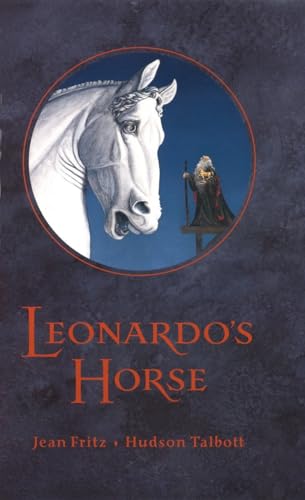
So this past week, we gathered to learn more of this marvelous dreamer, and to be inspired by his prolific idea making. And after reading Leonardo’s Horse by Jean Fritz (and ogling over the illustrations by Hudson Talbott), we got to work.

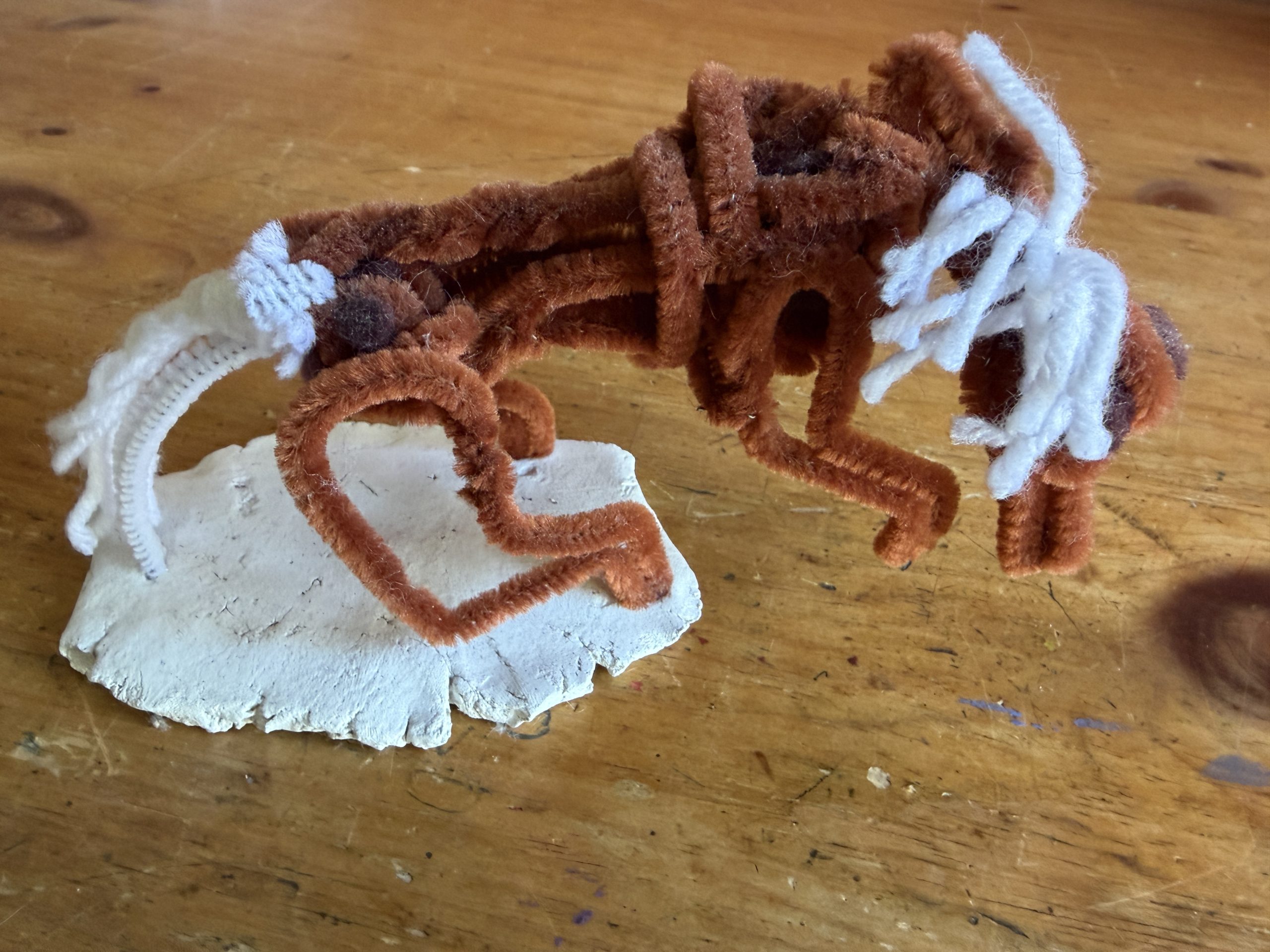
As I tried to imagine the complex engineering of the inner scaffolding, what Leonardo had to consider to create the clay model, let alone the bronze cast, I decided to focus our art making on the bones of sculpting. So from pipe cleaners, pom pons, yarn, and a lump of air drying clay we fashioned our horse.

Version 1.0.0

And what a horse. It’s not Leonardo. No. But it is certainly an inspired idea. And I imagine, this would make Leonardo smile. For he knew, better than most: “Art is never finished, only abandoned.”

~Kimberly

Posted on

Be Adventurous: Read a Book

Stowaway Bundle


So here’s what Karen Hesse knew to be true:

Once upon a time, in the summer of 1768, Captain James Cook sailed from England on H.M.S Endeavour, beginning a three-year voyage around the world on a secret mission to discover an unknown continent at the bottom of the globe. What is less known is that a boy by the name of Nicholas Young was a real live stowaway on that ship. Yep, eleven year old Nicholas Young really did stow away on Captain Cook’s voyage around the world! And what did Captain Cook do when he discovered the stowaway? Well, he commissioned Nick into the Royal Navy, made him assistant to the ship’s surgeon aboard the Endeavour. And, as if this is not enough, Nick was the first person on Captain Cook’s ship to spot New Zealand and later explored Antarctica.

Karen Hesse took this little bundle of history and spun a fictional journal filled with hurricanes, warring natives, and disease, as Nick discovers new lands, incredible creatures, and lifelong friends.

Be adventurous: read Stowaway!


~Kimberly

Posted on

The Best Christmas Read-Aloud EVER!

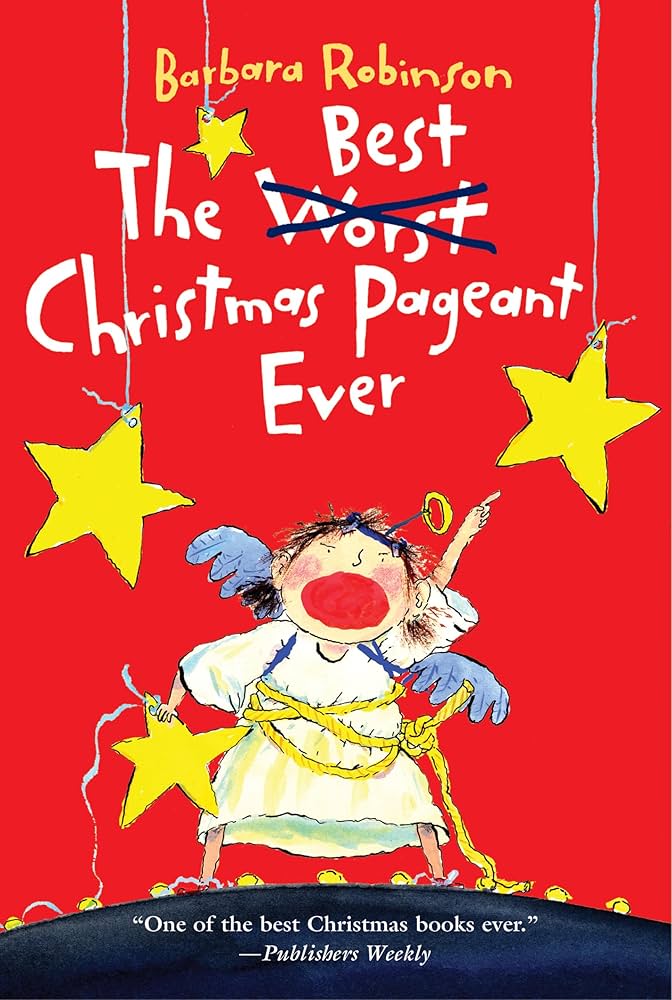
What happens when the worst kids take over the Christmas pageant?

The Herdman kids lie, steal, smoke cigars, swear, and hit little kids. So no one is prepared when this outlaw family invades church one Sunday and decides to take over the annual Christmas pageant. Thanks to the Herdmans, the pageant is transformed into the most unusual anyone has seen and, just possibly, the best one ever.

After reading the book, whip up some kettle corn and watch the film!

~Kimberly

Posted on

Stowaway with Nick

Stowaway Bundle

During the summer of 1768, Captain James Cook sailed from England on H.M.S Endeavor’s first voyage to explore the little known southern hemisphere. Eleven-year-old Nicholas Young was a stowaway on this voyage. True story.

Karen Hesse invites us to delve into this pocket of history alongside the stowaway and experience the astonishing adventure alongside Nick.

After reading, encourage your students to recreate the adventure in a meaningful and lasting way. Section 5 in our Literature and Writing Discovery Guide will present opportunities to move beyond mapping out the story details to identify the impact the story had on the heart.

My youngest son, Søren, spent significant time and effort researching the ship itself and committing his personal reflections to marks burned on wood. Creativity tied to a great story helps the reader retain and apply in ways where the essay falls short.

Captain Cook reminds us sky’s the limit, “Do just once what others say you can’t do, and you will never pay attention to their limitations again.”

~Kimberly

Posted on

After Books, Tinker.

Every time you finish reading a book, think tinker.

The word “tinker” comes from the middle English referring to people who engaged in the work of patching worn tin kettles. When I was young, tinkering was a crude, quick fix of any object regardless of the medium, be it tin, wood, brick, or fabric. My great-grandpa Ted was a tinker. I loved exploring the bits and bobble in his shop, creating assemblages of junk while he merrily tinkered. Back then tinkering was not considered an art form, it was something more akin to the household junk drawer. When I was young, tinkering was pretty much DIY before the acronym came to be.

Fast forward, I LOVE how the growing maker movement has brought a deeper meaning to this wonderful word. Nowadays, “to tinker” is recognized (rightfully so) as a significant step in the process of making, in the process of bringing shape to ideas.

What better way to deeply integrate and apply knowledge gleaned from great stories than to thinker an idea to shape?

So how to begin?

Think shoebox. Think wire. Buttons. Tags. Cork. Think ric rac and ribbon. Paint Glue. Hooks and chain. Clothespins and pompoms.

Think junk drawer and you are moving in the right direction for a tinker project.

So the next time your child reads a book, when it’s time for Section 5, download a planning sheet and think tinker time!


-Kim

Posted on

Journal BIG Ideas Inspired by Books

Taking notes is a foundational skill that will accompany your student through their entire educational journey and beyond. Even though there is no right way of taking notes, it is important to learn how to extract relevant and pertinent information from a text in a neatly organized, concise manner. This takes practice. As students are encouraged to practice over time the art of capturing the most important details from their reading, they will begin to recognize how the intricacies of a story fit into a larger picture. This is precisely how a Habit of Being is established.

When readers take note of character development, trace a setting, and watch a plot thicken, they are learning more than just the skill of recording facts, they are actually beginning to realize the potential of storytelling. Teaching students to dig into a story, to do the work of reading for meaning, enables them to discover how language has the power to communicate significance. Learning to take notes helps to lay the foundation for rich, clear, and organized writing.

Some might argue, when faced with a classroom of 30 students, or even when faced with one student sitting at a kitchen table stubbornly refusing to write, that teaching from a textbook that tells the student what to learn is an easier method than pulling teeth trying to nurture the independent skill of note taking. We would argue that learning to extract information from a story trains students to do the hard work of, not only attending to the details of reading, but more importantly to develop the skill of integrating knowledge into life outside of the book.

As students discover the details and framework that make a story great, they will apply this new-found knowledge to broader academic pursuits in all subject areas.

~Kimberly

Posted on

How to Read a Great Character and Become One

Characters do things. They feel things. They hear things.
They say things. They think things. They go places. They can walk, run, leap,
and jump. They may sit and rock in a rocking chair. They may just lie in bed,
sleep, and dream. But the important thing is that characters act. And it is
precisely these actions that show us just what kind of imaginary people characters
are—friendly, sad, nosey, happy, confused, angry, or inventive. And we need to
know because something always happens in great stories. Character determines
the outcome.

Earlier this month, my son Søren sat on the couch chuckling
to himself, turning the pages of an old favorite. It’s Lewis Carroll
re-imagined. Christopher Myers keeps the text the same but re-imagines the
beast as a basketball-playing-Jabberwocky. And the protagonist? Well, he
becomes a small boy with basketball-shaped-stars in his eyes.

What fascinated me about the scene was what happened when
the book was closed. My son smiled, got off the couch to rummage around the art
cabinet for paper, scissors, and tape. Silently he concentrated, cutting shapes
and connecting them until the characters emerged. Then he swept up the scraps,
set his characters to hold the gesture, and walked away from the table without
a word.

I know what he was up to. This was literary analysis at its
best. Carroll’s Jabberwocky is a larger than life, but there is no doubt that the
storm of neologism and nonsense qualifies it as a very difficult read. To most,
Søren’s hive of post reading activity might be deemed at best a responsive
craft. But Søren was actually deep in thought. This post-reading activity was
uniquely contemplative, was Søren’s way of unpacking Lewis Carroll’s poem and
the consequent reimagining of Christopher Myer.

And I know where Søren’s pondering will lead. It will lead
to an idea. Sometimes we begin with a study of someone else’s idea to incubate
an original idea of our own. So it might not be this week, maybe not even next,
but I’m sure Lewis Carroll and Christopher Meyer offered fodder that has been
sufficiently tucked away in the mind of my son.

~Kimberly