Posted on

After a Book Journey: Create


Reading a book is a journey. From Los Angeles to New York you’ll travel through the city and the countryside meeting wonderful people and seeing new and exciting places. Let the journey begin! (Hat tip to Reading Rainbow.) Take your 2nd grader on an Earlybird Destinations journey. They will not be disappointed.

Places you will go:
Miss Rumphius by Barbara Cooney
Abuela by Arthur Dorros
The Wonderful Towers of Watts by Patrica Zelver
Fly High, Fly Low by Don Freeman
Letting Swift River Go by Jane Yolen

And by the time they get to the end, they will not only have a deep appreciation for the places they’ve explored, but a heart full of fodder for their creativity to unfold.

Here’s a simple a simple lesson to help your students enact and elevate their creative responses to stories.

  1. To begin, if you are going to use a box (and boxes are a great way to begin, always paint the box). Give yourself a blank canvas upon which you can build your idea. A coat or two of gesso or acrylic paint will do just fine.
  2. Use more than 1 art medium. Here for example, using paint and air dry clay, use both folded and crumpled paper, live foliage, found objects, and so on.
  3. Be sure to anchor to the book where the idea originated by creating a meaningful Title or by posting quotes around the project.

You don’t have to be an artist to make your idea beautiful. And, think about it, ideas are meant to be appreciated. So, go on, beautify.

~Kimberly

Posted on

Ugly Vegetables

Use Blackbird & Company’s Earlybird Spring Literature and Writing Discovery Guide to plant a Chinese vegetable garden! The Ugly Vegetables by Grace Lin tells the tale of a little girl who helps her mother grow some very unusual vegetables while the neighbors are all growing flowers. Read how those ugly vegetables brought the neighbors together over a bowl of soup.

A little research will yield many inexpensive ways to use containers to grow vegetables.Check out our Pinterest page.

We’d love to hear your garden ideas too!

Leave a comment…


-Sara

Posted on

Rechenka’s Eggs

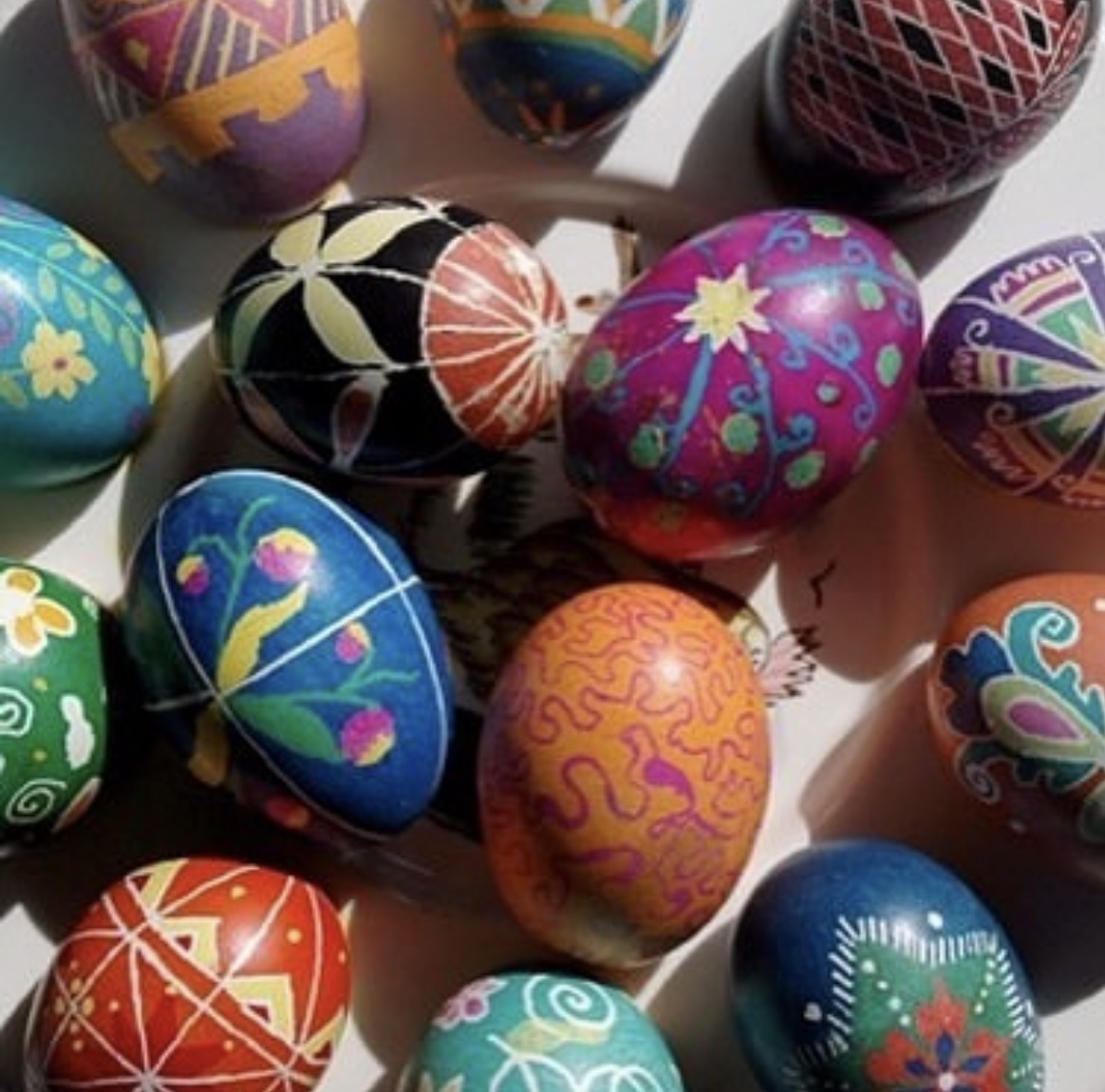
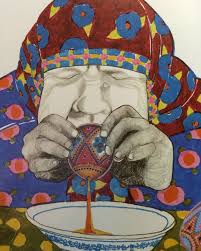
The fifth book in our Earlybird thematic Spring Discovery Guide is a Blackbird & Company favorite, Rechenka’s Eggs by Patricia Polacco is in our top ten favorite children’s books of all times! Beautifully illustrated this wonderfully told tale will introduce your student to the amazing art of Ukrainian Pysanky egg decorating.

This has been a yearly tradition at our house during Springtime. All the supplies you need can be found online. And if you can find a copy, be sure to watch Reading Rainbow (season 10 ,episode 4) to see Patricia herself creating a beautiful painted goose egg. …Magical!

“Behold the egg,” said Lavar Burton.

~Sara

Posted on

Earlybird for the Month of Poetry


April is just around the corner. It’s time to think poetry.

When is a flounder like a dish?

Who reads the Newt News?

How many lumps on the Bactrian’s back?

How many words rhyme with weevil?

What does the hawk remind the reader to be thankful for?

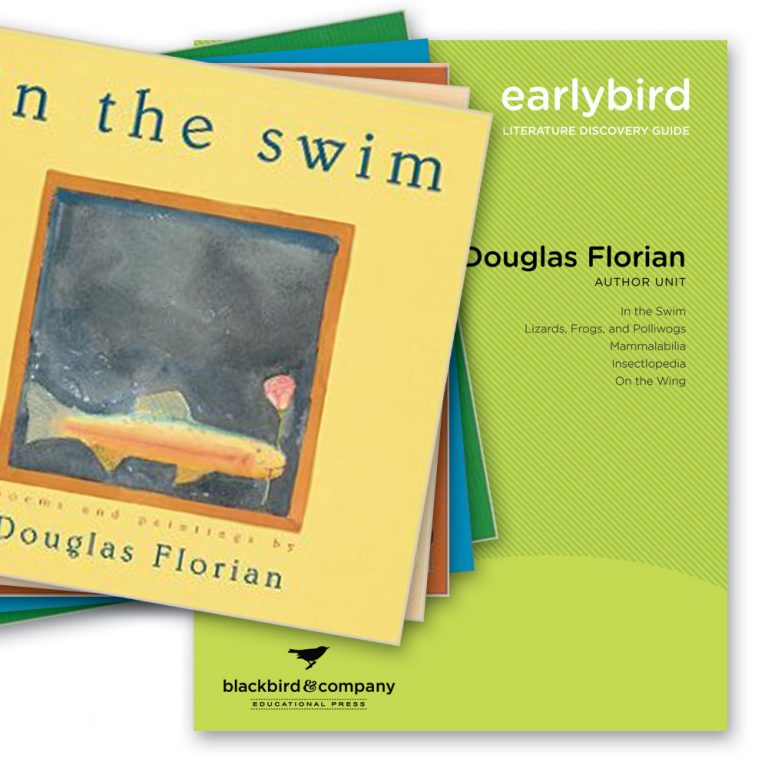
In our Earlybird Douglas Florian Discovery unit, students will explore beautifully illustrated collections of 21 poems. Each poem is pure silly fun blending science and whimsy to teach the reader about life in the sea, scaly slimy creatures, mammals, spiders, insects, and our fine-feathered friends.

Winner of the Lee Bennett Hopkins Poetry Award and recipient of an ALA Notable Children’s Book Award, Douglas Florian is the author and illustrator of many children’s books. He believes there is only one rule when it comes to poetry: There are no rules. Douglas Florian gives credit to his father as his first art teacher, who taught him to love nature. He begins his poems with research of the real thing and then uses that information to create an imaginary poem. Douglas Florian lives in New York City with his wife and five children.

Your 1st and 2nd grade students will not only write and illustrate poems inspired by the Florian poems, they will explore the traits of characters, acquire new words, and practice making sentences. More importantly, they will enjoy exploring the art of poetry.


~Kimberly

Posted on

Zinnia’s Flower Garden

Zinnia’s Flower Garden by Monica Wellington leads off week two in our Earlybird Spring Stories Thematic UnitThis is a great week to plant some flower seeds for your summer garden. There are excellent instructions at the back of the book on how to begin. Get a little notebook and keep a garden journal noting what you planted and how long each seed took to sprout. Take photos too! Wouldn’t it be fun to press the flowers come summer when they bloom. Here are some flower presses or you can make your own.
When you plant your flowers consider planting these five flower species that really help the Monarch butterfly survive on it’s long migration. Spider Milkweed (zones 5-9) blooms May-July, Chives (zones4-9) bloom April-June, Siberian Wallflower (zones 3-9) blooms March-May, May Night Salvia (zones3-9) blooms March-May and Common Milkweed (zones4-9) blooms June- August.
You will be richly rewarded with Monarchs in your yard and your children will be able to watch the lifecycle of thee amazing animals up close and personal.
-Sara
Posted on

Happy Birthday Ben?

NOT really…!

Ben’s family birth certificate says that he was born on January 6, 1706, but when the Colonies switched to a different calendar to keep pace with the seasons, his new birthday became January 17!

Founding Father.

One of five men who crafted the Declaration of Independence.

Once, the Postmaster General.

Founded the idea of the public hospital and library.

Organized the first volunteer fire department which led to his concept of fire insurance.

The architect of Poor Richard’s Almanac.

Inventor of the glass armonica, bifocals, swim fins, Franklin Stove, and, of course the lightning rod.

Honorary degrees from Harvard, Yale, University of St. Andrews, University of Oxford, and University of Edinburgh.

Spent 27 years of his life living abroad, crossing the Atlantic 8 times!

Earned his place on the $100 dollar bill.

All this more than 311 years ago!

Celebrate this life well spent one of two ways:

Ever wonder where inventors get their ideas? As it turns out, the great inventor Benjamin Franklin got his best ideas from a mouse named Amos (not really, but make for an adventurous historical fiction)! Consider this from historian David McCullah who read the book as a child:David McCullogh says “I can never be in Old Christ Church without wondering if perhaps some of Amos’s line are still there, back behind the paneling.” Pick up a bundle today. Who knows, you might cultivate a historian!

Early to bed and early to rise… you know the rest (I hope).

Benjamin Franklin was the youngest of seventeen children. He was the inventor whose thirst for knowledge led him to constantly seek to improve the lives of his fellow men. Follow his life as a leader in the American Revolution and ambassador to both Britain and France and learn why the French hailed him as the man who “tore the lightening from the sky and the scepter from tyrants.” Explore this an so much more in the D’Aulaire recounting of the life of Ben Franklin. And over the course of 5 weeks you student will not only be guided through the crafting of an original essay, but will discover just how valuable a life can be.


-Kim

Posted on

Knit / Purl through a Great Story

earlybird winter bundle

It all begins with the sheep.

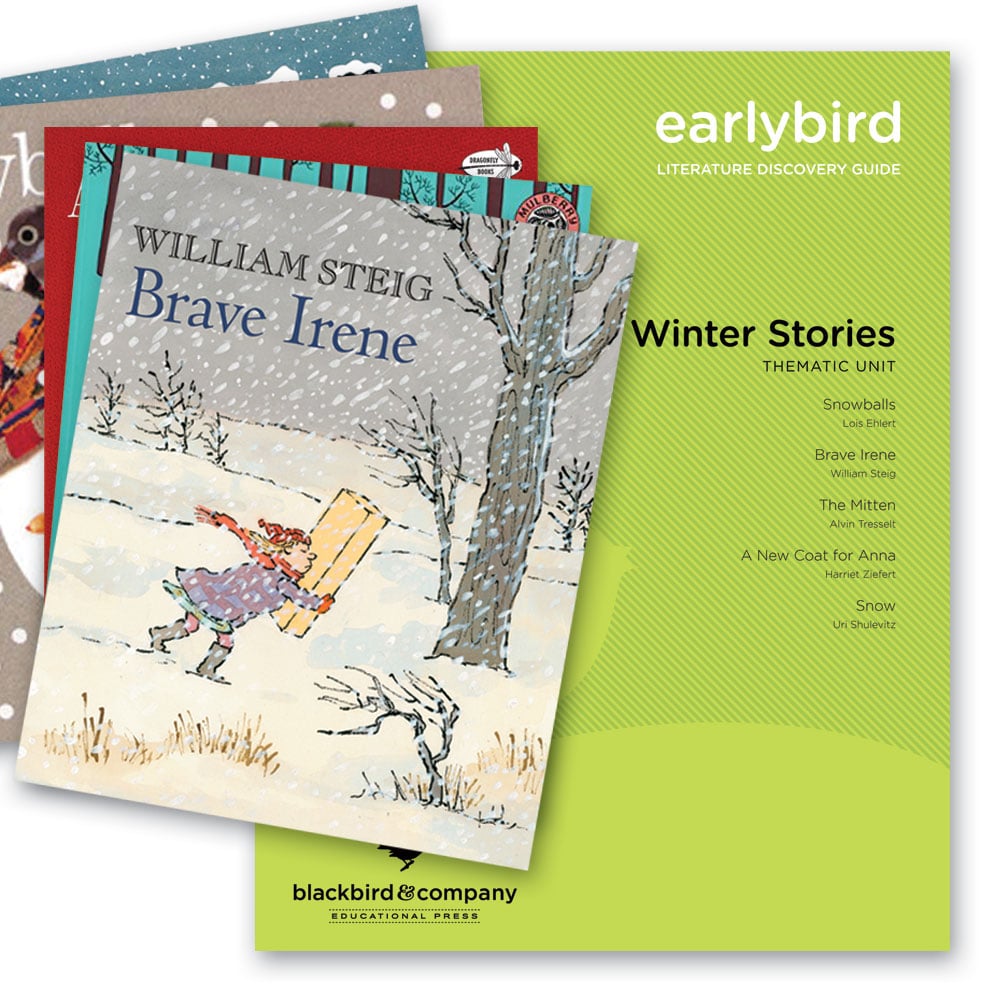
Our Earlybird Winter Discovery Guide’s fourth book, A New coat for Anna by Harriet Ziefert is a sweet story that helps readers learn just where a wool coat actually comes from.

A very fun project is to buy some white wool yarn and dye it with kool-aid packets from the market. Invite fellow students over for a learn-to-knit party!
new coat for anna earlybird winter book

Pick up an Earlybird Winter unit and encourage your students to journal their way through all the wonderful thematic stories.

~Sara
Posted on

Mitten of a Tale

earlybird winter bundle

Our Earlybird Winter Literature and Writing Discovery Guide’s third book, The Mitten by Alvin Tresselt is re-telling of a folk tale about all kinds of animals trying to fit in a lost mitten! Hilarious! We love the theme that common needs can bring people together.

Carry this theme forward by reading, Unlikely Friendships: 47 remarkable stories from the Animal Kingdom by Jennifer S. Holland.

If this book doesn’t elicit a mitten-full of,  “Oh, that is soooo cute!,” we don’t know what will!


-Sara

Posted on

Apple Pie and Books

earlybird fall bundle


I’ve never understood apple pie and cheddar cheese.

For me it’s apple pie and books.

One day, after a long walk, John sat under a tree to rest—an apple tree, of course. What better way to begin pie making than reading about John Chapman, the nurseryman who seeded much of our landscape with apples. From there, my recipe calls for Apple Picking Time by Michele Benoit Slawson about a girl named Anna who cares deeply about the tradition of gathering apples from those trees that Johnnie Appleseed so carefully cultivated.

apple piocking time earlybird fall book

But it’s still not time to go to the pantry. Not yet…

My recipe calls for How to Make an Apple Pie and See the World by Marjorie Pirceman. An apple is easy to gather from the market, but where did that apple come from? And the butter? The sugar? The spices? The answers call for a journey. And this little story guides the way.

how to make an apple pie and see the world earlybird fall book

Once back…

N o w  it’s time to go to the pantry. Peel some apples, remove the cores, and slice. Add a sprinkle fresh lemon juice to enhance the apple tang. Toss with sugar, cinnamon for spice, cardamom for warmth, and a happy pinch of nutmeg. Set aside. Cut the butter into the flour until the butter makes the flour sandy. Add water to the flour mixture, form a ball, then roll the top and bottom crusts. Fill the bottom crust with prepared apples, cover it with the top crust and crimp. Bake. Enjoy.

Nothing like apple pie and books.


~Kimberly

Posted on

Think Fall

earlybird fall bundle


I love fall. I love the sights. I love the scents. I love the texture of leaves crunching beneath my feet. I love the snap of ripe apples being twisted from branches.

And I love the stories of fall. With my youngest, Søren, I worked through our Earlybird Fall Literature and Discovery Guide three times (once at the beginning of kindergarten, once at the beginning of first grade, and once at the beginning of second grade)! Count them, three.I’m totally serious.

Three is an important number.

There is so much happening intellectually in the primary years—Kindergarten, First, and Second Grade. These first three years of school are when children are learning the basics of reading (decoding) and writing (encoding).

My son the kindergartener loved stories and he loved to draw. Copying words became an extension of this fun. We would read the stories together and chat our way through character descriptions. I used a hand-held whiteboard to capture his ideas so he could happily copy them as art into his journal. We enjoyed a fall craft each week, that was a given. When we read, How to see an Apple Pie and See the World, we made miniature apple pies. When we read the Scarecrow, we made a scarecrow doll. When we read Apple Picking Time, we drove for two hours to pick apples, taste apples, and after that, we made apple prints.

The second year, and the third after that, when I brought out the books, my son did not groan. My son was delighted to see his seasonal friends! The only thing that changed during these second and third passes was that my son was able to utilize his knowledge of language so far to encode his own ideas with me by his side. When we talked about the characters in Apple Picking Time, he was able to write a single words like “brv” for brave, and “frind” for friend to describe Anna. He was able to complete sentences from the word bank on his own. His journal time became an independent exercise too. We expanded our crafts to include a full-sized scarecrow, but we still made our traditional mini-apple pie.

During our third, and final pass at the unit at the beginning of 2nd Grade, Soren came loaded with ideas, “Mom, when we read Barn Dance, can I make the characters out of Legos? And when it came time for apple pie, he peeled and cut the apples on his own (with me hovering close by), measured the flour (dusting the kitchen with twice as much required for the recipe), and rolled the dough “all by himself” (for the most part). That year character descriptions included a deeper ingrained knowledge of phonics—friend was at last “friend” and “brave” was at last brave”—and a peaceful sense of independence. I knew that this would be the last fall we would work through the guide. Third grade would bring a new adventure with our Level 1 guides.

Soren did not work through any other Earlybird selection more than once. But he did work through them ALL during the primary years (kindergarten and 2nd grade). And I’m so glad he did. He worked through Level 1, Level 2, Level 3, and Level 4 too!

My son is now seventeen, and, looking back, I can say with certainty that it took all those years for him to develop and percolate his reading and writing skills. Literacy is an immensely complex, nuanced art. This year Søren is a high school junior interested in philosophy reading the likes of Kierkegaard (his namesake), Hobbs and Locke and Whitman. Who would have known back when we were picking apples? But I have no doubt in my mind that he is able to wake through the work of these wordsmiths because of the traditions we began back in kindergarten.

I am convinced that the longitude of utilizing our approach—the Blackbird & Co. approach—gave him the stamina and the skills to think deeply about great books and to formulate original, well-versed culminating ideas.

It’s still fall. Why not begin today? Snap an apple off the tree. The harvest season is small and precious.


~Kimberly