Posted on

On Fairy Stories and Fear

“If you want your children to be intelligent read them fairy tales. If you want them to be very intelligent, read them more fairy tales.”

                                                                                                ~Albert Einstein

I recently came across some of my daughter’s old writing. I believe she wrote it when she was 12 or 13. She is now 15 and a sophomore in high school. She was answering the prompt: “Why is writing important?” She learned that writing is more than just words on a page, it’s how people express how they are feeling. She believes for writers it’s like painting a blank canvas.

Words help us learn and feel or maybe better said, to learn how to feel.
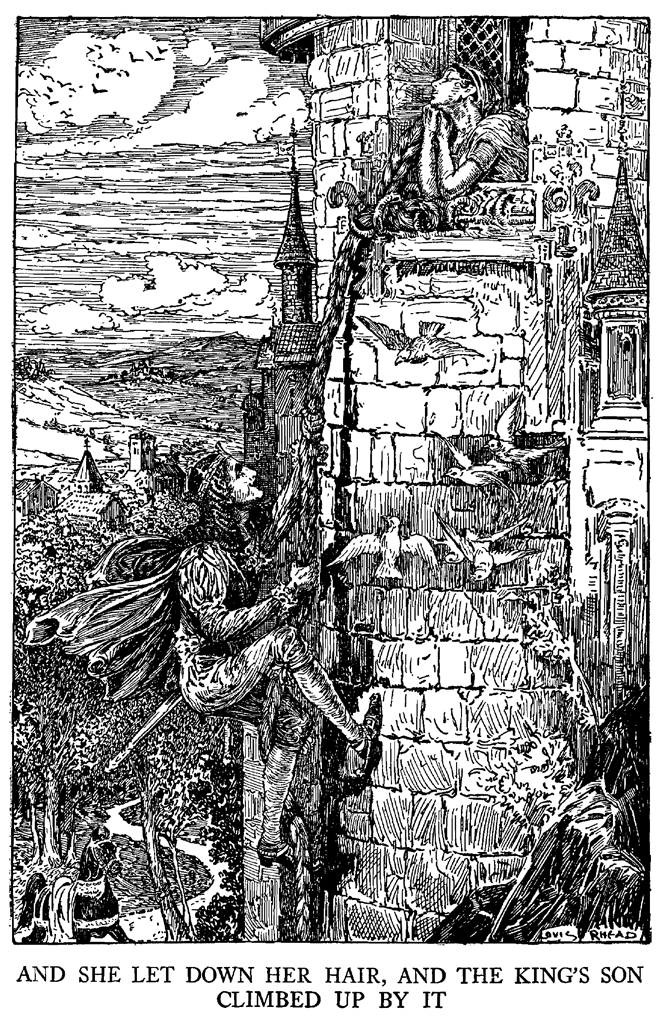
The other night I read to my son Grady before bed. We read one of Grimm’s fairytales, “Rapunzel”. Grady lay fully cocooned in his blanket, over his head, listening. As you probably know Rapunzel was taken from her family as a punishment for stealing the green, leafy, vegetable, rapunzel, from their neighbor’s garden. The garden belonged to a very powerful and wicked witch. The girl, Rapunzel was raised by the witch and was sent away from all people to live in a tower she could not escape, all alone. A prince heard her singing from the tower. He watched the witch visit her and saw her let down her long hair for her to climb. He did the same and soon after many months got to know Rapunzel and they fell in love. The witch discovered that the prince was visiting. She cut Rapunzel’s hair and then sent her far away, alone in a desert. The witch hung Rapunzel’s hair at the tower and let the prince climb up, but once he did, she was there to greet him. She scared the prince from the tower into a thorn patch far below, where the prince’s eyes were torn out. He wandered for years blind and alone until he wandered far enough. He found Rapunzel at last, drawn by her beautiful singing. This fairy tale ends well with the prince being reunited with his love, Rapunzel’s tears healing his eyes and them living happily-ever-after back in his kingdom.

Whenever I read Grimm Fairy tales to my children as they were going up, I always wanted to change what happened. I would naturally edit—the prince losing his eyes and wandering alone, the wolf eating Grandma. What I started to realize over time is that children, like being scared. But there is a difference being scared by books versus movies or television. With books readers can take it as it comes, with language aimed at a child’s imagination, suspense and simple elements building the world of the story. What if it’s actually important to hear that bad things can happen? We can feel pain. We can get hurt.  We can become resilient human beings.

Sometimes in life, in many ways, we wander blind for a period before we find the good, before we can see.

I want stories to end well. I want to eliminate the scary in the world because I don’t want to acknowledge the fear, I feel for my children in the world we live in today. As my daughter wrote so eloquently, these stories have taught me how to feel.

I recently read an article about the importance of being scared. Einstein was quoted: “If you want your children to be intelligent read them fairy tales. If you want them to be very intelligent, read them more fairy tales.” The intelligence that Einstein is referring to is existential intelligence.

Existential intelligence is defined as the sensitivity and capacity to tackle deep questions about human existence, such as the meaning of life, why do we die and how do we get there. The skills are reflective, deep thinking and design of abstract theories.

I saw an interview with President Obama years ago who discussed his great fear for young people losing this ability to be deep, reflective thinkers. In our fast-paced world we are encouraging more and more people to skim through reading material on electronic devices and not to sit and contemplate deeper meaning in what they are reading. In retelling Hansel and Gretel, nearly a century later, author Neil Gaiman asserts:

“If you are protected from dark things then you have no protection of, knowledge of, or understanding of dark things when they show up.”

The great polish poet, Wislawa Szymborska, wrote a reflection on the first edition of Hans Christian Andersen’s fairy tales which revolutionized storytelling:

“Children like being frightened by fairy tales. They have an inborn need to experience powerful emotions.”

Andersen took children seriously. He speaks not only about life’s joyous adventures, but about its woes, its miseries, its often-undeserved defeats. Andersen had the courage to write stories with unhappy endings. He didn’t believe that you should try to be good because it pays, but because evil stems from intellectual and emotional stuntedness and is the one form of poverty that should be shunned.

I have realized that throughout my life I have gone to great lengths to not feel or face fear. It’s not just the evil in the world but the great unknown. The what ifs. What if I am not smart enough, strong enough, talented enough, liked, or loved enough? What if I am not good enough?

Children’s author-illustrator Jon Klassen was asked how he comes up with ideas for his books? He says, “It’s just born of fear—of creating. It’s been a way of avoiding something I don’t want to do. And the solution to that avoidance lends itself to a story.”

My daughter went on to say that one of her favorite words she learned more about is the word, dumb. She learned it can mean temporarily unable or unwilling to speak. My daughter has a learning difference. She did not learn to read and write at the same developmental stages as her peers. She often felt dumb, as in stupid or foolish. My biggest fear was her feeling this way. So motivated to protect her and put her in her own tower far away, I kept her out of school and chose the path of homeschooling.

My fears came to reality as I realized I did not make her tower high enough.

The beauty in it all, like in our fairy tales that can be scary, is that we see resilience being born, we see paths that can have obstacles, we see hurts and feel fears. My daughter has been hurt, afraid to try, plagued by words. But she has also grown strong, wise, mature, forgiving and compassionate.  Fear comes with gifts.  Fear ear can bring us closer to faith. Faith brings hope, in the good, in mankind, in our individual skill sets. Fear and faith seem to go hand in hand and to be sheltered from one keeps us separate from the other. Today, I read to my kids the whole fear filled story of “Rapunzel”. I don’t have to fix stories for them, and I don’t have to fix life. Life is, we are in it right now, and I wouldn’t change a thing, because if I did, I wouldn’t be the person I am today and I happen to like me. Keep reading fairy tales and all stories that end in tragedy. Let your faith be bigger than your fear and enjoy the journey.


~Clare Bonn

Posted on 1 Comment

It’s April… Read and Write Poetry!

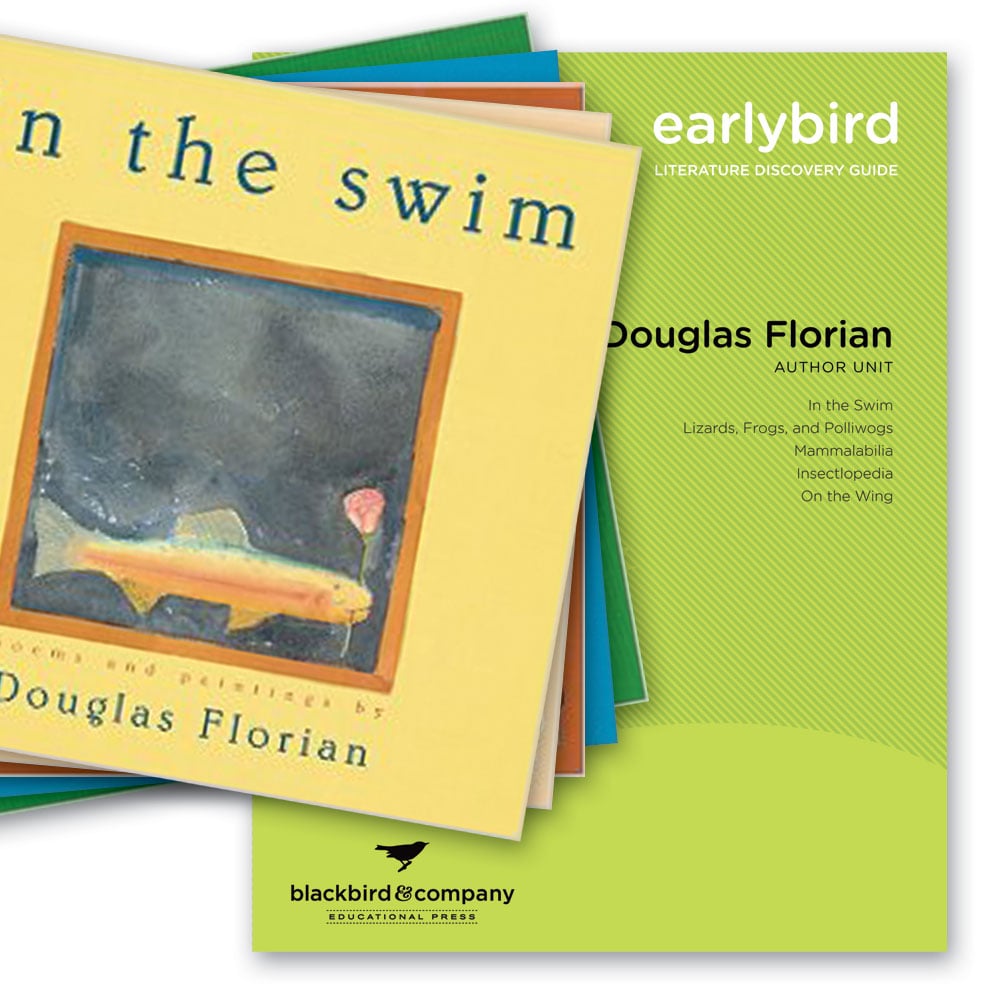
Try Douglas Florian.

Winner of the Lee Bennett Hopkins Poetry Award and recipient of an ALA Notable Children’s Book Award, Douglas Florian is the author and illustrator of many children’s books. He believes there is only one rule when it comes to poetry, that there are no rules. Douglas Florian gives credit to his father as his first art teacher, who taught him to love nature. He begins his poems with research of the real thing and then uses that information to create an imaginary poem. Douglas Florian lives in New York City with his wife and five children.

Try Love That Dog.

What is a poem anyway?

I don’t want to
because boys

don’t write poetry.

Girls do.

Meet Jack, who tells his story with a little help from some paper, a pencil, his teacher, and a dog named Sky.

Although this guide includes many of the same elements as the other Level 1 guides, such as vocabulary and comprehension, the format is unique.Each week, your student will be encouraged and guided to write poems in the style of each poet being introduced in the story.

Try Locomotion.

When Lonnie Collins Motion – Locomotion – was seven years old, his life changed forever.

Now he’s eleven, and his life is about to change again. His teacher, Ms. Marcus, is showing him ways to put his jumbled feelings on paper. And suddenly, Lonnie has a whole new way to tell the world about his life, his friends, his little sister Lili, and even his foster mom, Miss Edna, who started out crabby but isn’t so bad after all

Poetry bundleTry Exploring Poetry.

Discover the poet within you!

This unit will help you discover the craft of writing poems and the delight of reading poetry. Over the course of seven weeks you will be introduced to some of the basic techniques used by poets, explore excellent poetry, and practice writing original poems. Each section is designed to be completed in about two, one hour sittings.

Posted on 1 Comment

Let’s Talk Section 5

Each and every Literature + Writing Discovery Journal (the core of our language arts offering) sets aside a week to create and celebrate.

Don’t wait until week 5 to begin thinking about your Section 5 idea!

Why not start imagining during Section 2?

Make a plan.

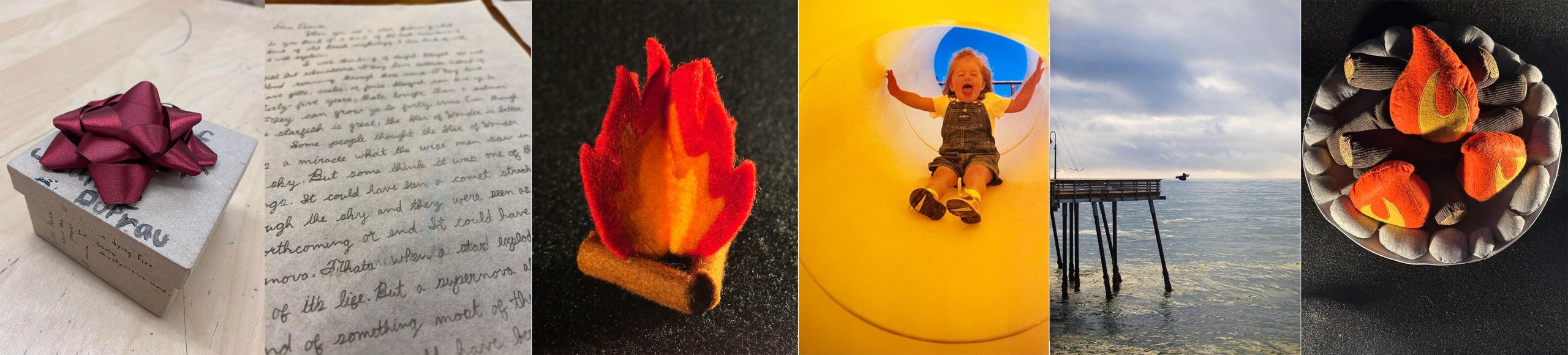
During Section 2, begin brainstorming. Download our free planning worksheet to begin brainstorming. Write down your ideas and, since your Section 5 will include a visual component, create small sketches demonstrating different ways you imagine your idea might take shape and what materials you might utilize.

During Section 3, choose the idea you like best and make a full-page sketch with labels that will help you prepare.

During Section 4, gather all the materials you will need to complete your project build.

After all this, when week 5 rolls around, you will be prepared to focus on creating a meaningful project. A project that you will surely be proud of for years to come. Check out our Student Project Gallery to be inspired. Send us photos of your completed project so we can add it to the gallery to inspire others.

Posted on

It’s Nearly Spring!

The first day of Spring is right around the corner.

Celebrate spring with your students! Blackbird and Company’s Early Bird Spring Stories Thematic Unit will help do just that! You’ll have 5 weeks of great reading and writing and projects at your finger tips.

First book in the line up is, It’s Spring by Linda Glaser. The cut paper illustrations are so adorable! It’s quite a fun project to paint a wide selection of colorful papers with tempera paint then after they dry use them to cut out a spring scene. Think of all the colors of spring like blues and greens and browns for trees and animals. Use the illustrations in the book as inspiration for your collage.

Or, another idea to celebrate the arrival of spring, from our very own blog archives,  write a haiku and make some blossom cards.


Whatever you decide, be sure to celebrate the blossoming!

~Kimberly


Posted on

Never Give Up!

One of the things I love about teaching the Pages classes is the opportunity to read and learn right alongside my students. I am endlessly amazed at their insights. There is never a class when they don’t point out something I did not see or interpret another way. This is the same thing I loved about homeschooling, watching the light come on in my children’s eyes as they discussed a great character in a book or a line they were chewing on!

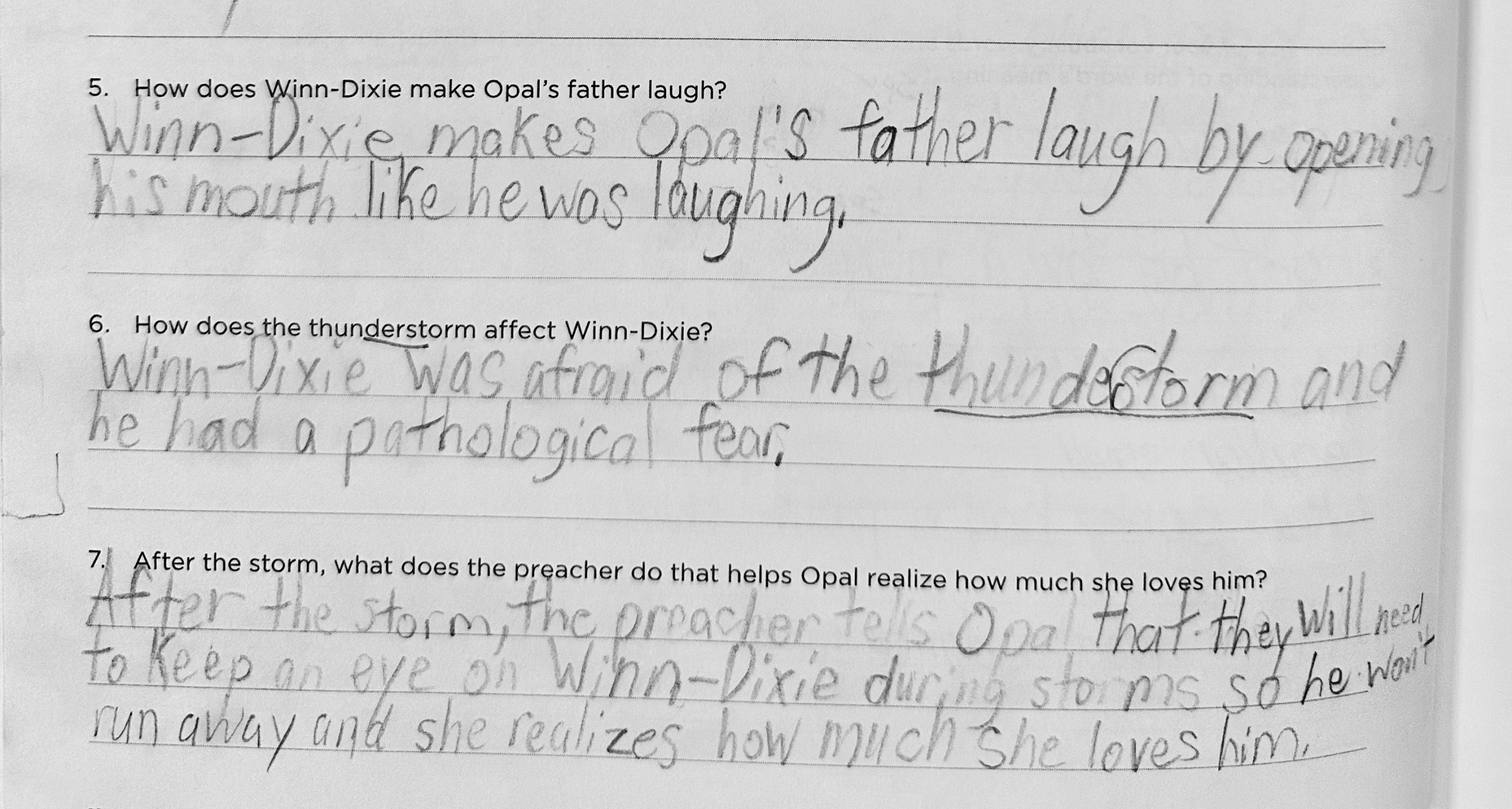
I started out this last Pages class as I usually do, discussing the author. This session we are reading, “Because of Winn-Dixie”, by Kate DiCamillo, which happens to be her first published book. Kate has led an interesting life. She was born in Philadelphia but moved to Florida when she was five due to health problems. She had chronic pneumonia as a child and was often hospitalized, which gave her plenty of time, (you got it) to read!

What I loved most about Kate’s story was the realness in her struggle to become a writer and the resilience it took to get her writing into the “right” person’s hands.

After graduating with an English degree and working lots of odd jobs, Kate ended up following a friend to Minnesota at 30-years old. She started working at a book warehouse (not her dream job). She also started waking up at 4am before her shifts to write two pages every day.—a habit that Kate has kept to this day. After four years she started submitting her books to publishers and received 473 rejection letters. Let me say that again, 473 rejection letters! That number has had me thinking and talking with my family and my students.

How would it feel to receive 473 rejection letters?

Would I personally give up?

Throw in the towel?

Would I think I don’t have anything of value to say?

And the answer I keep coming to is: I think I might. I am not sure my ego could withstand that number—473!

Resilience is simply the capacity to recover quickly from difficulties. To really go deeper, what are resilience skills? This is the list of traits that appeared when I looked it up:

Self-confidence.

Optimism.

Flexibility.

Responsibility.

Patience.

Problem-Solving.

Self-awareness.

It made me think that this is the list we should hang for ourselves to remind us of what is needed to push through the hard, ego-breaking experiences and get to the other side.

I am glad that Kate picked up that list and continued to submit her writing. Because of Winn-Dixie did finally get into the right person’s hand. It made it through sitting on one of these people’s desks while they were on maternity leave, only to be found again when the person returned and was cleaning her desk.

On top of this, her story went through multiple rewrites before it was published. Kate DiCamillo’s path to success was not an easy assent but more of a difficult and sometimes brutal climb. Gone are my assumptions that writing just comes easy to some. What replaced that thought is the thought that those who get to the top of the climb embrace that list of resilience skills and are courageous in using them.

Kate DiCamillo has gone on to publish 25 novels and has sold over 37 million copies. Four of her books have been turned into films and she is one of only six authors to have won two Newbery Honor awards. She spends 12-15 hours a week writing and 35-40 hours a week reading. I don’t know about you, but I will keep my resilience list hanging, right next to my pencil and paper. I will keep a warm cup of tea right next to the book I am reading. I choose to make it courageously to the other side, one page at a time.

~Clare Bonn

Posted on

Tracing Character Development

The Iron Giant.  Naima.  Hollis Woods.  Juan de Pareja.

We readers know they are people who don’t exist but we get involved anyway.

Why?

It’s complicated.
And yet it’s simple.
Characters inspire.
They inspire is to try.
They inspire us persevere.
They inspire us to be kind.
They inspire us to take heart.
They inspire us to hope.

Great characters remind us that we may be flawed but we are incredibly able. They remind us that we are not alone. Great characters offer truths that shape and spur us on.

Think Prospero.  Jane Eyre.  Sherlock Holmes.  Elizabeth Bennett.  Atticus Finch.  Jay Gatsby.  Gandalf.  Even Winnie-the-Pooh.

These characters, like us humans, are not one-dimensional. They are the tragically flawed heroes that inspire us to action—even if that action is simply a smile and a sigh and a moment of introspection at the end of the read.

We are here to help!

We are so happy to announce our new downloadable FREE Character Trait Decks to empower our students journalling in our Level 1, 2, 3 or 4 Literature + Writing Discovery Guides.

✧ ✧ ✧ ✧ ✧

“A bear, however hard he tries, grows tubby without exercise.”

~Winnie-the-Pooh

“All we have to decide is what to do with the time that is given us.”

~Gandalf

“Real courage is when you know you’re licked before you begin, but you begin anyway and see it through no matter what.”

~Atticus Finch

“We are such stuff as dreams are made on, and our little life is rounded with a sleep.”

~Prospero

✧ ✧ ✧ ✧ ✧

Generally Speaking, when it comes to understanding literary characters, actions speak louder than words.

Will they, like Frodo, carry the ring into Mordor? Or, like Edmund, eat the Turkish delight?

The main thing to keep in mind when considering the “character” of a literary character is this: Does the character act/think/feel this way all the time, or is this only a momentary response?

Just like real life, a character’s actions speak louder than words. Take Goldilocks. We’re all familiar with her adventure in the home of the three bears and her conundrum deciding which porridge to eat. On the surface, at first superficial glance, Goldilocks seem cute, an innocent little girl. It might be easy to describe Goldilocks as simply curious. Is Goldilocks always curious? Sure.

But might we infer that she is hungry or confused? If so is she always hungry? Always confused? And do these traits often lead her into all sorts of mischief? Maybe in the moment.

Let’s think again. What do the actions of Goldilocks within the context of the story really tell us about who she is?

Goldilocks seems greedy—eating food that does not belong to her without asking. She is for sure picky—dipping her spoon into every bowl before she finds the one she feels is “just right.” She seems selfish—freely taking for her own whatever goody presents itself. But is this who she is at her core?

These are aspects of character we gather about Goldilocks as we read her story. As we trace these traits throughout the story. We stumble upon more evidence later on when Goldilocks undergoes a similar situation involving the beds of the bears. In the end, these traits seem to be ingrained in her personality and give us insight into who Goldilocks is as a whole character.

The traits of Goldilocks are not necessarily pervasive, but I think we’d all agree her actions at the home of the three bears are greedy and picky and selfish.

When it comes to character traits, literary characters truly are the sum of their actions.


~Kimberly

Posted on 2 Comments

FREE Character Trait Decks!

I recently sent out a text to a handful of my adult friends who are life-long readers asking them if they have a favorite fictional character, and if they do, why? I was blasted with immediate responses and, frankly amazed by the well of insight:

“Raskolnikov, from Dostoyevsky’s Crime and Punishment, who starts off bitter, self-centered, and unable to see his own flaws, blames his hardship on others, and becomes a forgiving and self-reflective person by the end.”

“I love Samwise Gamgee. He is unassuming but willing to go where he needs to be, to silently be the support someone else needs. By the end he becomes even more brave. He is confident to stand for what he believes in, to take risks, and be a voice of hope in a time of darkness.”

“Marlow from Heart of Darkness. He starts off ignorant to the evils of the people around him but learns what evils humans are capable of. He is able to see through the lies he is told instead of assuming they are truths.”

“Ferdinand the Bull for not fighting the instigator. For staying true to himself.”

“Sirius Black. He was misunderstood. And a misfit. He stood for what he believed in. Even though his family was considered “evil”.
And he sacrificed. He was flawed and reckless. But good. Kind.”

“Aragorn is so overwhelmed and unsure of who he is despite the many prophecies declaring his life’s purpose. However, he pushes on because of those around him and his desire to serve them and truth.”

For me it’s hands-down Francie Nolan who, like the tree in Brooklyn, thrives under impoverished conditions—emotionally, intellectually, and physically. Francie demonstrates the tenacity that is seeded in us all. She works hard but doesn’t let work squelch her imagination. Francie is a hero in my eyes, ghost of the American Dream.

A Tree Grows in Brooklyn was my grandma’s favorite book. And this is saying something seeing that, as a young person, she read her way through the Santa Monica Public Library.

I never understood why this particular book tangled itself in her heart until I re-read it a few years ago and it dawned on me that my grandma saw herself in Francie.

Grandma’s father, for most of her childhood, like Francie’s, was an alcoholic (thankfully, he recovered, but much later in life). And she grew up in the tumultuous 30s, a product of Great Depression. fairly impoverished until later in life.

Pretty sure I know why, as an adult, just starting a family of her own, she fell in love with Betty Smith’s 1943 semi-autobiographical masterpiece. And, now, when I read this book (over and over for sure), I will see my Grandmother in Francie.

I am constantly struck by the unique insights readers bring to the characters they encounter. But I am also saddened that often times stories are simply read to get to the end and check off a box. None of the friends who texted back with lightning speed read to check off a box. They have spent a lifetime cultivating a friendship with books. And this is the heart we have built into our curriculum.

So where do we begin?

First, we encourage all readers to be the tortoise, not the hare. We believe that readers should never race through a story.

Second, never belabor a story to the point of derailment. You know what I’m talking about, those “literature” programs that slice and dice and teach and preach until the story is a sad, small reflection of its true self. We believe in balance. It is important to enable our students to read closely while challenging them to think creatively as they construct ideas. Along the way, when it comes to discovering the depth of a great character, we need to help our students acquire the skills necessary to articulate their observations.

Our program allows students to:
Keep a journal of character observations using rich character trait adjectives.
Develop a collection of words to describe the characters they encounter.

As we move deeper into fall, we’ve created a brand new tool to help students get started—our downloadable character lexicon. Simply print in color or black and white. Your student can cut cards to create a deck that can be used to describe the characters they explore.

Enjoy this little treat, and feel free to pass the link on to your friends.

~Kimberly Bredberg, MFA

Posted on

Worth Reading: Harper Lee


“Until I feared I would lose it, I never loved to read. One does not love breathing.”

So said Harper Lee.

Louisiana, 1995. Texas, 1996. Ontario, 2009. Mississippi, 2017. These are a few of the times and places Harper Lee’s To Kill a Mockingbird has been banned. The novel, published in 1960, has met widespread disrepute since the 1970’s. It has been taken off of bookshelves, removed from reading lists and syllabi, kept away from students’ impressionable minds.

Scout spends a good two-thirds of the novel listening. And so, over the course of the story she observes, offering her own opinions and views about matters but nonetheless clearly still a child learning to find and stand by her own beliefs. It seems like Scout’s transformation should be obvious and central to the plot of the story. But for me, her metamorphosis is subtle, as perhaps a person’s change of heart would be. Shifting and changing in slow movements like the hands of a clock, seemingly imperceptible but moving just the same.

Truth is rarely easy to swallow, rarely comfortable. And that is where many have issue with Lee’s novel. She did not shy away from truth. She could not, she lived it. But I would hope that many skeptics would change their tune if they took into consideration when To Kill a Mockingbird was written. Lee penned a present truth, calling into question the very framework of the society she grew up in. By doing this she challenges the reader to bring about a world that acknowledges those who are shoved into the shadows, speaks for those who are made silent, one that battles stagnate indifference.

Does Lee make the reader uncomfortable? Yes. But the reader should be uncomfortable. The reader should re-evaluate, doubt, wonder, squirm, reread. Without these discomforts, we will more readily repeat the atrocities we try so hard to forget.


~Kimberly

Posted on

How’s the Weather?

tornado bundle


Have you read Tornado by Betsy Byars? On this first day of winter, what a wonderful time to explore the mysteries of the weather! And “tornados” are a great place to begin. This story touches down at the cross section of pure fiction and science. Your 2nd and 3rd grade readers/writers will love the adventure.

When a tornado appears in the distance, Pete, the farmhand, gathers everyone into the storm cellar. How best to pass the time in this worried time? Tell a story! While they wait for the storm to pass, Pete tells the family about the dog dropped down by a tornado when he was a boy. Tornado, Pete’s pet was no ordinary dog. Tornado played card tricks, saved a turtle’s life, and had a rivalry with the family cat. By the time Pete tells all of Tornado’s lively stories, the storm has passed, and a very special dog has entertained another family.

PS … Don’t forget to CREATE your idea after exploring the story!

~Kimberly