
Rules? ...for SUMMER?
It’s summer and I am driving my twelve-year-old son and a group of his friends to Junior Life Guard practice at the beach. We pick up the twins and drive to another house to pick up three more. Gracie gets in the car still eating her breakfast. This gets the kids talking about “rules” for eating in the car. There is debate back and forth, should food be allowed, if so, what type of food? Crunchy? Smelly? Soggy? The list is endless, but all agree that mouths should be closed, chewing should be silent, mess should be cleaned up.
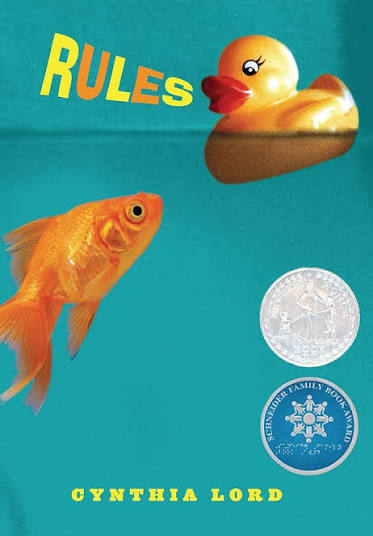
I’m currently reading a book called Rules by Cynthia Lord, in preparation for a brand new Literature and Writing Discovery Guide. The book is about a girl named Catherine who has an autistic brother named David. David has difficulty navigating social situations and needs clear rules to help him know what to do.
Some rules are easy, “Don’t stand in front of the TV when other people are watching.” Some rules are more complicated, “You can yell on the playground but not during dinner.” As you read the book you start to understand how many “unwritten rules” we give ourselves and others—rules that guide our thoughts, feelings and behaviors.
This made me think about the unwritten rules we give ourselves regarding summer. I know I have had them over the years. During my last online Pages Online class for the school year, the students had a whole discussion on what they consider approved summer activities. I remember graduating from college and being repelled by anything I felt was going to “teach” me something for an entire year!
But what if we change the rules? What if we write new rules for summer? Like: “Read everyday while feeling the sun on your face, your bare feet on the earth and your imagination running wild.” After all, when it comes to writing, we learn rules so we, as writers, can break rules! What if learning and play, curiosity, exploration, and fun for our little ones were all the same, not separate, not something to be avoided but embraced. I say learning can be all these things, and so much more—especially early learning! For this reason we are offering, once again, our Extra Play Tool Kit of Learning for TK through 2nd grade students!
Extra Playful Tool Kit of Learning
To begin, click through to discover our brand new collection of projects designed for early learners: Print Shop ABCedarian.
Gross Motor
- Have your student write the letters they are learning outside with chalk, or paintbrush and water. It’s okay to use big fun strokes.
- Have your student watercolor or paint letters -tracing a piece of paper.
- Have your student collect stones, sticks or leaves and make the letters with materials.
- Have your student write the letters in the dirt with sticks.
- Put the card with the word or sound out on the floor or tape to the wall. Have your student hop or run or dance to the sound you say.
- Have your student pick an animal and act like that animal while going to tag the card.
- Go on a scavenger hunt around the house collecting or naming items that start with the sound you are working on.
- Have your student make the shape of the letter with his body and make the sound.
- Have your student throw a bean bag on a letter sounds or words you have learned—use the cards from Hatchling or put words on bigger pieces of paper.
Fine Motor
- Glue buttons or beads onto a big block letter B written on a piece of 8 1/2 x 11 piece of paper.
- Engage in a beading activity with pipe cleaners.
- Draw wavy or zigzag lines for your students to cut, following the lines.
- Use an eyedropper and colored water to drop into little soap saver suction cups.
- Find pictures in magazines that start with different sounds, cut, and paste
I Spy Sounds in Books while Reading
Find pictures in books that start with the sound(s) you are working on: “Do you see anything on this page that starts with a ___ sound?” Give your child time and patience. If your child finds a sound but does not start with the sound you asked for respond in an encouraging way, praising the sound they did find. If the sound was “p” but they found “b” you might say: “Wow, you found a picture with the “b” sound, “ball” begins with this sound! Now ask if you can have a turn too. You can model finding the “p” sound. Look I found something round too, “pizza” starts with a “p” sound.
Moveable Alphabet tips and games
- The letters in the Moveable Alphabet are organized in alphabetical order to help students process as they see, feel, touch and do. Ask your student to find the letter (or letters) that makes the ___ sound. You can do this weekly after learning sounds, to practice and reinforce. Always have your children find the letters to match sounds and to also put away the letters when possible.
- Have your student take the letter sound you are working on or reviewing out of the moveable alphabet box. Have your student walk around the room or permitted area and put the letter in front of any object that starts with that sound. You can play this same game with first, middle and last sound. See game below.
- Put out letters of moveable alphabet in a sequence on the table and have letters that are missing. Have your student fill in the missing letters (examples: a__ c, d e __, g __i, j k __).
- Ask your student to find the first sound in a word. For example, try the word hat (this list can be the same word cards you practice with Hatchling Volume 1 or Volume 2).
- Ask your student to find the middle sound—this will be the short vowel sound (a, e, i, o, u) in closed syllable words. Closed syllable words have 1 syllable, one vowel, and are closed in at the end by a consonant or consonants. For example, the word “dog” or “stand” are closed syllable words.
- Play the Magic “E” game. Spell out any of the following words in the lid of the Moveable alphabet: cap, car, spar, her, them, kit, bit, pin, twin, rod, nod, hop, glob, hug, cub. Have your student add the Magic “E” to the end of the word and read with the long vowel sound.
- Play “My Mistake” with your student. Once your child has completed Volume 1C, CVC words (consonant/vowel/consonant words), you can play with the words you have learned and add new ones. Using the CVC objects, spell words and make mistakes. Ask your students to check your words and ask if they are correct. If they find the mistake have them change the letter to make it correct. For example, beside the object “bag” you spell “bog” with the Moveable Alphabet. Have your student correct your mistake.
- Play “What New Word” with your student. After completing 1C and 1H in Hatchling, Volume 1, see if your student can make new words out of words they have learned. For example, they learned the word “bag” in Hatchling 1C. How many words can they make if they take away the letter “b” and replace with a different sound (gag, hag, jag, lag, mag, nag, rag, sag, tag, wag, zag)? Let the words be nonsense or part of a longer word or names. Have fun and be playful. The point is you want your student to identify the correct sounds.
Have fun… the thing is, when it comes to summer, PLAY is learning! The possibilities are endless!
Enjoy the “rules” you write this summer!
~Clare