Posted on

How’s the Weather?

tornado bundle


Have you read Tornado by Betsy Byars? On this first day of winter, what a wonderful time to explore the mysteries of the weather! And “tornados” are a great place to begin. This story touches down at the cross section of pure fiction and science. Your 2nd and 3rd grade readers/writers will love the adventure.

When a tornado appears in the distance, Pete, the farmhand, gathers everyone into the storm cellar. How best to pass the time in this worried time? Tell a story! While they wait for the storm to pass, Pete tells the family about the dog dropped down by a tornado when he was a boy. Tornado, Pete’s pet was no ordinary dog. Tornado played card tricks, saved a turtle’s life, and had a rivalry with the family cat. By the time Pete tells all of Tornado’s lively stories, the storm has passed, and a very special dog has entertained another family.

PS … Don’t forget to CREATE your idea after exploring the story!

~Kimberly

Posted on

Butterflies of Winter

 Butterfly

When the cold of winter nips at your toes, remember summer with its warm, sunny days. While you are remembering, think butterfly. Remember how they come fluttering aglow with complex design—longings and swallowtails, and of course monarchs flitting through our blossoming gardens. Of course there is butterfly activity in every season, but when the rush of flitting color slows in the cold of winter, make a butterfly garden of paper and chalk pastel. 

Here's how:

For this project we began with a goodly weighted bristol, with a bit of a tooth. Pastel paper is best, but costly. Drawing paper will do just fine too. Begin by looking closely at a real butterfly. Next, study the anatomy of a butterfly. Pay attention to the symmetry and the complexity of these wonderful creatures.

ButterflyReal


Butterflyanatomy_lg

You will need to draw the shape of two forewings and two hindwings onto the paper you have selected. After drawing, you will need to cut out the wings and fold them horizontally in accordion folds. Unfold the wings. Using chalk pastel, decorate the shapes with butterfly details. Smudge some of the color, but leave some sketch marks. Be creative, but try to keep your creativity tied to the butterfly motif.

Butterfly5
Next, cut a thin, very long triangle shape of paper and roll it up like a croissant. This will be the head, thorax, and abdomen of the butterfly. Use a hot glue gun to attach the forewings and hindwings to the body. Finish the butterfly by blending the wing colors to the body using similar colors of chalk pastel. Attach a bit of wire for the antenna. Cut a length of the wire depending on the size of the butterfly you created, bend to a V, add some beads to both ends, and attach to the head of the butterfly with a drop of hot glue. 

Continue this process to create a rabble of butterflies. You will be amazed how wonderful these creatures akin to the real thing will brighten a winter garden window.

Butterfly4

Butterfly2


-Kim

Posted on

Forget the Flashcards: Bake a Cake

IMG_7725

One of the best ways to learn to think is to learn about the tools available! empowering your students to learn about the parts and functions of their brain will inspire them to tap into the vast potential of this amazing frontier. We are not left-brained or right-brained; we are “whole-brained.” Get to know how this happens by doing some research and and you will be awestruck.

Your brain weighs about 3.3 lbs and is 73% water.

Your brain contains roughly 86 billion brain cells.

All the messages sent by all phones in the world taken together number less than those sent by your brain.

Your brain information travels up to 268 miles per hour.

Your brain works faster than the fastest computer in the world.

 So don't delay… learn about the parts and functions of your brain so you can tap into your potential!

And after you do, bake a cake to celebrate what you learned. You will be surprised what you learn in the process!


-Kim


Posted on

Chasing Lines Slowly


Learning to follow a line is a skill that will teach students to think well. This skill is mathematical, involving spatial recognition, fractional and proportional relationships, and directional measurement.

To complete this project you will need colored pencils or markers, a sheet of heavy drawing paper or a drawing journal, and a quiet space to enjoy the process.

  1. Look carefully at the drawing by Henri Matisse.
  2. Divide your drawing space in your mind into four quadrants.
  3. Choose a quadrant to draw one of the fruits that you will then anchor all the other fruits and leaves to. Be sure to consider how much space the fruit demands and where the fruit is settled in the quadrant.
  4. Swap colors and draw a shape that connects to the first shape.
  5. continue like this until the drawing is complete.

Remember, teasing students that good things take time is an important lesson. This lovely drawing was completed by a 3rd grader in three sittings.

Ready, set, go (SLOWLY)!


-Kim

Posted on

Connect the Dots: Craft a Letter


What do the circulatory system, WW1, the life-cycle of a star, Samuel Adams, great characters from exceptional stories, and a single spring from the workings of an ink pen have in common?

Why human potential, of course.

Interdisciplinary endeavors provide the grand opportunity to perch students high above the realm of facts and mechanics, inspiring them to weave connections across disciplinary boundaries as they reflect on common themes, symbols, and purpose.

What better way to fortify learning?

An interdisciplinary endeavor challenges students to weave new knowledge to what is previously known. Challenges students to assemble and construct as they learn ignite curiosity.

And so letter writing is a tradition in my writing workshops. Letters crafted by hand. From the pencil markings scratched on paper to polished draft. The kind that take nearly an hour to read, to seep in and savor. Letter writing empowers student writers to share the connections they are making. Interdisciplinary connections. Connections at the intersection of acuity, creativity, and and ingenuity. But most important, engaging in the art of letter writing demands authenticity. Letter writing requires writers to raise their voice.

This year, letter writing at the Guild coincided with a wonderful Miss Lori (our Historian in Residence) lesson. When introducing students to The Committees of Correspondence, she first asked for a definition of the word correspondence and was met with the chirp of crickets. Not one could conjure a working definition.

“What does it mean to correspond?”

Crickets.

I imagine she stopped for a bit of word study before proceeding: “To correspond is to communicate by exchange of letters. Correspondence is a letter or letters that passes between correspondents (the letter writers).”

“Ohhhhhhhhhh!”

This set the stage for Miss Lori to continue, “The American Revolution would have never succeeded if it weren’t for letter writing.”

Think Samuel Adams. Back in 1772, he organized a network of letter writing—The Committees of Correspondence—to keep colonists informed of British actions against the colonies, and to plan a concerted response. Letter writing united the 13 colonies and girded their loins for revolution.

Letter writing is a terrific domain to teach a writing truism: one idea leads to another. And when it does the reader is engaged, intrigued, mesmerized.

At the Guild, letter writing exercises are a grand opportunity to inspire young writers to connect the dots, dots that they might not have imagined could be connected. And as the correspondents weave this disparate knowledge to one, they bring permanence, relevance, and significance to what is learned.

Trust me, it requires courage to weave the circulatory system, WW1, the life-cycle of a star, Samuel Adams, great characters from exceptional stories, and a single spring from the workings of an ink pen to a cohesive letter of consequence. But the task is worth the effort. So pull out some paper, think about this past year’s learning, connect the dots.

Letter writing is kindly, generous, revolutionary.


-Kim

Posted on

Rothko and El Greco Mashup

Rothko

It began back in November with our iModannari after Rothko who  thought that the greatest paintings were the ones that captured a moment of stillness. What better way to enter into the Thanksgiving season.

Rothko painted rectangles. But he blurred the edges so the shapes seem to float. the saturations of color he offers seem veiled somehow, adding to the contemplative nature of his work.

He was born at the dawn of the 20th century in Latvia and when he was ten his family emigrated to America. Later he studied painting at Yale University and then became part of "The Ten"— a group of expressionistic artists who rallied behind abstract art.

After returning from the Thanksgiving break, we didn't have the heart to white out the sidewalk patch dedicated to iModinnari, so artist-in-residence, Taylor suggested we try a mashup.

ElGrecoMary

In steps El Greco—painter sculpture, architect of the Spanish Revolution. Born in crete in 1541, and trained to become a master of Byzantine style art. But, as with all legendary artists, he soon departed from that style, breaking rules to bring shape to a voice that is uniquely his own. His expressionistic, dramatic style influence the likes of Picasso, and reached into the work of Rothko.  

Rothko_paradox

Are you catching the vision? Use the Rothko as the backdrop to host our interpretation of the El Greco.

ElGreco

The result is miraculous! Took my breath away. The students were able to capture something of the El Greco, while simultaneously letting the Rothko shine through.

Chalk pastels, a willingness to get your hands dirty, and the patience to look closely to discover how shapes and lines, and darks and lights work together to communicate an idea—that's all there is to it. You, too, can make a mashup. Step outside and give it a try. And if the weather outside is frightful, find a large piece of cardboard (the size of a refrigerator box works great), prep it with a couple coats of white tempera paint, and off you go!

 And keep Rothko in mind as you do: “Pictures must be miraculous"

Enjoy the miraculous process of making art. 


-Kim


Posted on

Master Class: iMadonnari

IModinarri

It's December in California, so we took to the great outdoors to tackle a master class. The mentor? None other than Fra Angelico. 

FraAngelico

Before tackling this Fra Angelico project, take a bit of advice from Leonardo: "It's easier to resist at the beginning than the end."

Even though this project looks extravagant, you will be able to resist the urge-to-resist at the beginning if you take the time to look.

Look closely at the top of the "canvas" where the profile line begins. Is it directly at the half-way mark, or closer to two-thirds? Trace the profile contour as it gently falls in a curvilinear manner toward the bottom left-hand corner.

When placing the eye, look at where it sits on the "page" in relation to the forehead and nose. How many fractional parts does the eye represent. In other words, how many eyes would fit in a line from the left-hand edge and the bridge of the nose?

What kind of curve is the eyebrow? And what kind of strokes is it made of.

Look at the color of the lips. Notice how the color is used to warm the cheeks with a soft smudge.

Ask and look. Continue to ask and look.

If you do, you will have conquered the most difficult part of the project at hand. Drawing is more about engaging in the process of looking than anything else. Beginning at this beginning will embolden you to press in to the end. 

This work began by students blocking out a great section of our Guild courtyard patio (5 by 6 feet). Next they painted the entire space with white, water-based tempera paint to create a canvas of sorts upon which the drawing could take shape. Next, the students studied the placement of the line that divides the drawing— the great contour of the angel's silhouette. And when they were certain of the line, the laid it down using a flesh-toned soft chalk pastel. They continued drawing and shading the profile, using their hands to smudge and soften details. Once satisfied with the angel, the students painted the great halo using gold tempera.

After three hours of joyful focus, the work took on incredible detail, materializing on the cement with the depth of an oil painting and the essence of the original.

So begin at the beginning and enjoy the persist. Persist straight through to the end!

-Kim 

Posted on

Celebrate Color: Happy Birthday Kandinsky!


IMG_7801

Celebrate the many colors of Wassily Kandinsky and practice the math of concentricity in the process.

Kandinsky connected color to sound. What an awesome metaphor: "The sound of colors is so definite that it would be hard to find anyone who would express bright yellow with bass notes or dark lake with treble notes." 

For this project, mix up jars of brightly colored paints that would make the treble notes sing with delight. We used Kandinsky's palette as a starting point:

Kandinsky

Always remember that the colors you mix will be so much more interesting than the colors straight from the tube. For example, when mixing red, add a splash of yellow to move it towards red orange, then mix a drop of the opposite of red orange, blue-green to tame it down a bit. 

IMG_7883


When you are ready to paint, think outside the box. This project could certainly be accomplished on canvas, but we decided to pick up some eucalyptus slices at our local craft store to create a puzzle-like effect.

After the project is completed, step back from the work and you will see, when it comes to art, Kandinsky is right: "Everything starts from a dot."


-Kim

Posted on

Read a Book / Make a Map


When is a family like a map?

Take a virtual trip to Paris to explore the metaphor!

This is the story of an old Parisian named Armand, who relished his solitary life. Children, he said, were like starlings, and one was better off without them. But the children who lived under the bridge recognized a true friend when they met one. And it did not take Armand very long to realize that he had gotten himself a ready-made family- one that he loved with all his heart, and one for whom he would have to find a better home than the bridge. Trace the steps of Armand and the children through the streets of Paris and discover just how a family if like a map.

After discovering this mystery make a diorama, or, create a map to document the journey.


~Kimberly

Posted on

Great Ideas: Be Inspired by Books

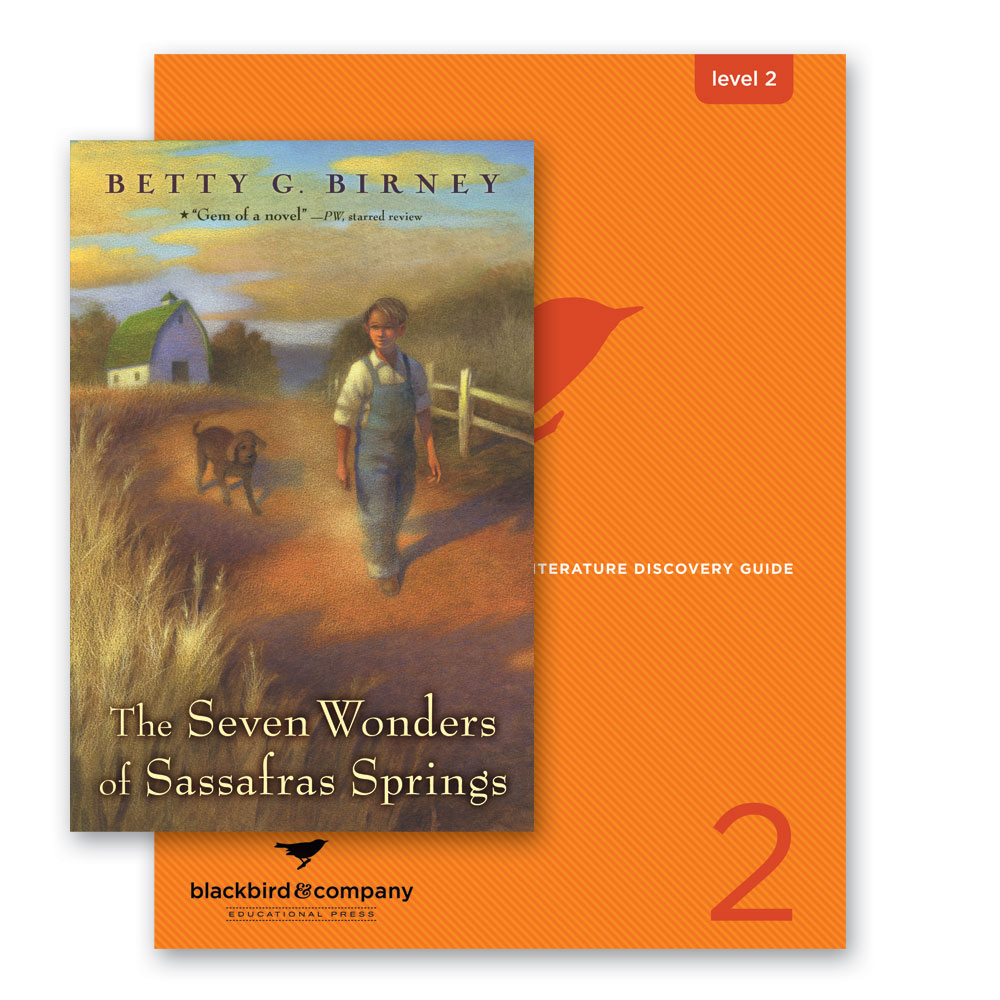
seven wonders ak

Every journey through a Blackbird & Company literature discovery guide ends with a final project for the student to create and present. It’s usually everyone’s favorite activity and it gives them an opportunity to extend their time with a story after finishing the reading of it—to make connections and create and think deeper about what a story might be saying or teaching them. A list of possible projects are provided in each guide with options to help build making, research and presentation skills. But the best ideas are swirling inside YOUR students! Encourage them to step outside the story and imagine the possibilities. And when you do, you will BE AMAZED!
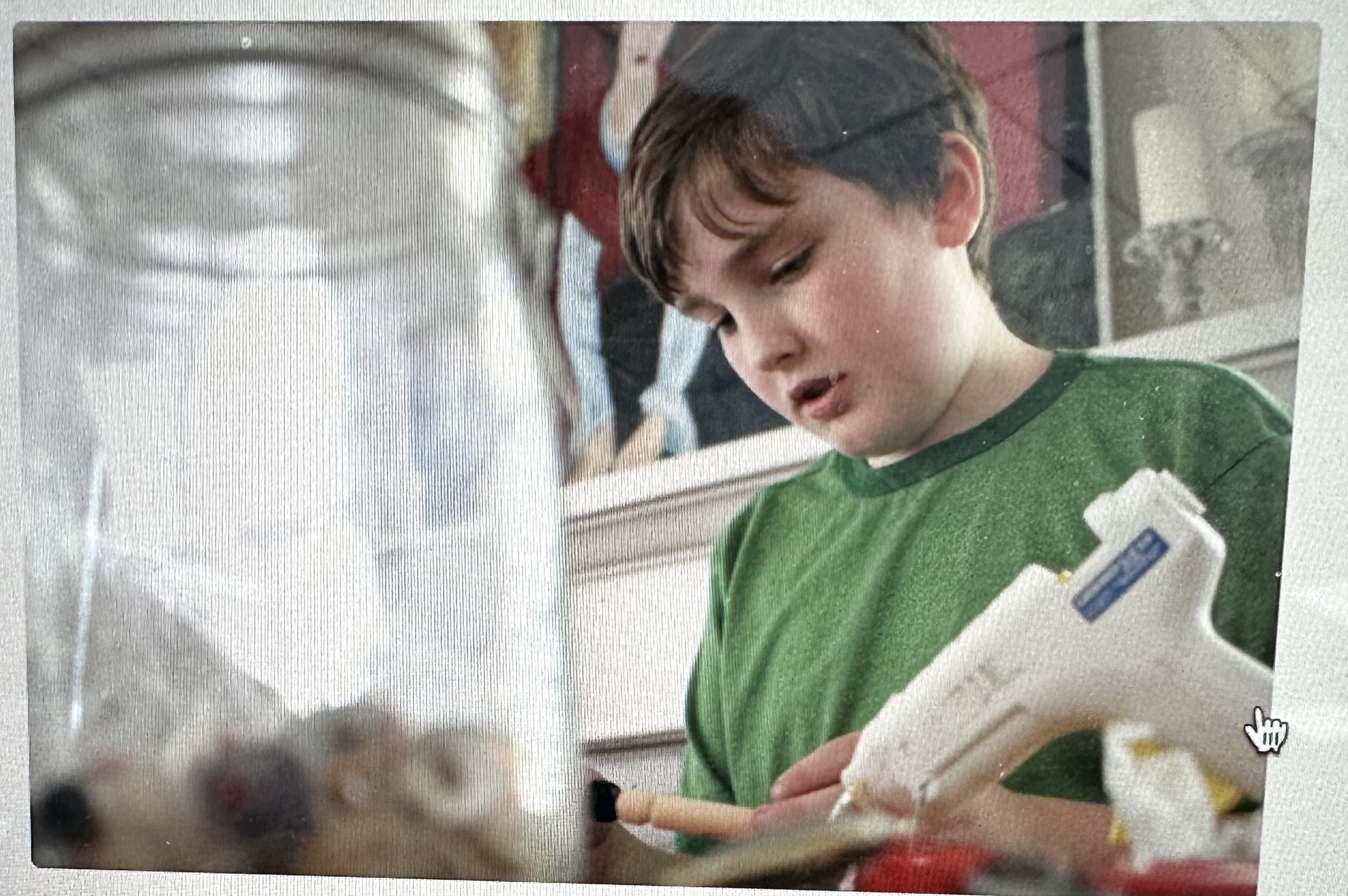
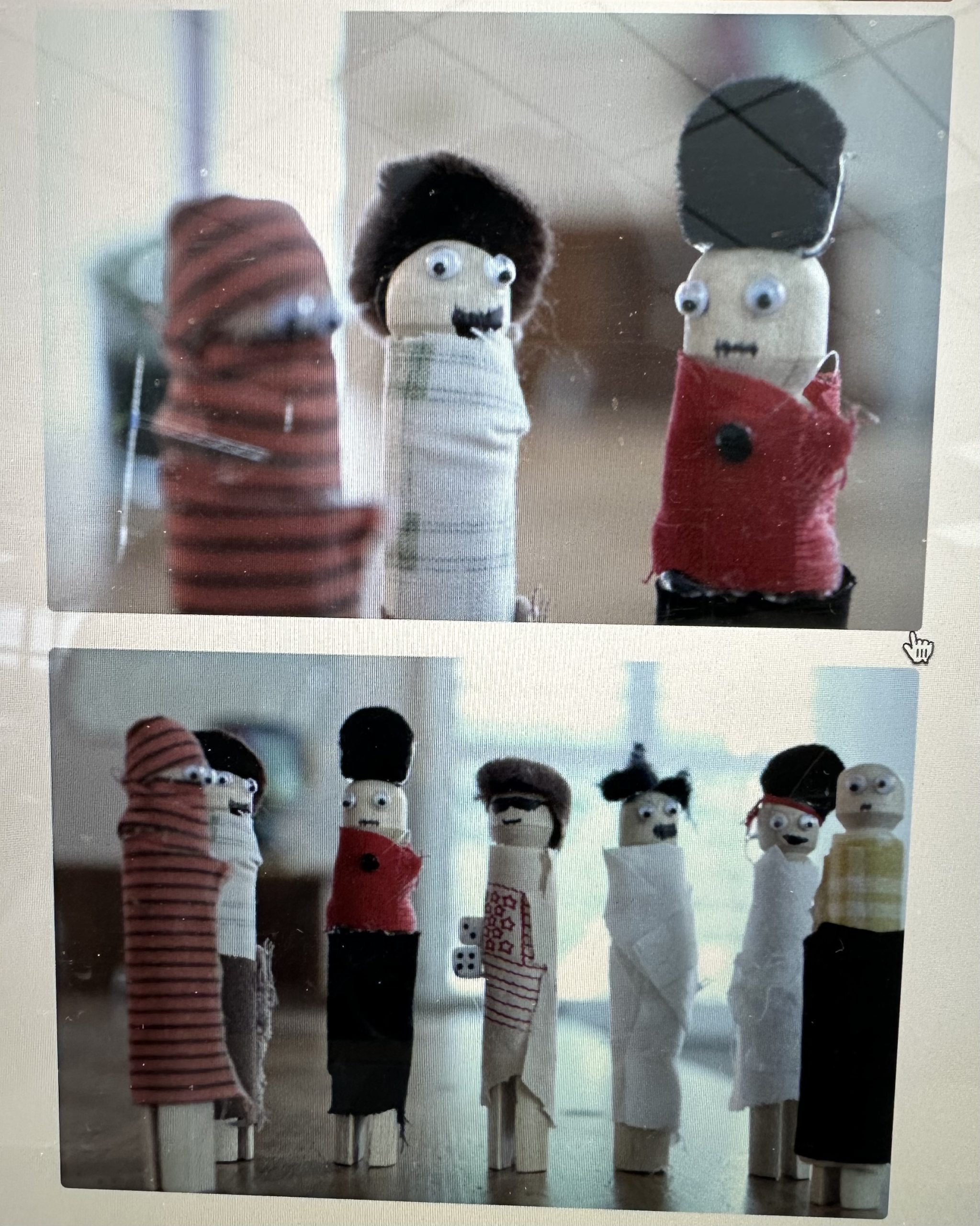
For The Seven Wonders of Sassafras Springs, Søren was inspired to create clothespin characters. In his words…

“For my project I made 12 different clothespin dolls. I chose to do this because Aunt Pretty had a clothespin doll collection and it sounded exciting trying to make my own. This was a difficult but fun project….The best part of making them is probably getting to use them afterwards!”

Creativity does not need instruction, it needs guidance. A great teacher is like a great pair of training wheels. For this project, after explaining his idea, Søren was simply offered the fodder—old fashioned clothespins, pom moms, scraps of fabric, and a hot glue gun. After that, my job as teacher was to step in only if he asked for help. Section 5 projects are not just a celebratory moment at the end of the close reading. Section 5 projects are the student’s opportunity to communicate an original idea sparked by a great story. Understanding and remembering are vital, analyzing too. But synthesizing and applying coupled with creating, well this is the potential of Section 5. So instead of staring at a page of learning objectives, stare for a moment at Søren’s happily engaged photo. I guarantee he is checking off learning objectives that transcend the ones we teachers sometimes get blinded by.

You can also see more projects from most of our titles by visiting out Flickr group. Get inspired, and join the group so we can see what you and your kids are up to.

~Kimberly