
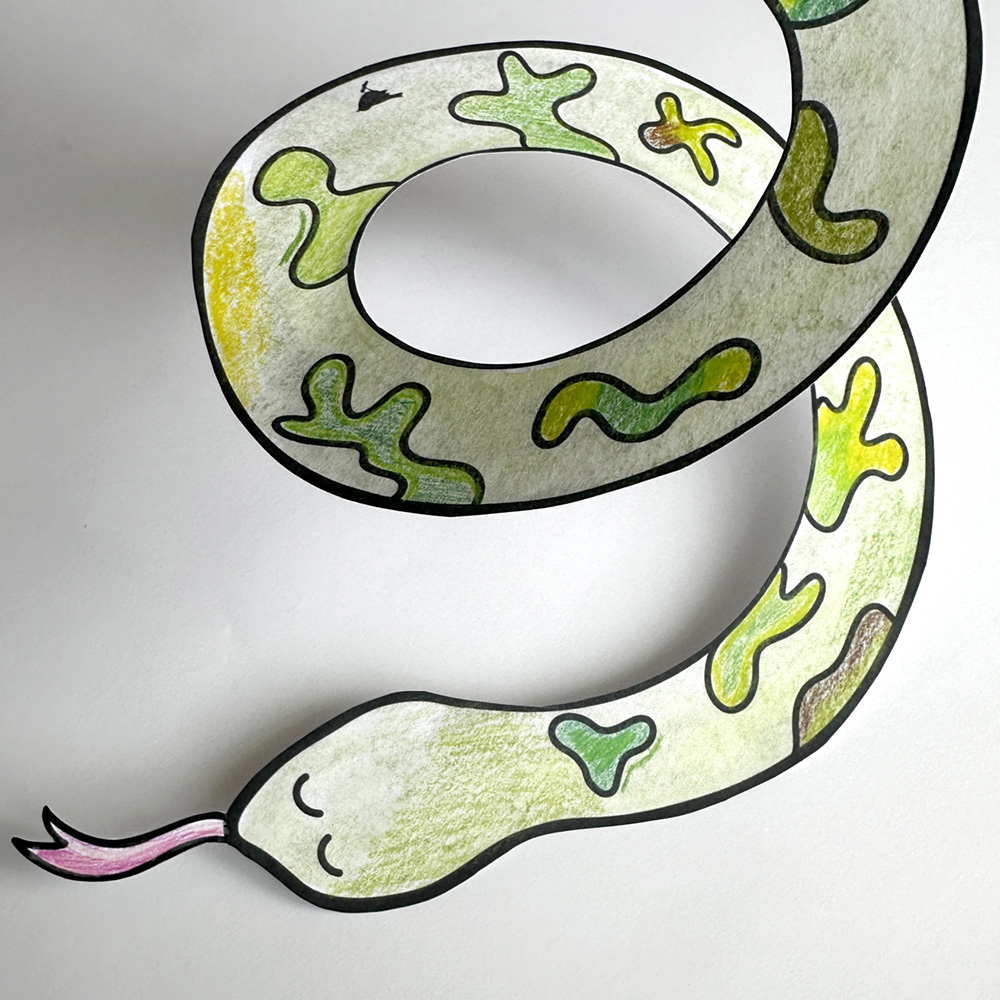
Print Shop is Live! 🎉
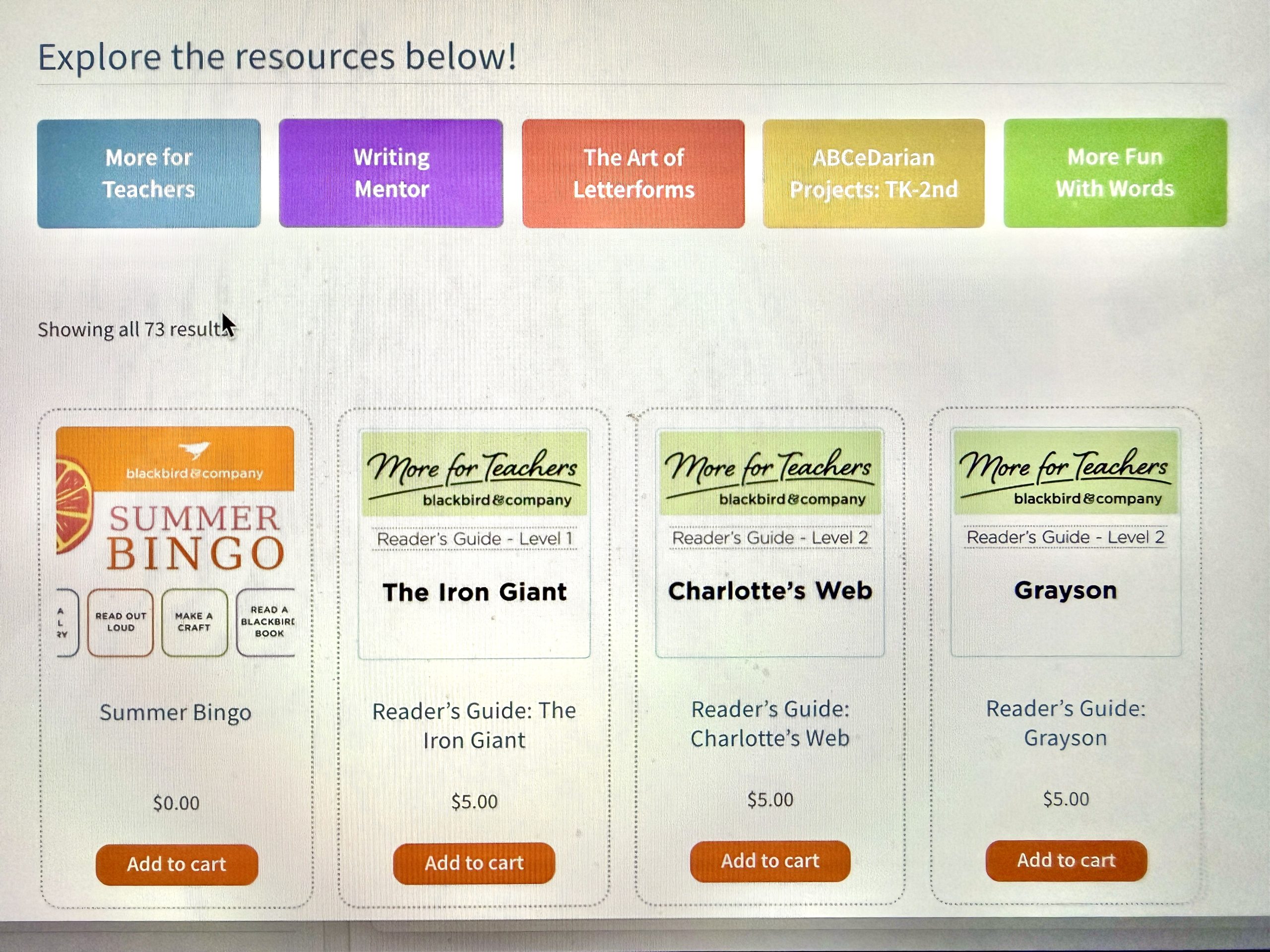
Head over to the website to explore what’s new. Navigate from the orange bar at the top of our homepage. There is something for everyone.
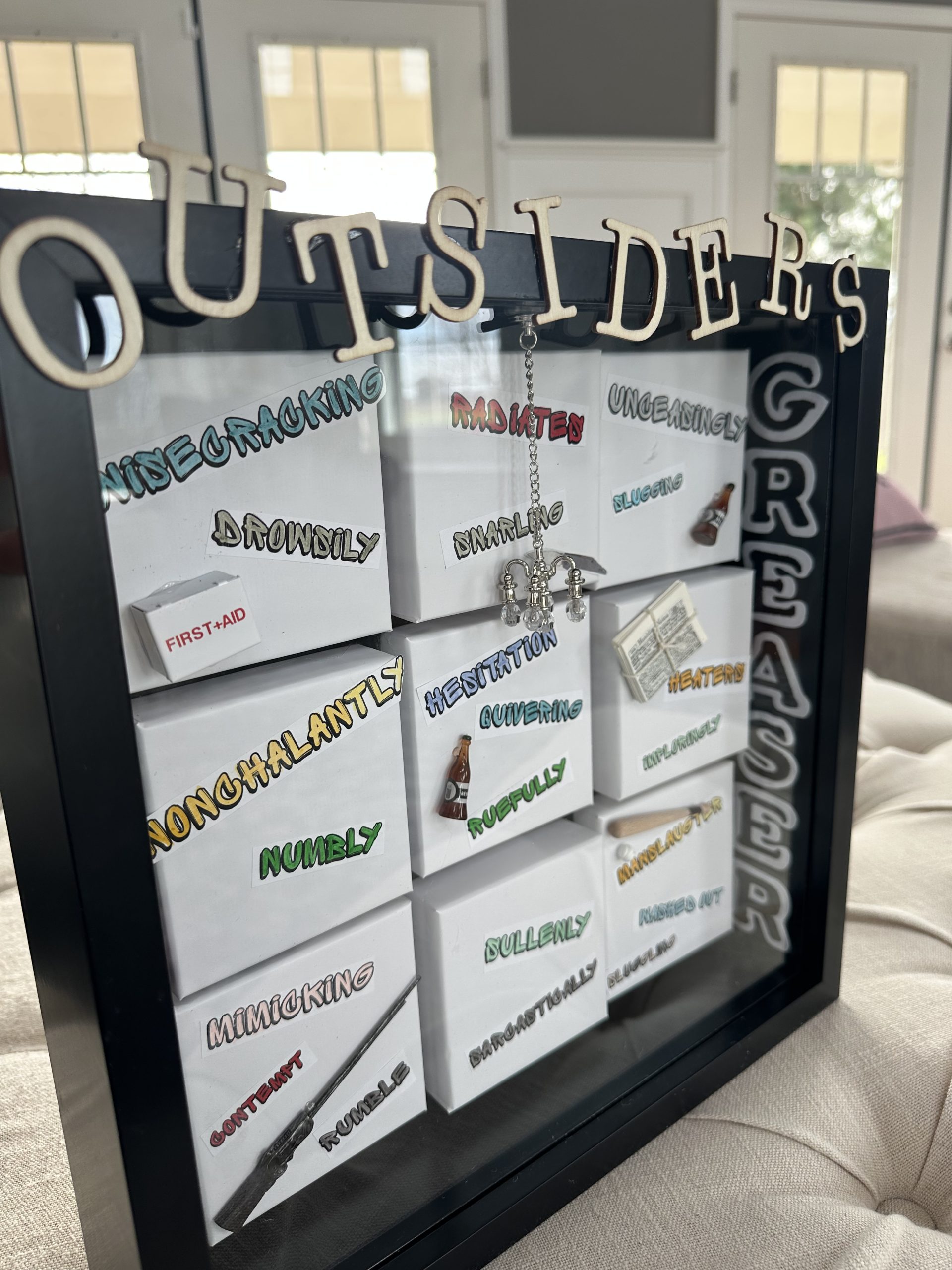
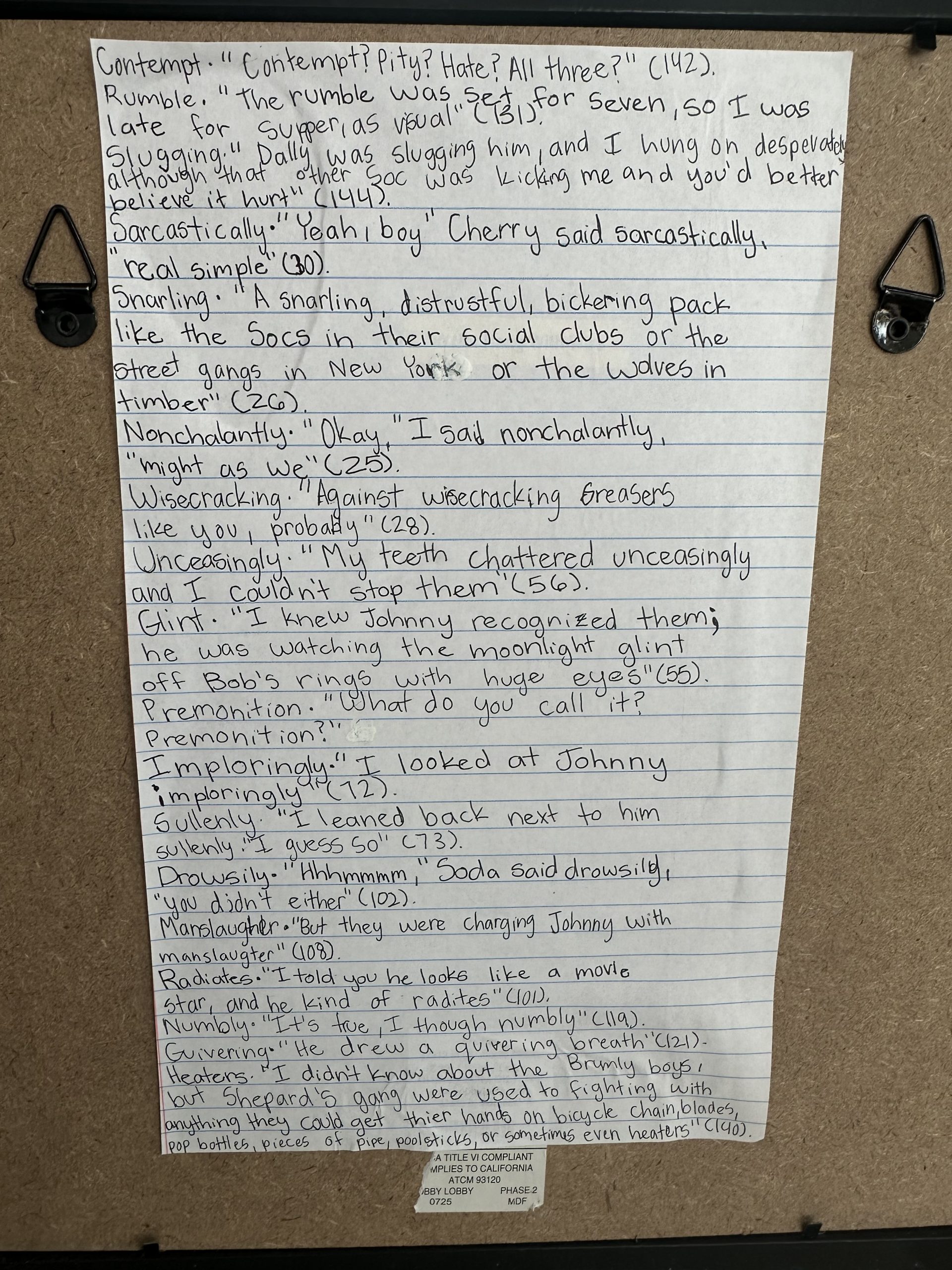
As a writer, I am often saddened by what has become of the essay. Quoting “Introduction to Poetry” by Billy Collins, I have to say, I agree:
~Kimberly
DON’T FORGET TO PLAY BINGO!
Download your Summer Bingo for free on Printshop HERE and submit a picture of your completed bingo sheet below to enter the raffles. Bingo will run June 1st through August 31st—so print out your bingo sheet and get to crossing off squares!

The Gold Below the Surface
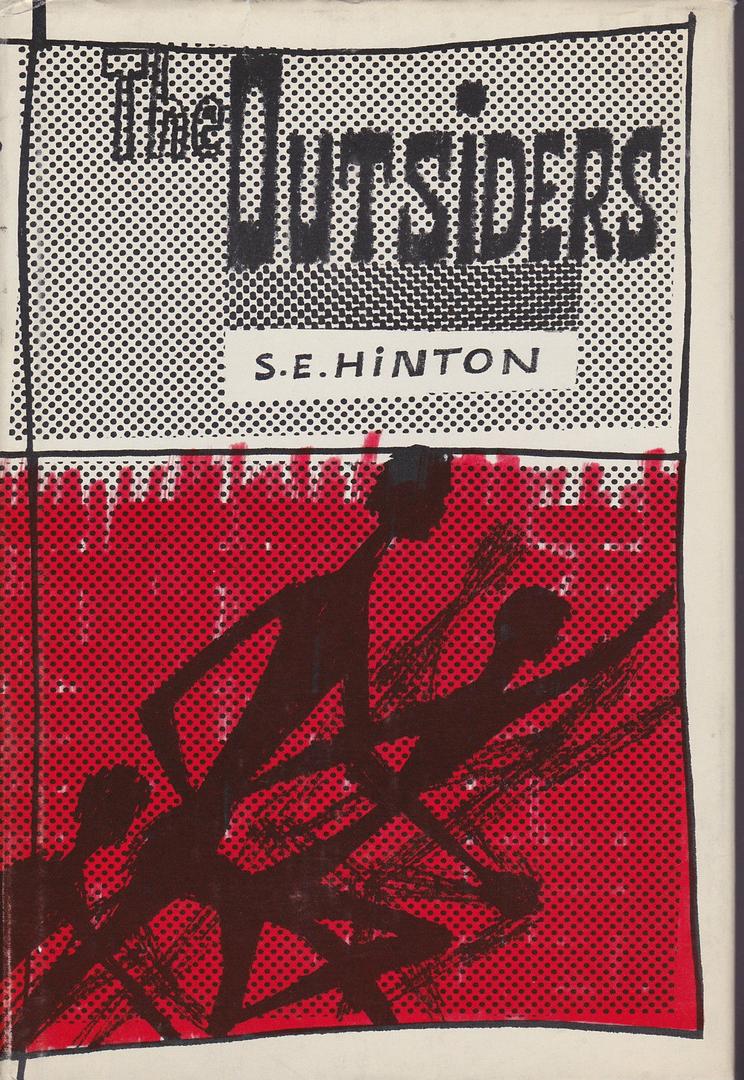
Have you ever been judged before someone really got to know you? In The Outsiders, by S.E. Hinton, the Socs and the Greasers are separated by wealth and reputation. The theme of loyalty, the symbolic switchblades, and the transforming of differences to similarity, keep this story alive and kicking.
For the Greasers to survive, they must rely on loyalty to one another. Every day, the streets are dangerous for the Greasers. S.E. Hinton uses the ongoing conflict between the Greasers and the Socs to demonstrate this danger, “Greasers can’t walk along too much, or they’ll get jumped” (2). The Greasers rely on each other for protection. Being loyal means sometimes having to sacrifice. Johnny protects Ponyboy at the church fire, “We put it out before you got burned. That jacket saved you from a bad burning, maybe saved your life” (94). Johnny courageously sacrifices his life because of his loyalty to his friend Ponyboy. Johnny rescuing Ponyboy not only demonstrates the loyalty of a true friend, but the true devotion of the Greasers toward one another.
Switchblades are weapons that symbolize both violence and protection. The Greasers live in a tough environment. They rely on violent switchblades for power, “Ya kill’em with switchblades, too, ya, kid” (83). Daily life is filled with rivalry, where the switchblades represented hostility. Getting the news that Johnny will be dying, breaks Ponyboy. But Johnny’s last words stick with him forever like a switchblade to the heart, “Stay gold, Ponyboy, stay gold…”(148). In the last seconds of his life, Johnny, protecting his friend, instructs Ponyboy how to live life. Receiving his last words of guidance, Ponyboy can move forward.
Despite all of the differences between the Greasers and the Socs, they are amazingly alike. After all, having differences doesn’t mean we humans aren’t similar. Despite the Greasers and the Socs differences, both groups are more alike than meets the eye, “It seems funny to me that the sunset she saw from her patio and the one I saw from the back steps was the same one” (1). Seeing the same sunset demonstrates similarity. Not knowing what Johnny’s future is going to look like, or if he even will have a future, is very scary. Worrying about what might happen to Johnny in the near future, Ponyboy comes face to face with mortality, “The blood was draining from my face and Darry put an arm across my shoulder and squeezed hard…even if he lived, he’d be crippled for the rest of his life” (102). All these thoughts are running through his mind. Sunsets and death lead readers into understanding that the Greasers and the Socs have much in common.
Throughout The Outsiders, S.E. Hinton, uses the simple theme of loyalty, symbols like switchblades and staying gold, and striking motifs of sunsets and death, to create a hauntingly realistic tale that is relevant here in the 21st century. Ultimately, judging someone before getting to know them creates walls that divide. Getting to know someone before judging enables us to discover someone as a whole, and this will always surprise the heart.
Works Cited
Hinton, S.E. The Outsiders. Viking Press, 1967.
~Kimberly
DON’T FORGET TO PLAY BINGO!
Download your Summer Bingo for free on Printshop HERE and submit a picture of your completed bingo sheet below to enter the raffles. Bingo will run June 1st through August 31st—so print out your bingo sheet and get to crossing off squares!

~Kimberly
DON’T FORGET TO PLAY BINGO!
Download your Summer Bingo for free on Printshop HERE and submit a picture of your completed bingo sheet below to enter the raffles. Bingo will run June 1st through August 31st—so print out your bingo sheet and get to crossing off squares!

It all began with Little House in the Big Woods. Published in 1932. This book is the first in the series of her memories growing up in the American Midwest during the last quarter of the 19th century. While these books are fictionalized, they are considered by most historians to be primary sources from this period of American History.
I read each and every book in the series back when I was in middle school back in the 70s. About the same time, the TV show was released. I imagine Laura Ingalls Wilder never imagined her stories would impact so many humans in the 20th century and beyond. Even though she lived a long life, she died in 1957, long before the television show.
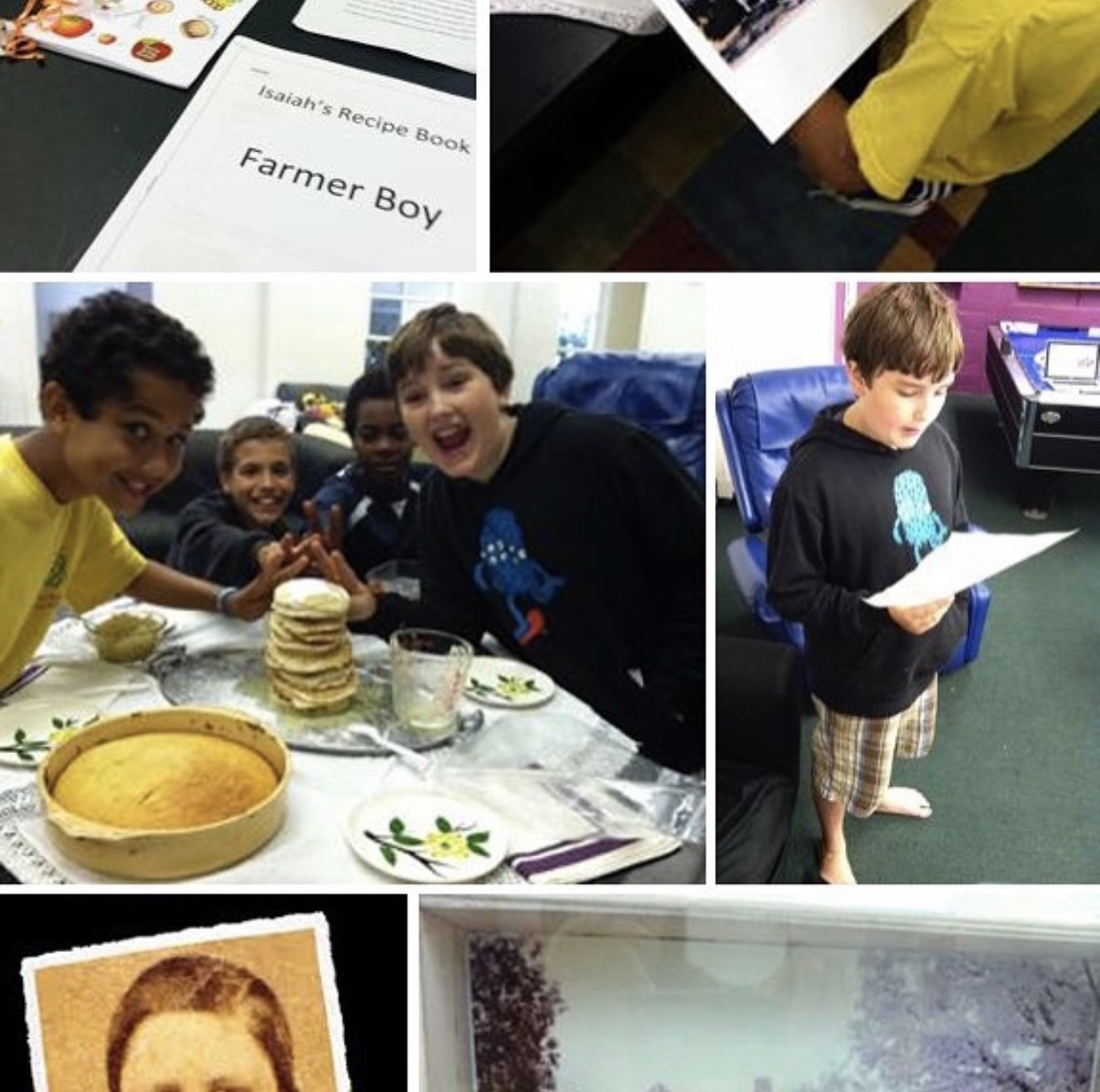
My two favorite books are The Long Winter and Farmer Boy (in that order). The Long Winter is the tale of how the Ingalls family survived the brutal winter storms in Dakota Territory during 1890. Let me tell you, it is a page turner! Discovering the “twisting of hay” technique alone is worth the read! But Farmer Boy is unique, a stand alone, being the story of Almanzo Wilder’s childhood—the man who Laura later married.
Two of my now adult children adored Farmer Boy as did countless of my students! The standout, of course was the description of food, especially the “stacked pancakes” Almanzo adored. That boy could EAT!
Here, at the dawn of July, Think forward. Read the books (or listen on Audible) you have chosen to explore this coming year. As you read, listen for words that strike your fancy, sentences and passages that underline. Use sticky tabs to mark words, sentences, and passages you want to share. Flip through your student’s workbooks to see what will be expected. Calendar out your schedule. Use the Parent/Teacher button dropdown on the orange bar at the top of our home page. Here you will find suggested Lesson plans for every single one of our ELA unit types. You will also, in this area, find our Answer Keys. Head over to Print Shop and scroll down to find FREE Writer’s Checklists, Character Trait Cards, and a wonderful spelling program.

~Kimberly
DON’T FORGET TO PLAY BINGO!
Download your Summer Bingo for free on Printshop HERE and submit a picture of your completed bingo sheet below to enter the raffles. Bingo will run June 1st through August 31st—so print out your bingo sheet and get to crossing off squares!

Does your student struggle to spell well? Stumble to decode simple words and phrases? Or do you have a student who just needs a bit more direct instruction, a bit more time for slow, methodical practice? Summer’s here! Time to help these students fly.
Click through to: The Wonderful World of Phonics
Reading builds a rich vocabulary, grows our knowledge of the world, and sparks BIG ideas.
Writing begins with an idea and is crafted to words on a page by a courageous thinker.
Our open-ended unit provides you, the teacher, with all the tools necessary to guide your students into the wonderful world of phonics. Our curriculum, rooted in Orton-Gilligham wisdom, is user friendly and affirming for the older student who needs additional direct instruction and independent practice to shore up skills. Includes all you need to know about phonics, a placement guide, plus lesson guidance each step of the way.
Help your students dive into 2026 with the ELA tools that will enable them to read and write and think well!
DON’T FORGET TO PLAY BINGO!
Download your Summer Bingo for free on Printshop HERE and submit a picture of your completed bingo sheet below to enter the raffles. Bingo will run June 1st through August 31st—so print out your bingo sheet and get to crossing off squares!

Being a West Coast dweller, I’ve never engaged in the quintessential summer activity of catching lightning bugs (fireflies) in a jar. But I’ve seen it on film, in photographs, and I’ve certainly read about the activity! Here, in California, we have fireflies, just not the nocturnal flashing variety.
One of my favorite children’s author / illustrators is Patricia Polacco who creates picture books filled with her wonderful family memories. When Lightning Comes in a Jar is a perfect summer read, especially for those of us who might otherwise not experience the delight if fireflies!
And since summer has arrived, and we are on the subject of fireflies, I have to recommend Fireflies by Julie Brinkloe. I’ve read this wonderful story aloud countless times to my children and nearly have it memorized!
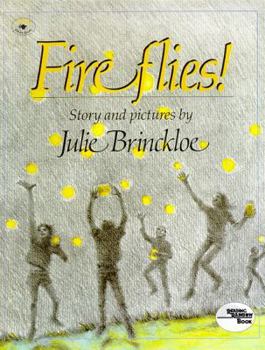
The story begins, “On a summer evening I looked up from dinner, through the open window to the backyard. It was growing dark. My tree house was a black shape in the tree and I wouldn’t go up there now. But something flickered there, a moment—I looked, and it was gone. It flickered again, over near the fence. Fireflies!”
Not only is this a terrific opportunity to learn about these amazing creatures, but also to explore themes of empathy, kindness, and responsibility. Doing the right thing will not be easy, but when the boy realizes that the fireflies do not shine as bright in the jar he releases them back into the wild. And, when he does, I always imagine his heart shining a bit brighter.
Here’s to the wonder of summer!
DON’T FORGET TO PLAY BINGO!
Download your Summer Bingo for free on Printshop HERE and submit a picture of your completed bingo sheet below to enter the raffles. Bingo will run June 1st through August 31st—so print out your bingo sheet and get to crossing off squares!
~Kimberly

Once again, hop on over to Red Hen Toys and pick up the Binomial Square puzzle. Of course, this Montessori / Froebel inspired material is designed to prepare students for more complex math instruction down the line—proportional reasoning, base 4 numeration, polynomials and more.
But for this summer activity, the goal is to integrate the activity into the art of writing. Begin by presenting your student with a blank journal, a pencil and some colored pencils. Here is a little nugget to spark curiosity:
Did you know all multiplication problems can be represented by a rectangle?
Copy this sentence and move on to create original questions in the journal.
Encourage students to freely explore, beginning with questions, questions they will write in a journal:
How many blue pieces are needed to make a square? or How colors does it take to make a square?
Keep exploring and composing questions along the way. From here move on to statements like:
There are sixteen pieces in the Binomial Square puzzle.

Finally, begin to build shapes and craft instructions—imperative sentences. From the image above, a first sentence might read:
Pick up the bright yellow rectangle and place it vertically on the right on the table in front of you.
Next, place the light green rectangle horizontally flush right at the bottom of the bright yellow rectangle, creating a 90 degree angle.
Keep going from here! This activity engages your students in active learning—reflection and problem solving instead of passive direct instruction. Students who enter into the activity of journalling and puzzling, will be setting the stage for more advanced math learning, but more importantly for advanced writing. Slowing down and observing relationships between the puzzle pieces, will strengthen observational skills. The process of communicating observations with words on paper will develop skills and strategies that will help your writers write well.
DON’T FORGET TO PLAY BINGO!
Download your Summer Bingo for free on Printshop HERE and submit a picture of your completed bingo sheet below to enter the raffles. Bingo will run June 1st through August 31st—so print out your bingo sheet and get to crossing off squares!
~Kimberly

So what exactly is a magnum opus? E.B. White demonstrates this beautifully. Charlotte’s Web begins with the tension of an ax. Life on the farm causes Fern to face life and death, “‘I don’t see why he needs an ax,’ continued Fern, who was only eight. ‘Well,” said her mother, ‘one of the pigs is a runt. It’s very small and weak, and it will never amount to anything. So your father has decided to do away with it.'” Of course, we know how the story goes. Fern rescues the runt and sets the action into motion.
But, let’s get back to the matter at hand, the concept of magnum opus. Toward the end of the story, in chapter 19, Charlotte refers to her egg sac as her magnum opus. But when Wilber thinks the peach colored cotton-candy like thing is a toy, Charlotte sets him straight. And in the process of setting Wilbur straight, Charlotte unpacks the term for us, “It is my egg sac, my magnum opus. Latin for great work. This egg sac is my great work—the finest thing I have ever made.” Charlotte’s sac, containing 514 eggs becomes a powerful representation of her legacy.

Our Blackbird & Company students are continually constructing ideas—words to phrases, to sentences, to paragraphs, to essays. Now is the perfect time as summer saunters in, to look back on your student’s body of writing from the past year in search of a magnum opus! I’m certain you will be able to pull a singular sentence from your student’s body of writing. One sentence that stand’s above the rest. Post the sentence up on the refrigerator, read it often. In so doing you are encouraging the student’s important work, but you are also reminding yourself that a significant part of being a teacher is inspiring, applauding, marveling in the work of the student!
~Kimberly
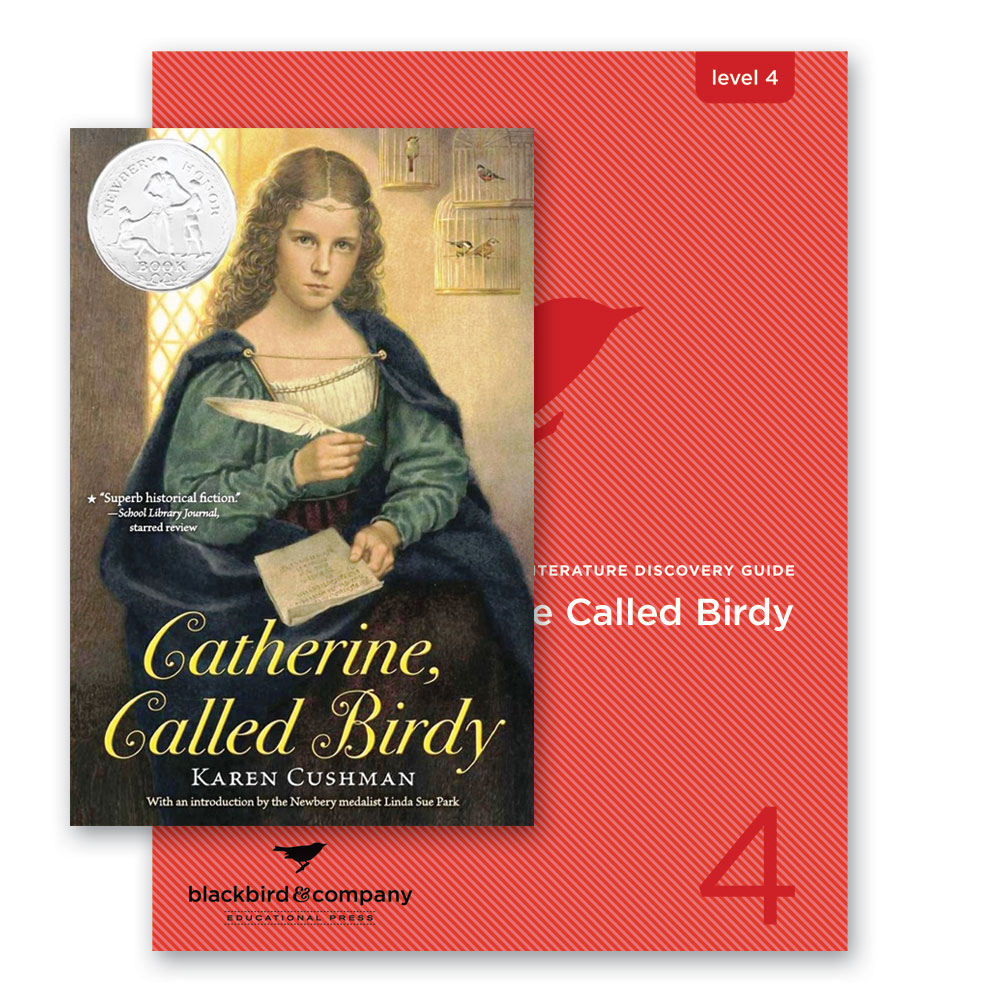
The first three chapters of Catherine, Called Birdy, begin with Catherine introducing herself. Birdy, as she is called, is stubborn and loves to play pranks on people and be outdoors. I get the feeling she might be a tomboy from learning about her interests. Soon enough, as I started reading, she is indeed a tomboy who lives in the country, Stonebridge, England: “I, trapped inside, spent two hours embroidering a cloth for the church and three hours picking out my stitches after my mother saw it. I wish I were a villager” (1). Birdy doesn’t enjoy lady-like chores and would much rather be outside in the dirt, “I could be enjoying were I not in here sewing” (3). I love getting to know people on a more intimate level, so I particularly enjoyed the section where Birdy describes her family life. I became more attached to the characters, which brought more understanding of her personality. Birdy lives with her mother, father, and their nurse, Aelis. Catherine’s mother always seems to be pregnant, “Here in my prison my mother works and gossips with her women as if she didn’t mind being chained to needle and spindle” (4). Her father is quite strict and demands that Birdy marry into money, but Birdy really doesn’t want to grow up and be pressured to marry! She hisses in her journal: “When there is money involved, my father can be quite well spoken” (5). With their family nurse being supportive of Birdy and are quite similar, sharing the love of journaling. Birdy enjoys writing about her feelings, daily life, and, of course, commenting sarcastically about the people around her. I also journal about my day-to-day life and find it comforting to see the similarities. The first few chapters have intrigued me, and I am eager to get to know more about her lifestyle and how her relationship deepens with her family.
The last few chapters intrigued me with the weird feelings of tension and stress. Chapters four through six, include the winter months from December through March. Birdy continues to write in her private journal about her day-to-day life, believing that girls are raised for chores around the house while boys have it so much easier, This quote is expresses her feelings: “The sun looked likely to shine yestermorn, so Gerd miller’s son and I left our chores undone and went to Wooton village where they were to hand two thieves” (47). In this moment, I knew Birdy and Gerd running off to Wooton to witness a couple of 17-year-old bandits get hung in front of the town was NOT an intelligent idea, “Never having seen a hanging, I could only imagine the huge hairy bandits with cruel scared faces, snarling and growling fearsome curses, whole we onlookers shrieked and shrank back in fears” (47). Birdy and Gerd couldn’t manage the witnessing. Throwing up their breakfast, they sprinted back home. My breakfast coming up as well, feeling they needed to go home before any drama started! Birdy had never see someone get hung so she thought today would be the day but turns out not. I discover Birdy feels the tension of her father’s stress over money. As I read, I get a bit worked up, feeling the stress from her father. She worries even more that he may try to arrange a marriage for Birdy had to help with the family’s financial situation, but she rightfully expressed she doesn’t want to grow up and get married. Birdy realizes she needs to find something independent to decrease the family drama. She finds that the only independence she has is writing in her journal. My hope is that in the next few chapters, Birdy starts to feel less pressure while feeling a bit supported. Oh! how Birdy needs to feel supported in life.
Section three brings hope. I feel like Birdy is turning a corner towards the end of spring, looking toward her future. As she journals that she can’t run away from all her responsibilities, I can relate to Birdy. In this part of the story, looking into the future with all the responsibilities that come along with getting older, I can relate, and this stresses me. A personal example is the thought of going to college. Experiencing big life changes like not living at home, and, of course, money. Birdy’s father continues to search for her a husband. Birdy’s true love isn’t finding a husband, but living free outside, playing in the dirt, with nothing to do with a husband. I wish Birdy’s father would stop pushing her to get married because she already confessed to him that she does not want a husband, “I pray the new year brings us joy and wealth, that George comes back for Easter and that Robert does not, and that God assists me in this marriage matter” (100). I find that as I read towards the end of the book, the mother isn’t as involved as the father. It bothers me. Is it because she is pregnant, over and over, or is it that the father, being the ruler, is the one in control, as Catherine’s mother is in the background completing womanly duties? The more I read, the more these thoughts come to mind. As the story goes on, Birdy confides in her journal, “Fought again with my father, God gave me the big mouth, so I think it can be so sin to use it. Even so, I plan to resume sulking instead of arguing- it is much easier on my face” (117). My hope is Birdy finds peace.
My moods were all over the place in the final chapters of Catherine, Called Birdy. First, I was sad. Then, I was worried. Thankfully, the story ended with a happy ending for Birdy which made me quite relieved! I was devastated, along with Birdy, that her father was making her marry a man with a shaggy beard, “I have been thinking about my own marriage. Once I dreamed of a handsome prince on a white horse decked in skills and bells. Now I am offered a smelly, broken-tooth old man who drinks too much” (136). Birdy didn’t know what to do in this situation so she runs to her uncle’s house, escaping her father. I start to get worried for Birdy and what will happen next with marriage. Birdy knew, “The northern shaggy-bearded pig has sent me betrothal gifts, which I, of course, refused since I will not consent to marry him” (140). I was worried for Birdy but knew she could make a good decision about what’s best for her. After thinking about what she wants in her future, feeling free, marriage, and becoming the woman she wants to be, Birdy soon realizes she can’t control everything in her life. What she can control is what kind of woman she becomes. Later, when her uncle brings her home and she discovers the shaggy bearded man had died from a fight while out drinking, my jaw dropped! Literally dropped! Birdy doesn’t have to marry him anymore! Instead, she is called to marry the old man’s son, Stephen. Stephen turns out to be an educated young man who she gets to know and realizes is very kind. She finally sees a bright future for herself where she learns her future won’t be perfect. Still, she knows she can carry her spirit. After so many struggles for Birdy, the ending of contentment was so comforting for me. I recognize her struggles. When we take the time for self-reflection, learning life isn’t always perfect and in a certain order, we can still be joyful and content with life.
~Kimberly