Posted on

Kandinsky for Fall

When Vasya opened his paint box and began mixing colors, he heard sounds—yes, sounds! As he grew older, he discovered that he was synesthetic—able to hear colors singing and see sounds dancing.  You can learn all about this and more in The Noisy Paintbox by Barb Rosenstock.

Kandinsky is famous for his brightly painted squares and concentric circles and this is just the fodder for a fall greeting card.

Here’s what you’ll need:

  • 1/4″ and 1″ and 2″ hole punch
  • Craft paper (assorted fall colors, blue + natural cardstock for tree trunk)
  • Scissors
  • Glue stick
  • Plain greeting card & envelope

How To:

  • Punch circles in various colors and sizes
  • Draw a leafless tree on the cardstock, cut out
  • Make a blue square to represent sky
  • Use the glue stick to create the collage

Check out our Pinterest, Instagram or our Facebook to watch a little video of our crafting. And, check out Operation Lexicon, Traits of Characters to learn more about Kandinsky, other amazing people, and to explore the wondrous ways a single word can describe a singular person.

Enjoy!


~Kimberly

Posted on

Knock! Knock!

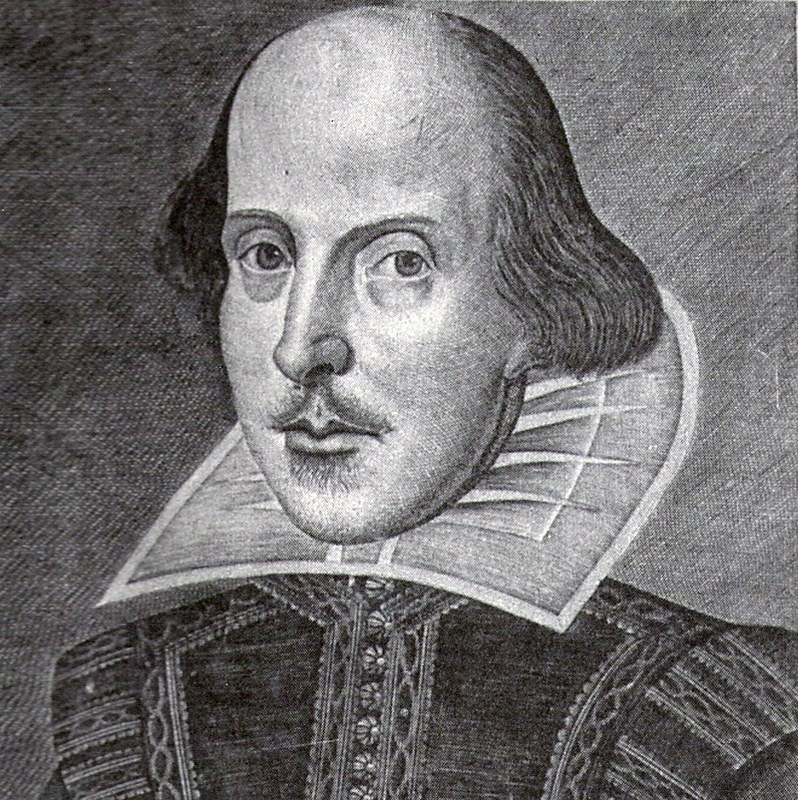
Happy Birthday Shakespeare!

Thank you for leavening the world with wonderful words and phrases:

Leapfrog and Bedazzled and Swagger

          All that glitters is not gold.

          Jealousy is the green eyed Monster.

          It’s a brave new world.

All Shakespeare.

But did you know that he is also the father of the Knock, knock! joke?

Yes! the Knock, knock! joke!

It all began in his famous tragedy.

In Macbeth, Act 2, Scene 3,  suddenly there is a knock knocking:

“Here’s a knocking indeed! If a man were porter of hell-gate, he should have old turning the key.

[Knocking]

Knock,
knock, knock! Who’s there, i’ the name of Beelzebub?”

The Bard’s tragic phrasing is far from the little supercilious jokes i told as a child:

Knock, knock!
Who’s there?
You.

You who?
Yoo-hoo! Anybody home?

Knock, knock!
Who’s there?
Canoe.
Canoe who?
Canoe come out now?

Knock, knock!
Who’s there?
Howl.
Howl who?
Howl you know unless you open the door?

Still, it’s good to remember—especially today—that Shakespeare was a trendsetter!


~Kimberly

Posted on

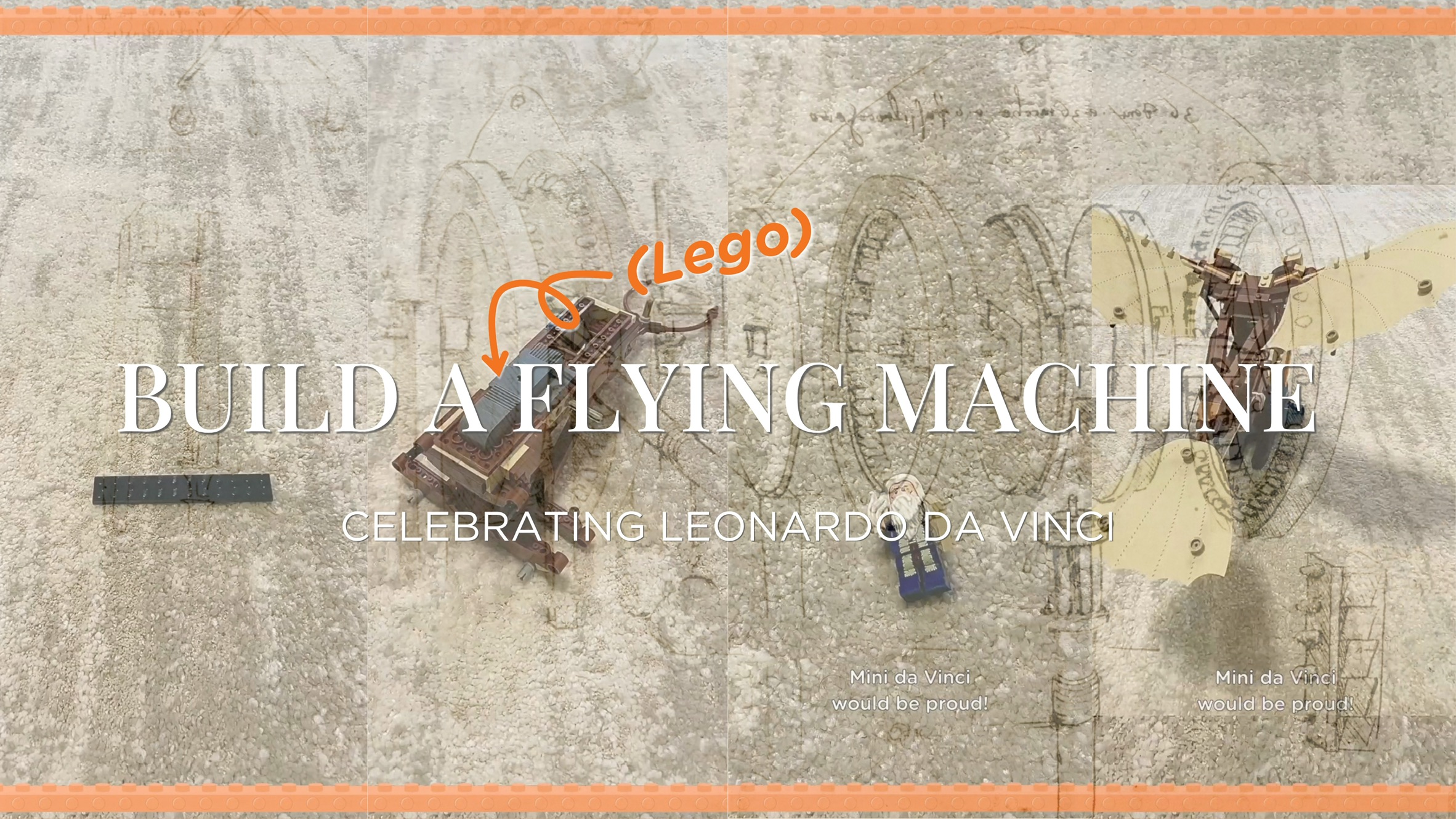
Learn with Leonardo

Look

Imagine

Create


“Whatever you do in life, if you want to be creative and intelligent, and develop your brain, you must do everything with the awareness that everything, in some way, connects to everything else.” ~Leonardo da Vinci


Observation begins with a question: What am I seeing? In a world filled to the brim with stimulation, it is easy to take our senses for granted. Though we are usually quick to have thoughts on things that we taste and smell, sight (of all things) can often be overlooked. We see so many things on a daily basis that it’s easy to forget to stop and really look.


There is nothing like art-making to engage students in active learning. Leonardo da Vinci, the quintessential Renaissance Man, made over 13,000 journal observations during the course of his lifetime, and as he did, he not only gained an enormous body of knowledge, but also created masterworks and made significant discoveries that he generously shared with the world. His influence is far reaching.

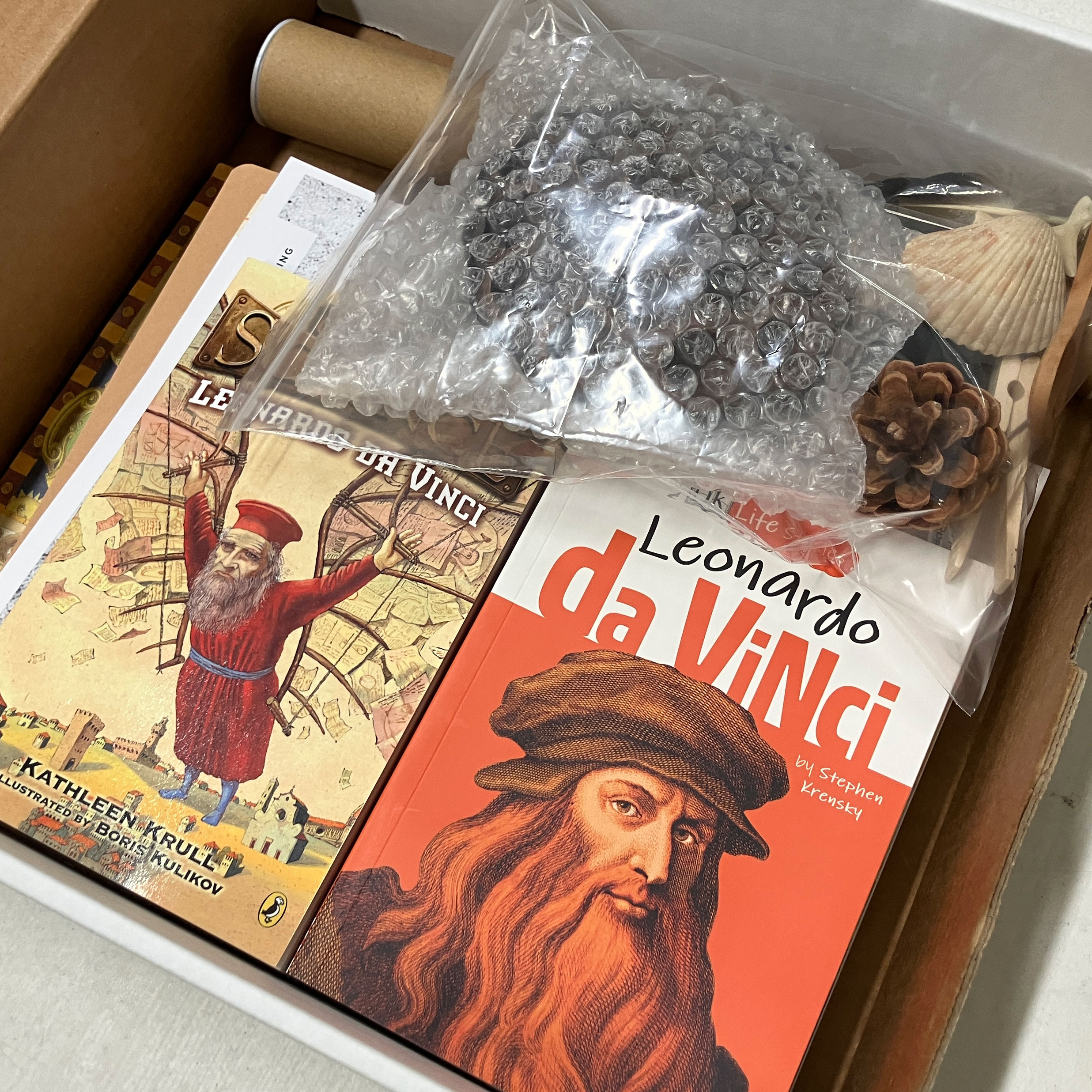
Over the course of 20 weeks, students will learn to observe from no other than the Renaissance Man himself! Students will research the life of Leonardo Da Vinci and learn to create observational drawings. Watch for our brand new unit to be released early this summer.


~Kimberly

Posted on

Stitch / Strengthen

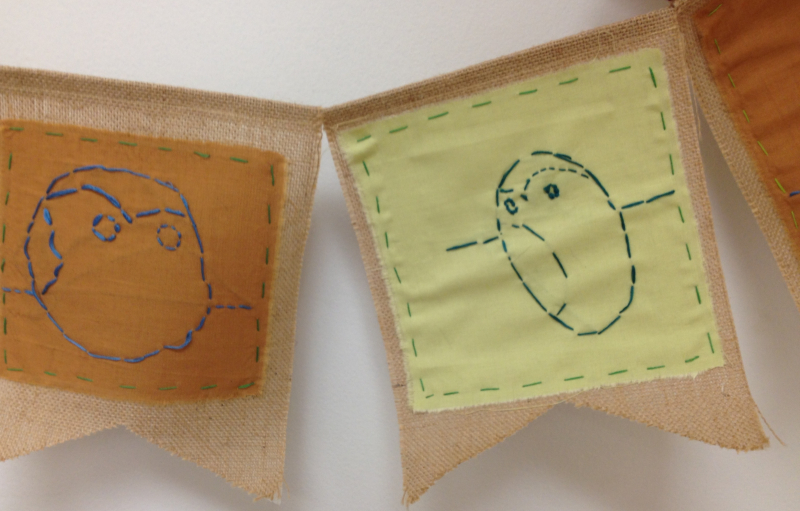
Hands, fingers, eyes, oh my! When it comes to writing an idea, students are often thwarted by the complex activity of coordinating the minute muscle movements of the hands and fingers holding a pencil, with the sight of the eyes and the idea stirring in the mind’s eye!

Stitching is a wonderful way to switch it up, setting the pencil aside (temporarily) to strengthen small motor ability.  Not only does sewing by hand require the pincher grasp that requires coordinating the thumb and pointer, but it requires coordinating the eyes in the process. Stitching by hand is a quiet, slow activity that requires patience.

Stitching leaves strengthen’s fine motor skills.

Many years ago I cut some very simple pinnately parallel, leaf-like shapes in calico fabrics. I popped the raw “leaves” into  a little basket with pre-threaded (with embroidery floss) needles and carved out time during fall for leaf stitching—half an hour would easily stretch to an hour with my little ones contentedly choosing two leaf shapes and stitching them together tenaciously. This seasonal tradition began with me teaching the running stitch, re-threading all the needles and moving quickly to my children confidently whip stitching and blanket stitching, even threading their own needles!

And guess what? Writing an idea became less painful. Skills gained during sewing transfers directly to the stitching of ideas crafted with pencil on paper.

Check out our brand FREE new Letter Forms worksheet!


~Kimberly

Posted on

More Leaves for a Friendly Letter

Accentuate your friendly letter with a fall-themed crafty insert!

This project began with a package of fall leaf table confetti. But you can just as easily begin by tracing real leaf shapes on colored craft paper, cutting out the shapes, and drawing. From there, all you need is imagination and a fine-point marker. Fill each leaf with a repetitive design of lines! You might even add a little message to your design! These handcrafted fall leaves, inserted into your friendly letter, will be a delightful surprise to the recipient and a fresh addition to any fall table.

Don’t forget to check out our FREE resources on letter writing and letter forms by hand!

~Kimberly

Posted on

I Modinnari Apples

I Modinnari is a tradition that many communities have adopted to honor an Italian tradition that began way back in the 16th century. Once upon a time itinerant artists commissioned for bigger works, would,  at the close of the project, create a related work of art in tempera on the pavement.

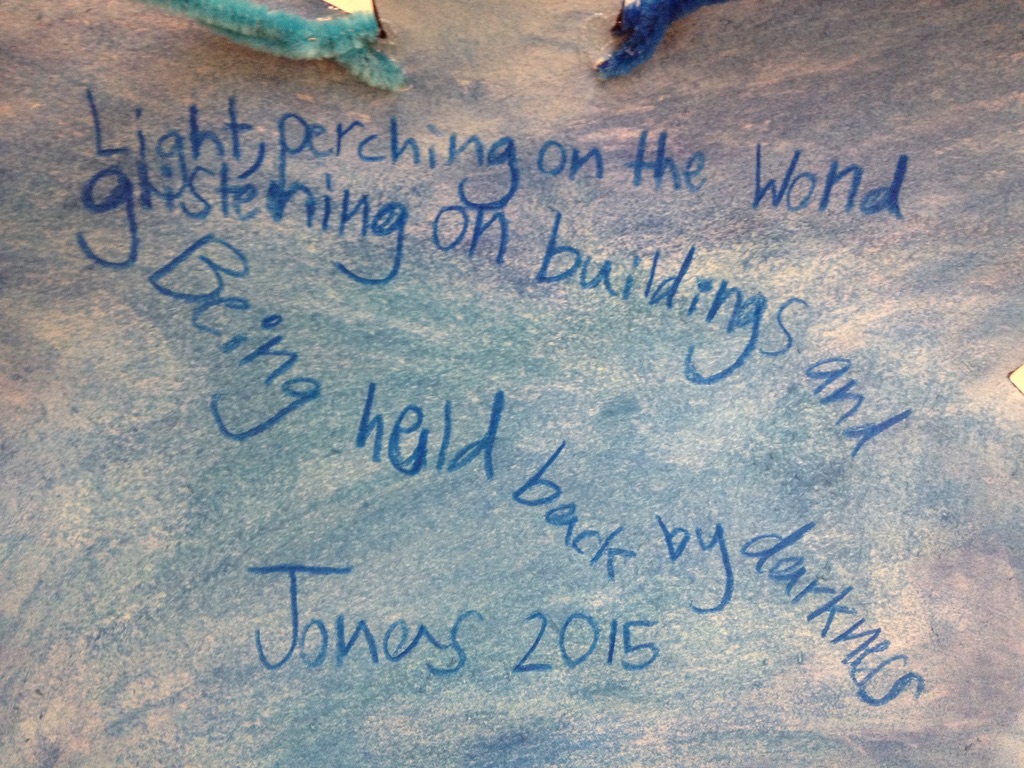
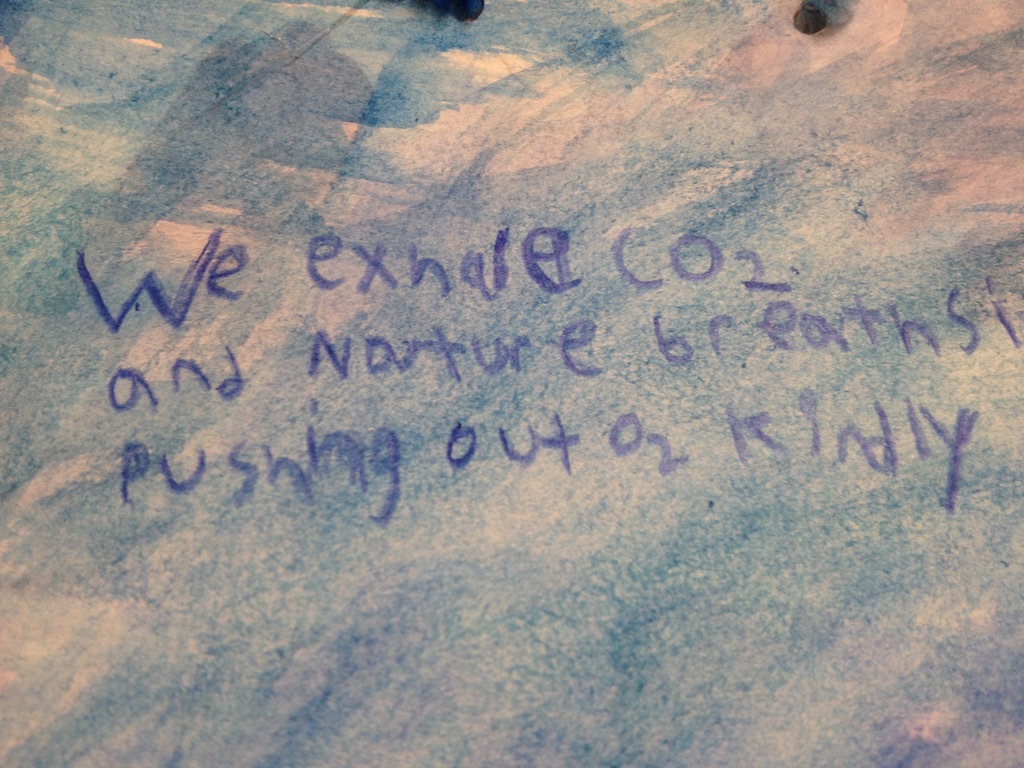
For many years this was a tradition with my children, and later with my students. These two are perfect examples for fall. The copy below, after René Magritte’s Listening Room, was created on our driveway during COVID. The above image after inspired by Paul Cézanne’s Apples but re-imagined to fit into a particular space.

You can I Modinnari too!

Here’s How:

  1. Use a white, water-based tempera paint, to cover the space you will be using to create your art.
  2. Choose an image to copy. Apples are obviously recommended!
  3. Using a collection of chalk pastels, begin drawing and layering up colors. Begin with light colors and add darks last!


~Kimberly

Posted on

Pop Art Apples

It looks simple. It is. But what makes it read “apple” is the fact that it began with observation. The most important thing that observation teaches, is that apples are not perfect spheres.

One fun way to observe is to observe a black and white photograph. Here’s how:

  1. Take a phot of a single apple or a group of apples on your phone. Edit the photo to black and white.
  2. Turn on the edit option and choose a color of your choice.
  3. Choose an apple color for the pen tool. Have your student scribble-trace the apple contour with an Apple Pen or finger.

Now get to know artist Roy Lichtenstein. Read about him here. This is work, Two Apples, was created back in 1972. Take some time to observe. Here are some things to notice:

  1. It is horizontally oriented, divided into two unequal parts, the bottom being larger than the top.
  2. We see: Red, blue, black, and white.
  3. The apples shape is created by a strong, single outline that creates a beautiful organic shape.
  4. The stem is a single stroke of paint.
  5. The upper background is dotted.

Now you try!

  1. Begin with very light pencil drawing. Divide the horizontal space. Fill the space with two large apples.
  2. Choose colors (we recommend using gouache or acrylic paint on smooth Bristol paper) . Limit the palette to two colors, plus black and white.
  3. Paint the sold background at the bottom of the painting. Next paint the apples. Let this dry thoroughly.
  4. Next paint the dots in the upper background. This should be done slowly. Let the paint dry.
  5. Use white paint to pop a highlight onto the apple if you like (our students did not create the highlight).
  6. The very last step is to outline the apples and the horizon line with black.

When it come to apples, the possibilities are limitless! This is what the pop artist reminds us:

“Pop art looks out into the world. It doesnt look like a painting of something, it looks like the thing itself.”

There is no doubt in the viewer’s mind that these pop art apples look like the form of the real thing! This is because the artists began with observation.


~Kimberly

Posted on

Speaking of Apples

Cézanne said: “Everything is about to disappear. You’ve got to hurry up if you still want to see things.”

What does he mean?

I think he means: “LOOK!”

This little painting by 9th grader, Kingsley, was accomplished during Session 1 of Pages online live! Under the expert tutelage of Mr. Taylor,  inspired by the colorful still life paintings of Paul Cézanne, in five happy, peaceful hours over the course of five weeks, this student painting took shape.

How did she accomplish this beautiful feat?

By engaging in the slow work of observation.

The skill of observation enables us to recognize, slow down, perceive, decide, appreciate, and ultimately, to know.  Observation engages all the senses. Yes, we can see with our hands. And it is through the senses, that we will make sense of the world. But don’t take my word for it, Da Vinci, master of observation says it with eloquence:  “All our knowledge has its origins in our perceptions.”

Art making is academic.


~Kimberly

Posted on

Three Ideas with Fall Leaves

It’s fall! Leaves are turning. Following are three ideas to help you “switch it up” with fall leaf activities! While reading the following ideas, listen to Vivaldi, Autumn from The Four Seasons performed by the Netherlands Bach Society. This will surely get the fall mood stirring!

One.

Listen to a fall leaf story, Leaf Man by Lois Ehlert is amazing place to begin! This one is also a fall leaf favorite.

Read a fall poem.

October by Robert Frost
O hushed October morning mild,
Thy leaves have ripened to the fall;
Tomorrow’s wind, if it be wild,
Should waste them all.
The crows above the forest call;
Tomorrow they may form and go.
O hushed October morning mild,
Begin the hours of this day slow.
Make the day seem to us less brief.
Hearts not averse to being beguiled,
Beguile us in the way you know.
Release one leaf at break of day;
At noon release another leaf;
One from our trees, one far away.
Retard the sun with gentle mist;
Enchant the land with a
methyst.
Slow, slow!
For the grapes’ sake, if they were all,
Whose leaves already are burnt with frost,
Whose clustered fruit must else be lost—
For the grapes’ sake along the wall.

Two.

Stitch a leaf. These leaves began with a leaf walk. Grab a basket and collect some freshly fallen leaves. Look up and, if possible, pluck a a few fresh leaves too. Once home, observe the different shapes you collected. Trace your favorite onto a piece of felt. Felt squares can be found at your local craft store. The felt we used was purchased on Etsy from an artisan who dyes beautiful colors with natural materials. Once the leaf shape is drawn on the felt, cut out the leaf. Now stitch the veins with matching embroidery floss using a simple running stitch.

This project is a really fun throwback to a classic that my sister-in-law, Tracey, beautified with unexpected bright fall colors and simple organic shapes! These leaves, once cut, are unfolded and embellished with a hole punch (all terrific fine motor for little ones), then veins are drawn with colored pencils. String these paper leaves for a decorative fall garland. Collect them in a little basket. You might even use these leaves as a little greeting card!

Three.

Haiku are the little powerhouses of the poetry world! They are a fun challenge involving the best of word play, mixed with a little finger counting to get the syllables just right! Here’s a brief “Haiku 101” to help you get started:

1. Haiku poems consist of a three-line stanza that has a total of 17 syllables written in the following pattern:

Line 1: 5 syllables
Line 2: 7 syllables
Line 3: 5 syllables

*Slight variations in syllabication is appropriate as this helps the poet maintain the “one thought in three lines” rule.

2. Haiku poems are observations of nature, often making reference to the seasons.

3. Haiku poems are like photographs, which capture moments in time. A  “haiku moment” describes a scene that leads the reader to a feeling.

4. Haiku poems were originally written as introductions to longer works of poetry and should be written as one thought in three lines.

Consider this simple, but lovely, fall haiku written by the Japanese poet, Matsuo Basho:

In the autumn night,

 Breaking into

A pleasant chat.

Ready to write? Try crafting a leaf haiku. Use photos in this post to inspire.

~Kimberly

Posted on

Three Ideas with Apples

It’s apple picking time! Apples are quintessentially fall. Following are three ideas with apples to help you “switch it up” with activities to enjoy those fall feelings…

One.

Listen to an apple story (this one was a favorite in our house).

Another favorite is How to Make an Apple Pie and See the World by Marjorie Priceman.

Read an apple poem:

A Drop Fell on the Apple Tree (794) by Emily Dickinson

A Drop fell on the Apple Tree —
Another – on the Roof —
A Half a Dozen kissed the Eaves —
And made the Gables laugh —

A few went out to help the Brook
That went to help the Sea —
Myself Conjectured were they Pearls —
What Necklaces could be —

The Dust replaced, in Hoisted Roads —
The Birds jocoser sung —
The Sunshine threw his Hat away —
The Bushes – spangles flung —

The Breezes brought dejected Lutes —
And bathed them in the Glee —
The Orient showed a single Flag,
And signed the fête away —

Two.

Paint some apples. This painting is a “study” (a copycat!). Pick up a canvas, some brushes, and a few tubes of acrylic paint. Before you begin, do some research. Do you know Paul Cézanne? Listen to a story about his apple paintings. Now study the apple painting by Paul Cézanne that inspired the copycat above! The first step of a painting is to prepare the canvas. Create a light brown to wash all over the canvas. This will dry quickly and once it does, use a pencil to sketch the apples—four on the top, and six on the bottom. Notice how each apple has a beautiful organic shape? There are zero perfect circles here! The next step is to add your big brush strokes of color—red and yellow and green. Can you mimic the colors? Here’s a hint: never paint straight out of a tube. To get a Cézanne red, you must mix a tiny drop of green into a quarter-sized blob of the red. To get a Cézanne yellow, you must mix a tiny drop of purple into a quarter-sized blob of the yellow. To get a Cézanne green, you must mix a tiny drop of red into a quarter-sized blob of the green. Mixing with complimentary colors (colors opposite each other on the color wheel) make beautiful complex hues! Practice mixing colors until you have colors that are similar to Cézanne. The dark blue-black outline work is the very last step.

Three.

Draw an apple and write an apple poem! Following are two photographs to inspire a small poem.  Fall is the time of year when we enjoy back-to-school. The leaves are changing and there may even be a scrumptious apple pie baking in the oven! Fall is the perfect season to write our ideas! What better way to capture a wonderful fall feeling than to craft a haiku for a change in season!


~Kimberly