
Posted on

Learn to Write Sentences from Great Writers

“All you have to do is write one true sentence. Write the truest sentence that you know.” ~Ernest Hemingway

Writing meaningful, true sentences should always be the place to start, take it from Hemingway.

Beginning in the 5th grade, students will embark on an exploration of rhetorical style. A rhetorical device is a tool of style—sound, imagery, rhythm, repetition—that evokes a reaction from the reader. The purpose of this journey is to provide students in grades 5 though 8 opportunities to learn from great writers, tricks of the trade—rhetoric that make sentences soar.

A sentence is simply a collection of words that conveys an idea. When well-crafted sentences are connected wisely, one after another, meaning flows, carrying that idea forward in a clear and concise manner. When students understand the tools that will enable them to construct well-formed sentences, they will be equipped to confidently write their ideas.

One True Sentence: Tools of Style is an ongoing opportunity for students to write concisely. Students who know how to combine, elaborate, and vary sentences, will fearlessly arrange words and phrases to craft well-formed syntax. Over the course of 20 weeks, as they practice the art of constructing sentences, students will acquire tools within the context of actively writing.

Pick up a copy today! Better yet, pick up all four


~Kimberly

Posted on

One True Sentence Begins Here

When  you learn to write “one true sentence” (in the words of Hemingway) the rest will follow.


A sentence is simply a collection of words that convey an idea. When well-crafted sentences are connected wisely, one after another, ideas grow wider and deeper. But without the basic tools of construction, the parts of speech + punctuation, meaning and communication are lost.

Students in 3rd and 4th grade will begin by reviewing the four types of sentences—Statement, Command, Exclamation, & Question—before moving into the construction zone!

The purpose of learning the parts of speech and the marks of punctuation is to produce well-formed sentences that communicate clearly. And the best way to learn these is to provide opportunities for students to construct their own sentences within a framework.

Your students will not only have fun constructing their ideas using One True Sentence: Parts of Speech & One True Sentence: Punctuation,  but they will enter the zone where writing thrives!


~Kimberly

Posted on

Topic Sentence vs. the Storymaker HOOK

“I have an IDEA!”

Putting that idea to paper with pencil is not always a simple process.

Great writing begins with an IDEA!. And ideas on paper are always introduced by a first sentence. But sometimes the stress of crafting that first sentence stalls the writer, especially younger student writers.

We’ve all been drilled on the concept of “topic sentence”— that first sentence that sets the stage for the idea at hand. But when the crafting of the topic sentence becomes formalized, it can crush creativity that leads to fluid writing and the development of voice.

We, instead teach our students to craft the HOOK!

The HOOK is simply a topic sentence that inspires writers to write their ideas and encourages readers to read on. The subtle distinction we are making between the topic sentence and the HOOK is this: Think of a literal fishhook that catches the reader and makes them want to read on. A great HOOK might be charged with sensory details or concrete examples. It may be full of imagery and action!

Storymaker is designed to help students in 2nd, 3rd, and 4th grade craft a HOOK with three thematic options: Farm Tales, Fairy Tales, and Fun Tales.

Journal writing is an indispensable part of Language Arts. Beyond its academic significance, this activity provides the opportunity to develop important skills. Storymaker is an ongoing opportunity for students to write for real and for creativity to flourish. Each week, students use Story Starters, Setting & Character cards, plus fun objects to create an exciting story HOOK. From there it’s fun and easy to develop that HOOK into an engaging story. Students using Storymaker, during the edit week, learn that having a clear purpose and maintaining focus is achieved by deleting extraneous information and having the courage to rearrange words and sentences to improve meaning, focus, and clarity.

As students practice the art of constructing the HOOK and building a story upon it, they will develop writing skills, confidence, and creativity which will carryover into all other school work.

With Storymaker, students will learn to write in the words of Hemingway, “One true sentence…,” and the rest will follow. Click through to learn more about the crafting of the HOOK.


~Kimberly

Posted on

The BEST Sentences are Poetic!

This poem is a call to ACTION:

   to see light through the color slide,

   to listen for the sound of the hive,

   to watch the mouse wander its way through the maze of the poem,

   to feel around in the dark for a light switch,

   to waterski and wave at the author who is standing at the shore

   (patiently smiling, I imagine).

This poem is also a REMINDER:

   to NOT tie the poem to a chair and to NOT torture a confession out of it.


Deconstructing poems to shreds of rudimentary grammar and mechanics, rhythm and rhyme scheme, always distracts the reader from the ability of poetry to resonate a wonderful thought provoking idea!

Reading poetry aloud helps us listen for the lovely sounds of language.

Reading poetry on the page helps us see the way words work together and empowers us to write splendid, strong sentences.

This poem, as example, is comprised of four sentences. FOUR—count them. Each begins with a capital letter and ends with a mark—four beautifully simple sentences broken into bite-sized fragments. Here, Billy Collins demonstrates how words are woven to phrases, phrases to complete ideas in the form of a sentence.  Furthermore, when a poem is written to help us consider just exactly what a poem is, well that poem is a an ars poetica (click through to learn a little more).

Listen to Billy Collins narrate this wonderful poem here.


~Kimberly

Posted on

Phrasing Verbs Well

“…

I just finished reading a wonderful little novel translated from Korean to English.

Along the way I discovered several little jeweled takeaways about life and language.

The protagonist, Yeongju, abandons the corporate world to follow her dream of opening a neighborhood bookshop. Right up my alley.

In the midst of this adventure she realizes that owning a bookshop involves the art of writing. Again, right up my alley. In time, her blog and social media catches the attention of a newspaper editor who invites her to write a regular column. After writing the first draft of the first installment, she asks a writer friend to proofread. What follows is an absolutely wonderful writing lesson.

Before getting in to it, let’s begin with a refresher:

The definition of a sentence is a set of words that communicates a complete idea, is completely self-contained. A single sentence contains a subject and a predicate and can tell, command, ask, or exclaim. There you have it. Simple, right?  Well, yes, and then again NO.

Student writers should never (not ever) focus on learning all the rules before trying to compose sentences. No, no, no!  But along the way, via both direct instruction and editing, students will learn grammar the meaningful way.

Form follows function. Ideas are what make sentences come to life. Polishing form is a detail that follows idea making.

So in the story, Yeongju is writing that first article about how it feels waiting for customers to fill up her bookstore. She writes the sentence:

The customers were awaited. Awkward, right?

Her writer friend explains why this is grammatically awkward to Yeongju:

“‘Sonnim gidareyeojyeotda—the customers were awaited. The phrasing is awkward.”

“We use the passive form when the subject undergoes an action. So eat becomes eaten. But using the passive form with the verb to wait makes it seem like the the subject, the customers, was undergoing the action of waiting and this is odd” (213).

But what intrigues me is that Yeongju has the tenacity to explain her why she chose this awkward verbiage:

“Sonnim gidaryeotda—I waited for the customers,” doesn’t seem to adequately express the feeling of awaiting customers.  She wanted desperately to convey  the emotion of waiting that she experienced as owner of the bookshop.  Ultimately, it was suggested that she had indeed communicated this in her progression of sentences:

“‘Try reading the essay from the beginning. Your sentences clearly bring across the feeling you hope to express. You’re thinking that you have to put the emphasis in this sentence, right? There’s no need to. Those emotions have been sufficiently conveyed throughout the text. In fact, it’s better to keep this sentence plain'” (214).

This is what I love about books, the unexpected lessons!

Three takeaways from this little passage of reading:

1)  Each sentence we write is a self-contained unit.

2) Each sentence we write exists in community.

3) Always re-read what you write.


~Kimberly

Posted on

One True Sentence

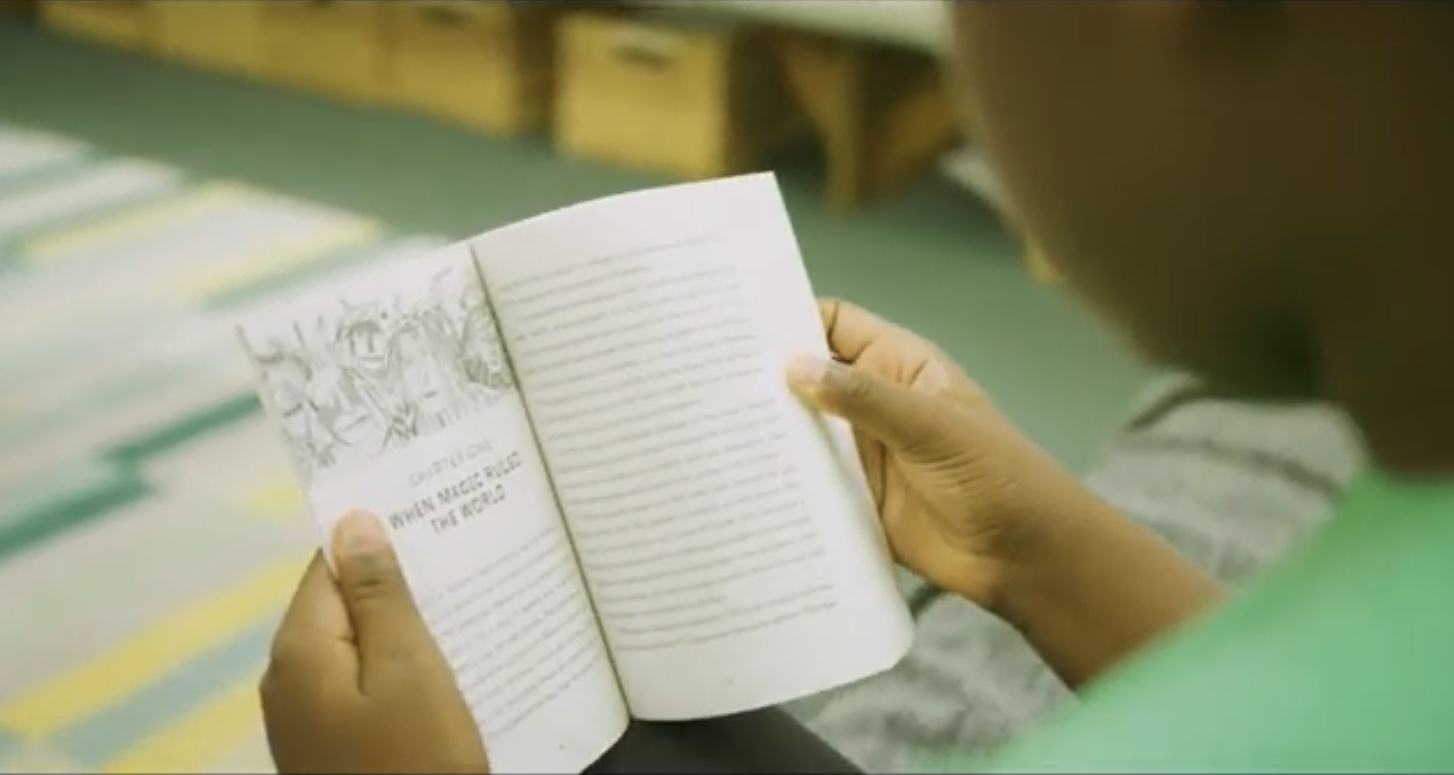
“Before I discovered the miracles of science, magic ruled the world.”

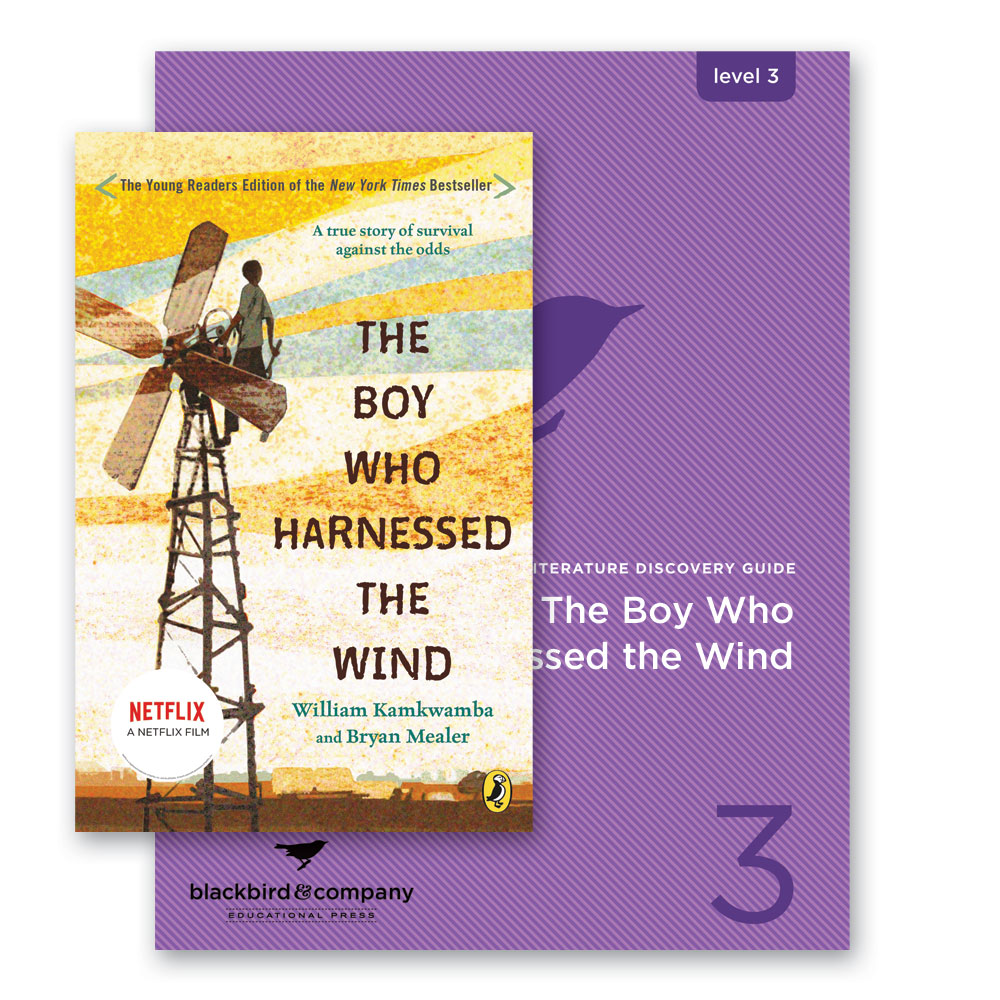
In a single sentence,  the first sentence of chapter one, The Boy Who Harnessed the Wind, William KamKwamba draws us in to the world of his small farming village in Malawi.

One day, William was approached by boys who told him that, while tending the herd animals, they discovered a random sack in the road—a giant sack filled with bubble gum! So begins the drama. The boys shared a handful of gumballs, which William, naturally, devours. When the trader realizes, however, that the bag of gumballs had slipped off his bicycle, he retraced his path. That trader was so upset, he went to the local sing’anga for help. When William got wind of this, he was terrified!

“Now the sweet, lingering memory of it soured into poison on my tongue. I began to sweat; my heart was beating fast. … I began crying so hard I couldn’t move my legs. The tears ran hot down my face, and as they did, the smell of poison filled my nose. It was everywhere inside me. I fled the forest as fast as possible, trying to get away from the giant magic eye. I ran all the way home to where my father sat against the house, plucking a pile of maize. I wanted to throw my body under his, so he could protect me from the devil” (page 4).

What comes next? Well, William’s father to the rescue. He walks 8 kilometers to pay the trader for the entire bag of gumballs which, by the way, amounts to a full week’s pay. No magic involved.

William’s father did not fear magic.


The sentence that begins this wonderful true story of how, when William’s family’s crops fail due to drought, William devises a plan—an idea that would not only benefit his village, but would set him on a journey to Dartmouth.

I know this because because the very first wonderful sentence drew me into the story.

“Before I discovered the miracles of science, magic ruled the world.”


Let’s unpack the sentence:

Before: Well, this word is a preposition (so is “of” by the way).

So the sentence begins with a complex prepositional phrase: Before I discovered the miracles of science, (which is also a dependent clause because it cannot stand alone as a sentence).

The independent clause, magic ruled the world, could actually stand alone as a sentence, though it would be way less intriguing.

Add the dependent clause, to the independent clause and now you have not only contrasting subjects (magic and science), but you have introduced a character and a significant revelation.

Hemingway reminds us: “All you have to do is write one true sentence. Write the truest sentence that you know.”

One true sentence. Simple. 

~Kimberly

Posted on

Shakespeare’s Words

Mark Twain once said, “The difference between the almost right word and the right word is really a large matter—’tis the difference between the lightning bug and the lightning.”

But Shakespeare knew this long before Mark Twain spoke these words!

Have you ever received an invitation? Well, you can thank William Shakespeare for bringing that happy word into popularity! William Shakespeare actually invented 1700 words over the course of his lifetime and generously brought them into the wide world through his 154 sonnets and 38 plays.

Dis you know that the rate of words disappearing from English is greater than the rate they are appearing? Yes, the English language is shrinking! I, for one, am so thankful for William Shakespeare and the words he left us to chew on. 

Shakespeare used verbs as adjectives and nouns as verbs. We see the verb “impair” used as an adjective in his play Troilus and Cressida: “Nor dignifies an impair thought with breath.” In his play, Julius Caesar,” he uses the noun “dog” as a verb: ”Destruction straight shall dog them at the heels.” He generated compound words like starblasting and doghearted and so much more! He played with suffixes. He played with prefixes. His imagination was limitless!

Above all else Shakespeare reminds us, like Mark Twain, that every word has unique power to communicate!

Come December, we will be celebrating Twelve Days of Haiku. More details tomorrow, but let’s begin with the prizes! We will be giving away a wonderful pairing of Shakespeare’s Words: A Glossary & Companion and Will’s Words: How William Shakespeare Changed the Way You Talk. We will be offering this pairing to three three winners on the last day of 2023!


More details tomorrow!

~Kimberly

Posted on

Creating a Tradition of Letters

While cleaning out a closet I found some treasure! Real writing gold. A stash of letters my mother had written to my father over the course of a year while she was simultaneously raising 4 children and trying to sell our house in North Carolina. My father was out west in California building a new house in the 1960’s. As I read through these seven letters (as well as a few my older brother and sister had written to him), I was instantly transported back to my childhood in that small town as my mother was reporting on each child and all the goings-on of friends and close relatives like my grandmother and my aunts and uncles.

I was struck how writing letters is a record in time, an anchor to the shifting sands of time, people and places.

This led me to realize how much we forget from the past and how our lives change so much. How could we not change as we age? Each life stage changes us—education marriage, raising family, careers, possible trauma, big life changes, and so on.

And then I found another letter that really hit my heart.

This is a letter I wrote to a beloved aunt all about the man I was dating at the time (late 70”s), named John.  I was trying to convey matters of my heart and all my feelings about dating him and wondering if he was the one? I have never been a journal keeper, so these letters are all I have to remember who I was at that time.

I fear letter writing and all its myriad benefits have fallen away to the convenience of email and texting but it’s not the same. I can feel my mother’s love through that beautiful penmanship and the slow deliberate retelling of stories and gossip. I can imagine my father working alone up on the mountain, pulling up a paint can to sit upon while reading about his wife and children. There is so much love and longing in those letters flowing from the tip of that pen.

I am happy to report that my daughter was pen pals with her grandfather all through her childhood, as he was living a nomadic life in the desert, sending her sweet letters with little desert creature drawings imbedded. And at 30 she corresponds regularly with my cousin who is 45 years her senior! They share a love of travel and always send post cards from far flung places on the globe.

No wonder letters are regularly studied by historians to learn facts about the people and subjects they are writing about. Where would we be without Van Gogh’s wonderful letters to his brother Theo and all the insights contained therein? Or Emily Dickinson’s thousand extant letters (experts believe there were thousands more) that reveal her interests and profound feelings, which obviously informed her poetry and life? Or all the WWII letters written by soldiers to their mothers and fathers and wives? These letters are obviously invaluable.

So we at Blackbird and Company want to encourage the art and gift of letter writing! We have some brand new FREE resources—Letter Writing and Letterforms—to help you establish the very fun and rewarding endeavor that is letter writing.

Happy Holiday Season to you all!

~Sara

Posted on

The Friendly Letter is a Gift

Let’s start a tradition!

Let’s write friendly letters!

Composing a letter by hand—a non-electronic letter—is a relational, social activity that teaches generosity, idea making, and the nature of beauty.

Once upon a time there was no such thing as email, text messages, and social media. Back then there was mail. The art of letter writing began way before Pony Express.  I love watching movies where fancy-dressed people are sitting together after a lovely meal sharing news from friends and relatives living in far reaches of the wide world. Letters. They called them letters.

Ephemera is a wonderful word. Say it aloud. Ephemera.

But ephemera is something that is not meant to be preserved. I would argue that letters, the thoughtfully crafted kind, are not ephemera but rather lasting gifts!

  1. Letter writing, like all writing, begins with an idea. It’s November. And November is the season of gratitude. So why not write an idea tied to the theme of gratitude? Starting with a list is always a good idea. Brainstorm! What are you thankful for?
  2. Hone in: Once there is some fodder on the page, focus in on a specific topic that you can develop. Encourage student writers to keep ideas simple, being grateful for finding that favorite lost sock,  watching the goldfish swimming in the backyard pond, or accomplishing a difficult task like mastering a new math concept. Brainstorm some more.
  3. With a topic nailed down, begin crafting the rough draft. Time to pick up the pencil and tell the story—yes the story! Narrative writing (a story of gratitude is no exception) is an opportunity to share. Write a first draft.
  4. Lay down the pencil when all the ideas are on the page. Set the writing aside for up to 24 hours. Let the story simmer.
  5. Re-read what was written. Now is the time to make edits, to re-arrange, to add wonderful words and phrases and to read again! Once satisfied, copy the gratitude narrative into the card you have chosen. You can certainly add some “pleasantries” to introduce the purpose of your gratitude narrative (’tis the season, after all), and you can share a bit of personal news after your narrative, but however you shape your letter, don’t forget to mark it with a date, create a salutation, and a friendly closing.

Check out our FREE letter writing worksheet here.

Well-told stories encourage people to see things in new ways.

Snail Mail is not archaic!

To write a letter is to offer a generosity.

To receive a letter is a gift.

Heres to a month of letter writing! Let’s put a stamp on it!

“A letter always seemed to me like immortality because it is the mind alone without corporeal friend.” ~Emily Dickinson

Posted on

How to Encourage Middle and High School Writers

Students using our Middle School ELA Grade Level Collections will be exploring essay form, enhancing vocabulary, and being introduced to advanced rhetoric in addition to the CORE units. Students at this level have developed confidence in the expanded form of idea-making, are crafting clever Hook openings with unique voicing, and are moving into the territory of unencumbered idea making!

Students regularly engage in the process of writing, idea to draft to the re-read/edit loop that leads to a beautiful polished final work.

When students move to the high school level, each week, in addition to journaling observations character development, themes, symbols, and motifs, they are encouraged to craft a synopsis and a personal reflection to help them timk deeply about the story at hand in preparation for the crafting of a literary essay.

Crafting the synopsis and reflection within a constrained word count, challenges the writer to make each word matter!

Each culminating essay follows the same form introduced in middle school, so that the writer is now prepared to craft original observations and ideas tied to complex literature constrained to the particular literary form.

Click through to watch a recording of the August Professional Development sessions with Mrs. B & Ms. Clare:

How to Encourage Middle School and High Student Writing! 


~Kimberly