Posted on

Fall is Just Around the Corner!

And its, by far my favorite time of year…

Fall feelings are near!

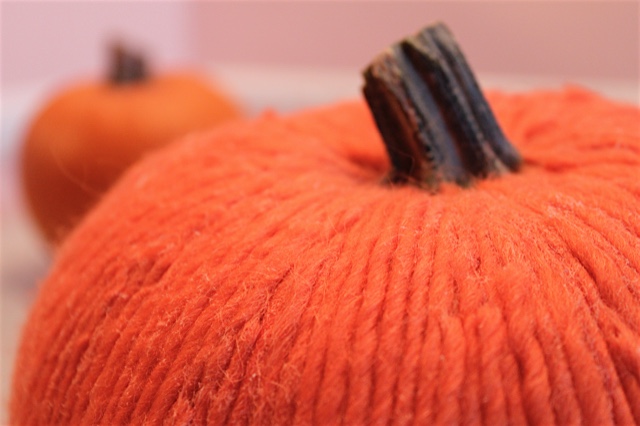
Once upon a time, over two decade ago (wow), our family covered this white pumpkin with orange yarn—one strand at a time. What’s the point of this, you ask? Delight springs to mind. But looking back, it is precisely these types of activities that built patience into my four children. They will be the first to tell you that nothing beautiful happens speedily! This project took many October days to complete in little spurts.  During the process my four exercised their observation skills. They became very aware of the fact that the pumpkin’s shape is organic, non-symmetrical.  They gained fine motor skills applying glue with a brush, cutting a strand of yarn just the right length, and affixing. Ultimately, they exercised grit by seeing this exercise to its conslusion.

Never discount the power of a good craft!

Now, during the last slow days of summer, is the time to get busy preparing.  Whether you are teaching primary, elementary, middle or high school students ELA, we’ve got you!

Primary is Kindergarten, 1st and 2nd Grade

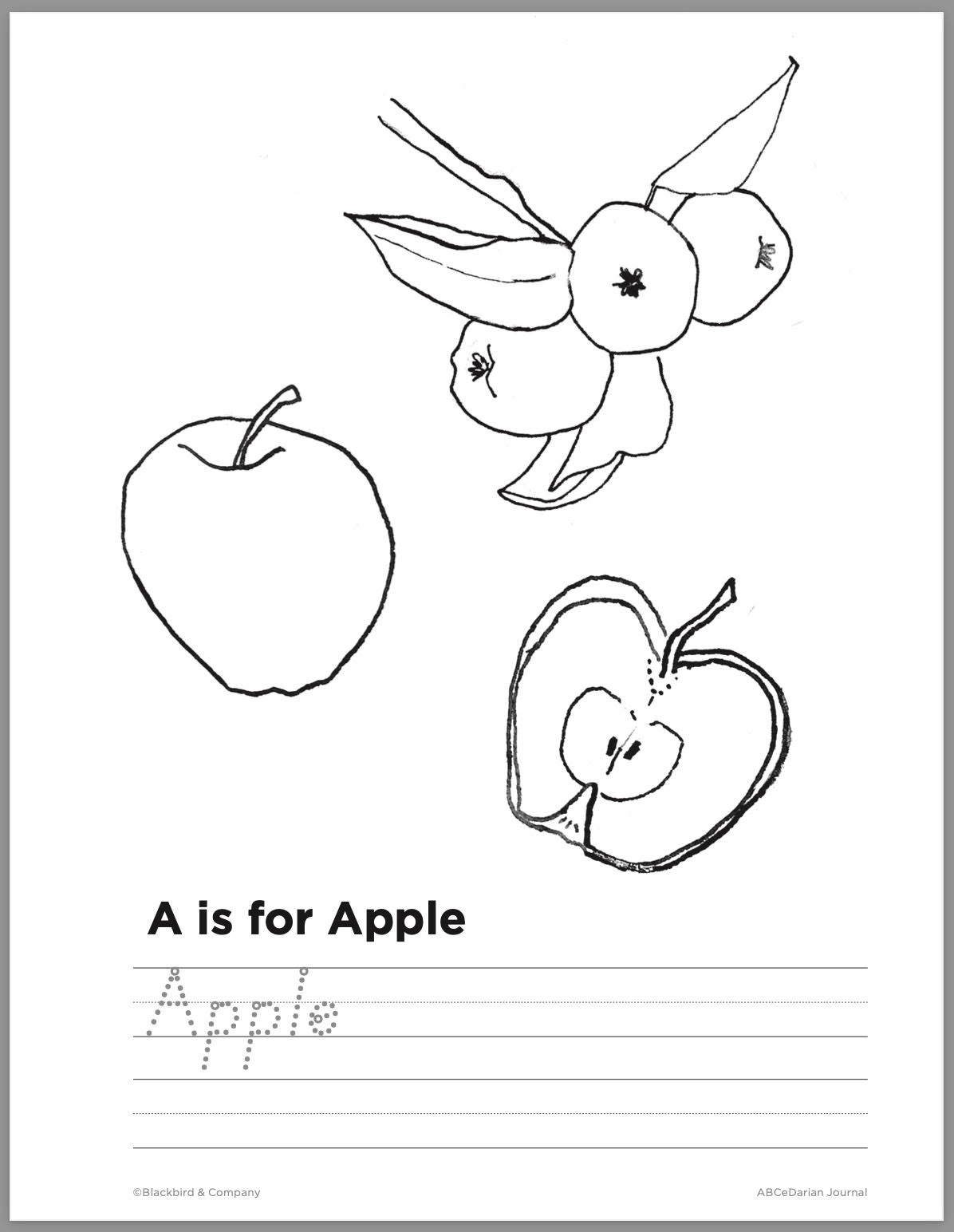
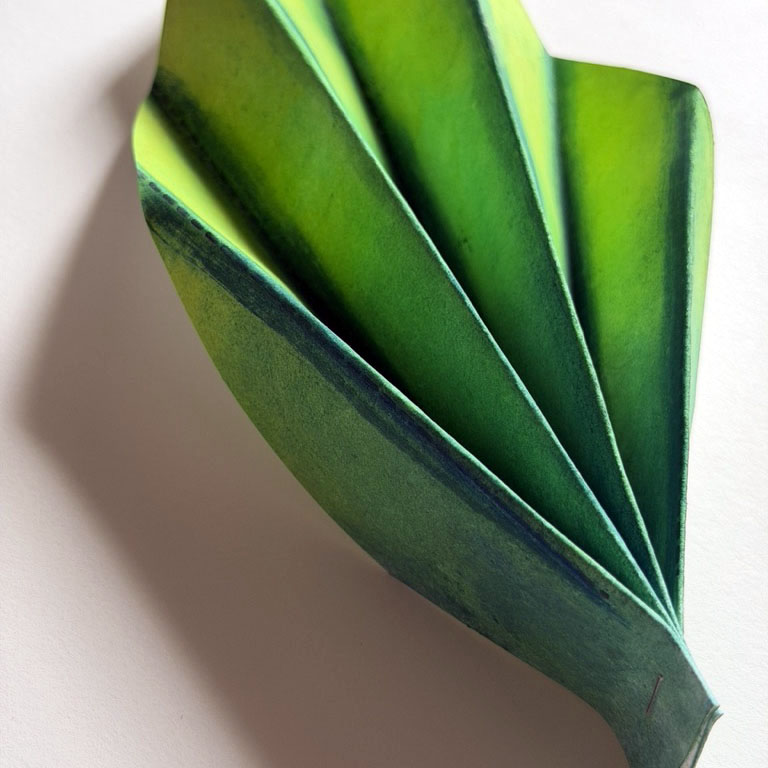
For primary students be sure to check out Print Shop which is chock full of ABCeDarian crafts—crafts tied to the sounds of the alphabet. Why? Because English Language Arts is an art form that requires curiosity, imagination, and hand skills. After all, we believe the best technology for learning to write well is the pencil. Download projects, gather material, and be prepared to begin the school year with ease.
L is for Leaf 01

Elementary is 3rd and 4th and 5th  Grade

Help your students build a rich lexicon—their very own collection of words. Check our our Print Shop introduction to the wonder of words with this Collective Noun downloadable activity.
And begin the 3rd grade with Operation Lexicon Traits of Character to help your students collect a specific collection to describe the rich characters they will encounter as they read stories.

And click through to Print Shop, More for Teachers, and you will discover our brand new Reader’s Guides. These are crafted to walk with you through a close reading, offering some insights that we hope will inspire you and your students.
Reader's guide: Grayson

Middle School is Grades 6 and 7 and 8

In middle school, students are learning to use rhetoric to make their sentences stylish. One True Sentence: Tools of Style, begins in 5th grade and really ramps up in middle school. Amplification? Polysyndeton? Tools of Style help students write better sentences. Print Shop Writer’s Guides offer more practice along the way.
High School is Grades 9 and 10 and 11 and 12

This is where Blackbird & Company students take flight! With CORE Level 4, students will read and explore characters, themes, symbols and motifs, journalling for four weeks and culminating in a literary essay guided each step of the way.

Our Pages Online offer Literature + Writing Level 4, Intermediate and Advanced Composition,  plus Art History / Studio and Music History / Appreciation electives.
 

Now’s the time to get prepared! Fall is around the corner and this means the start of a brand new school year. We’re here to help!


Posted on

Print Shop Highlight: The Art of the Sentence

Within a paragraph, beautiful sentences steal the show. They glide across the page like a ballerina twirling across a stage; you can’t help but keep your eyes glued to every clause, every comma, every figure of speech. 

These sentences don’t materialize out of thin air, however. Beautiful sentences and flowy paragraphs seem so effortless because writers have learned lessons they don’t often verbalize—or perhaps don’t even know they know!

Although developing one’s voice is a process of trial and error and practice, we’ve developed a line of worksheets to help demystify what makes great writing great. Introducing: The Art of the Sentence.

So far we have released three worksheets (downloadable on Print Shop) within The Writing Mentor line that explore how to craft great sentences. The Art of the Sentence worksheets go as follows:

In about three pages, each worksheet follows a Learn, See, Do structure to scaffold students from learning about sentence length, to seeing examples, to writing intentional sentences themselves. 

We can’t wait to offer more Art of the Sentence worksheets soon to explore ideas like writing an intriguing hook. Keep your eyes peeled for our upcoming goodies!

Let’s take our students’ writing to the next level—we’ll meet you at Print Shop!


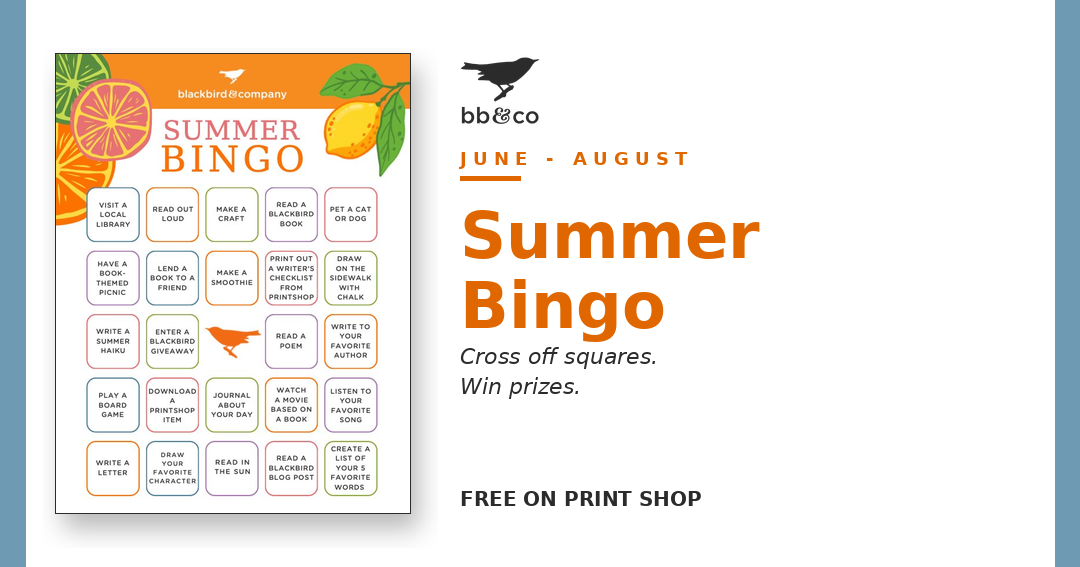
DON’T FORGET TO PLAY BINGO!

Download your Summer Bingo for free on Printshop HERE and submit a picture of your completed bingo sheet below to enter the raffles. Bingo will run June 1st through August 31st—so print out your bingo sheet and get to crossing off squares!


Summer Bingo!

Posted on

Romeo + Juliet are Everywhere

One of the significant milestones for student writers is the ability to connect the dots. A big part of becoming educated is acquiring knowledge. In English Language Arts as with all the humanities, students engage in reading and learning from books. Shakespeare is the bedrock of storytelling. We believe a must for students to gain a richness of language alone. Our Operation Lexicon guides students into the vast array of words unique to Shakespeare’s work. This is a great unit to begin in summer before diving into his sonnets and plays larger work. 

Operation Lexicon 11 - Shakespeare

 Here again, our student Kate, during the spring semester demonstrated that she is enlarging her fund of knowledge and understands how to connect dots. One of her projects included diving into the works of Shakespeare. She learned about his life and touched the surface of his work.

To begin, she did a close reading of  one of his well known sonnets, considering both its content and form. After creating the beautiful final project above to showcase the sonnet—a slowly copied work—she read a beautifully illustrated version of Romeo and Juliet. Now she was ready to dive into the world of Shakespeare’s play.

What is tremendous is the connections she made as she enlarged her fund of knowledge and connected the dots in her culminating essay.


Romeo and Juliet are Everywhere

Was any of it worth it? Shakespeare’s nearly 500-year-old play portrays two lovers, Romeo and Juliet, who tragically fall in love despite the deep, destructive resentment between their families. The language tricks, film adaptations across different time periods, and devastating consequences make this play an important work of art.

Shakespeare uses language tricks to add ironic humor to this tragedy. Romeo’s fickle love, ended his love towards Rosaline enabling him to suddenly fall in love with Juliet, setting the tragedy into motion. After Benvolio insists Romeo abandon his obsessive crush on Rosaline, Romeo responds hyperbolically: “Yet tell me not, for I have heard it all. Here’s much to do with hate but more with love. Why then, O brawling love, O loving hate!” (Folger lines 160-168a). It’s silly how Romeo’s feelings for Rosaline changed so quickly, turning into an obsession over Juliet. It’s wild that Romeo is compared to an attractive book holding a bad story, illustrating the complexity of what lies below the surface. Juliet compares Romeo to a beautifully bound book containing a dark heart after he kills Tybalt: “Was ever a book containing such vile matter so fairly bound? O, that deceit should dwell in such a gorgeous palace” (Folger lines 83-85a). Juliet’s statement is both amusing and disturbing regarding her obsessive passion. Shakespeare’s use here of complicated and tricky word play is effective.

Franco Zefrelli, Baz Luhrmann, Rogers and Hammerstein, and even Michael Jackson have reshaped Shakespeare’s play, “Romeo and Juliet,” for film. Baz Luhrmann’s 1996 film brought the story of Romeo and Juliet to life for me with of the casting of Leonardo DiCaprio, the modern setting, and the ’90s styling. While Robert Ebert loved Franco Zefarelli’s 1968 film, “I believe Franco Zeffirelli’s Romeo and Juliet is the most exciting film of Shakespeare ever made,” I don’t agree. I found the film dull. The 1968 film was theater-like, traditional, and Romeo dies first! Nobody can criticize Leonard Bernstein’s music or Stephen Sandhein’s lyrics, which was created for the theater, toured worldwide, and later became the famous 1961 film. This clever adaptation is set in New York’s Upper West Side, where, like The Outsiders, gangs are feuding (the Sharks and the Jets). I found the connections of West Side Story and Romeo and Juliet, and The Outsiders interesting, especially where all three stories encountered complicated relationships, conflict, and overwhelming emotions. And then there is Michael Jackson’s 1982 music video, “Beat It,” yet another adaptation where hostility increases quickly between rivals. Here Michael Jackson steps in, advocating for peace, using music and choreography to communicate powerfully. I wonder how Shakespeare might view all these adaptations?

Let’s talk tragedy. To begin, the fact that the Montagues and Capulets keep their feud going on and on and on to a point in time that no one actually remembers how it started is foolish, destructive, and clear evidence of how pride definitely comes before a fall! It’s frustrating and isolating for Romeo and Juliet, who could not share the fact that they were actually married with their loved ones. In the end, it took the tragedy of death to bring the feud to an end and to bring these families to their senses. How can anyone not connect to Romeo’s and Juliet’s obsessive love for each other and their heartbreaking death? Family conflict, love, and unfortunate spontaneous decisions do not always end well. Tragedy is real and happens every single day. Beware of holding onto grudges!

From 1597 to 2026, Shakespeare’s Romeo and Juliet has informed and influenced millions upon millions of us humans, but the idea was inspired by an earlier work by an English poet, Robert Brooke, who was inspired by an Italian poet named Matteo Bandeblo. There is nothing new under the sun, but Shakespeare made this tragic tale his own inspired by artist who came before him. Retelling Shakespeare’s classic redefines the timeless tragedy for every new generation. I wonder who will come next.

Work Cited

Jackson, Michael. “Beat It.” 1983. YouTube, Michael Jackson – Beat It (Official 4K Video)

Romeo and Juliet, Directed by Baz Luhnmann, 1996.

Shakespeare, William. “Romeo and Juliet.” Folger Shakespeare Library, https//folger.edu/shakespeares-works/romeo-and-juliet/.

Shakespeare, William and Zwerger, Lisbeth. Romeo and Juliet. Michael Neugebauer Publishing, 1996.

West Side Story. Directed by Robert Wise and Jerome Robbins, 1961.


~Kimberly


DON’T FORGET TO PLAY BINGO!

Download your Summer Bingo for free on Printshop HERE and submit a picture of your completed bingo sheet below to enter the raffles. Bingo will run June 1st through August 31st—so print out your bingo sheet and get to crossing off squares!


Summer Bingo!

Posted on

You aren’t teaching literature alone: Introducing Reader’s Guides

Leading young minds through literature can be intimidating—teachers are forced to ask the big questions, like, “What are the themes of this story?” and “How can we learn from these characters?” And that’s not even mentioning the pivoting we have to be prepared for when our students pull questions seemingly out of nowhere!

This is why out of all our wonderful Print Shop materials, the More for Teachers: Reader’s Guides are my personal favorite. 

What is a Reader’s Guide, you may ask? Great question!

Our Reader’s Guides are a helping hand we extend to teachers and parents, supplementing the guidework students complete in our CORE Literature Discovery  guides. We do the research on the book so you don’t have to!

Each guide includes:

  • Stats (like reading levels) and themes
  • About the Author
  • About the Book
  • Section Synopses
  • Seven Tips for teaching the story!

For example, in the Seven Tips for The Iron Giant, we highlight repetition, figurative language, symbolism, philosophy, and genre in a few pages so that teachers can point these elements out to their students. We aim to make complex literary ideas accessible, to give you some food for thought as you take on the challenge of educating.

So far, we’ve released Reader’s Guides for:

  • All 6 titles from the 3rd Grade Level Collection (Woohoo!)
  • 4th: Charlotte’s Web
  • 5th: Grayson
  • 6th: The Wanderer
  • 7th: The Folk Keeper
  • 8th: Bridge to Terabithia

Think of this as a sampler platter. More is on the way.

So the next time you crack open a literary book, don’t forget its Reader’s Guide. May you be empowered to teach with confidence!

DON’T FORGET TO PLAY BINGO!

Download your Summer Bingo for free on Printshop HERE and submit a picture of your completed bingo sheet below to enter the raffles. Bingo will run June 1st through August 31st—so print out your bingo sheet and get to crossing off squares!


Summer Bingo!

Posted on

An Alive and Kicking Section 5 Project

The word essay has its roots in the old English  word “assay” tied to science in the 1400s. Think metallurgy. In the lab, scientists hypothesize and try ideas out.

As a writer, I am often saddened by what has become of the essay. Quoting “Introduction to Poetry” by Billy Collins, I have to say, I agree:

But all they want to do
is tie the poem to a chair with rope
and torture a confession out of it.
Swap the word “essay” for the word “poem” and we are understanding what has happened to this rich form. We need to land at Form Follows Function—ideas must always lead. Form will follow.
The true purpose of the essay is for the writer to bring shape to an idea in a particular scaffolded form. With the literary essay, we begin in a story. Imagine the reading like meandering down the shore of a lazy river gathering tumbled stones and other treasures. At the end of the reading, the writer examines what was collected and writes about a significant discovery. This discovery is shaped the essay, Yesterday I shared one such essay tied to S.E. Hinton’s seminal novel, The Outsiders.
Today I want to share another way that readers “assay” ideas gleaned from great stories—Art. Every one of our Integrated Literature and Writing units includes a culminating 5th week of study, what we call the Section 5 Project.  Here Kate, the essay writer from yesterday’s post, has created a beautiful Lexicon of Outsiders. Her assemblage gathers and immortalizes words and symbols from the book in a brand new, creative way. She supports her choices by providing actual quotations.

Powerful (and lovely).

Am I right?

~Kimberly


DON’T FORGET TO PLAY BINGO!

Download your Summer Bingo for free on Printshop HERE and submit a picture of your completed bingo sheet below to enter the raffles. Bingo will run June 1st through August 31st—so print out your bingo sheet and get to crossing off squares!


Summer Bingo!

Posted on

Alive and Kicking

Over the course of five weeks, in the Level 4 Integrated Literature and Writing units, high school students are led on a journey through an exceptional work. Not only will they journey through, but they will document the journey, creating a weekly journal that explores, characters, themes, symbols, motifs, and vocabulary. The journal will also include a synopsis of the week’s reading and a weekly personal reflection. All of this, to prepare for the crafting of a culminating essay. 

Back in the 60s, fifteen-year-old S.E. Hinton—Susan Eloise—began writing The Outsiders. The book was published when she was 18 and has been in print ever since. Back in the 90s it was surprisingly ranked #38 on the American Library Association’s Top 100 Most Frequently Challenged Books. But in 2019, the BBC listed the book as one of the top hundred most influential.

Now I love it when an idiom is used in a fresh way. So it tickles me that Kate, a current 9th grade student working through Honors English, was able to incorporate one of my favorites into her essay—alive and kicking. This one was, once upon a time, a sales pitch used by fishermen. Think 1800s. Think nets filled with flopping fish pulled onto a pier to sell. This is an alive and kicking offering, for sure!  Fresh, indeed!

The idiom in Kate’s Thesis Statement was a teaching moment during the edit stage of the writing process. Kate first wrote: “The theme of loyalty, the symbolic switchblades, and the shrinking of differences to similarity keep this story relevant.” When she and her teacher were working through the editorial process, the idiom felt like a very natural improvement. This is REAL writing. This is the space where the mentor and the apprentice read and discuss and edit. All real writers learn through mentorship. Never is “imagination” or “originality” or “voice” the result of a consumable worksheet.  Authentic essays spring from the heart that is drawn into a process—brainstorm, draft, re-read, conference with a mentor, polish. And here, you will read the result of a student who engaged in such a process. 

Thank you, Kate, for reminding us that S.E. Hinton’s BIG idea is still alive and kicking!


The Gold Below the Surface

Have you ever been judged before someone really got to know you? In The Outsiders, by S.E. Hinton, the Socs and the Greasers are separated by wealth and reputation. The theme of loyalty, the symbolic switchblades, and the transforming of differences to similarity, keep this story alive and kicking.

For the Greasers to survive, they must rely on loyalty to one another. Every day, the streets are dangerous for the Greasers. S.E. Hinton uses the ongoing conflict between the Greasers and the Socs to demonstrate this danger, “Greasers can’t walk along too much, or they’ll get jumped” (2). The Greasers rely on each other for protection.  Being loyal means sometimes having to sacrifice. Johnny protects Ponyboy at the church fire, “We put it out before you got burned. That jacket saved you from a bad burning, maybe saved your life” (94). Johnny courageously sacrifices his life because of his loyalty to his friend Ponyboy. Johnny rescuing Ponyboy not only demonstrates the loyalty of a true friend, but the true devotion of the Greasers toward one another.

Switchblades are weapons that symbolize both violence and protection. The Greasers live in a tough environment. They rely on violent switchblades for power, “Ya kill’em with switchblades, too, ya, kid” (83). Daily life is filled with rivalry, where the switchblades represented hostility. Getting the news that Johnny will be dying, breaks Ponyboy. But Johnny’s last words stick with him forever like a switchblade to the heart, “Stay gold, Ponyboy, stay gold…”(148). In the last seconds of his life, Johnny, protecting his friend, instructs Ponyboy how to live life. Receiving his last words of guidance, Ponyboy can move forward.

Despite all of the differences between the Greasers and the Socs, they are amazingly alike. After all, having differences doesn’t mean we humans aren’t similar. Despite the Greasers and the Socs differences, both groups are more alike than meets the eye, “It seems funny to me that the sunset she saw from her patio and the one I saw from the back steps was the same one” (1). Seeing the same sunset demonstrates similarity. Not knowing what Johnny’s future is going to look like, or if he even will have a future, is very scary. Worrying about what might happen to Johnny in the near future, Ponyboy comes face to face with mortality, “The blood was draining from my face and Darry put an arm across my shoulder and squeezed hard…even if he lived, he’d be crippled for the rest of his life” (102). All these thoughts are running through his mind. Sunsets and death lead readers into understanding that the Greasers and the Socs have much in common.

Throughout The Outsiders, S.E. Hinton, uses the simple theme of loyalty, symbols like switchblades and staying gold, and striking motifs of sunsets and death, to create a hauntingly realistic tale that is relevant here in the 21st century. Ultimately, judging someone before getting to know them creates walls that divide. Getting to know someone before judging enables us to discover someone as a whole, and this will always surprise the heart.


Works Cited

Hinton, S.E. The Outsiders. Viking Press, 1967.


~Kimberly

DON’T FORGET TO PLAY BINGO!

Download your Summer Bingo for free on Printshop HERE and submit a picture of your completed bingo sheet below to enter the raffles. Bingo will run June 1st through August 31st—so print out your bingo sheet and get to crossing off squares!


Summer Bingo!

Posted on

The big Print Shop drop is coming up—get ready for The Writing Mentor

Poetic devices can turn prose into poetry.

Sprinkle in alliteration or oxymoron or polysyndeton and all of a sudden, a sentence is more than just a sentence. It’s art. 

But how does one teach the art of writing this sentence? Well, the One True Sentence: Tools of Style workbooks are a great place to start. Each workbook explores twenty devices that skillful writers have at their disposal. 

Sometimes, however, writers need more time to sit with these new techniques, time to contemplate and learn and practice. That’s why we created The Writing Mentor print-outs for our Tools of Style workbooks. Each downloadable 3-5 page worksheet (found on Print Shop) supplements a specific lesson from the workbook. With every lesson, students have a chance to learn, practice, and get creative. 

Zooming in, students will: 

  • Learn from a great writer’s example of the poetic device. We’ll break it down for you.
  • Practice with scaffolded activities where students identify the poetic device and write their own with guidance.
  • Get creative by unleashing their inventiveness, be it through writing beautiful sentences, composing short poems, or drawing imaginative pictures.

What better way to learn about amplification than by writing your own amplified sentences—or to practice anaphora than by writing an anaphoric poem about yourself? 

Download a Writing Mentor: Tools of Style worksheet starting on July 20th to cultivate the writer within!

DON’T FORGET TO PLAY BINGO!

Download your Summer Bingo for free on Printshop HERE and submit a picture of your completed bingo sheet below to enter the raffles. Bingo will run June 1st through August 31st—so print out your bingo sheet and get to crossing off squares!


Summer Bingo!

Posted on

10 Days and Counting! 🎉

Soon Print Shop will be loaded with goodies designed to enhance  your primary, elementary, or middle school student’s ELA journey.

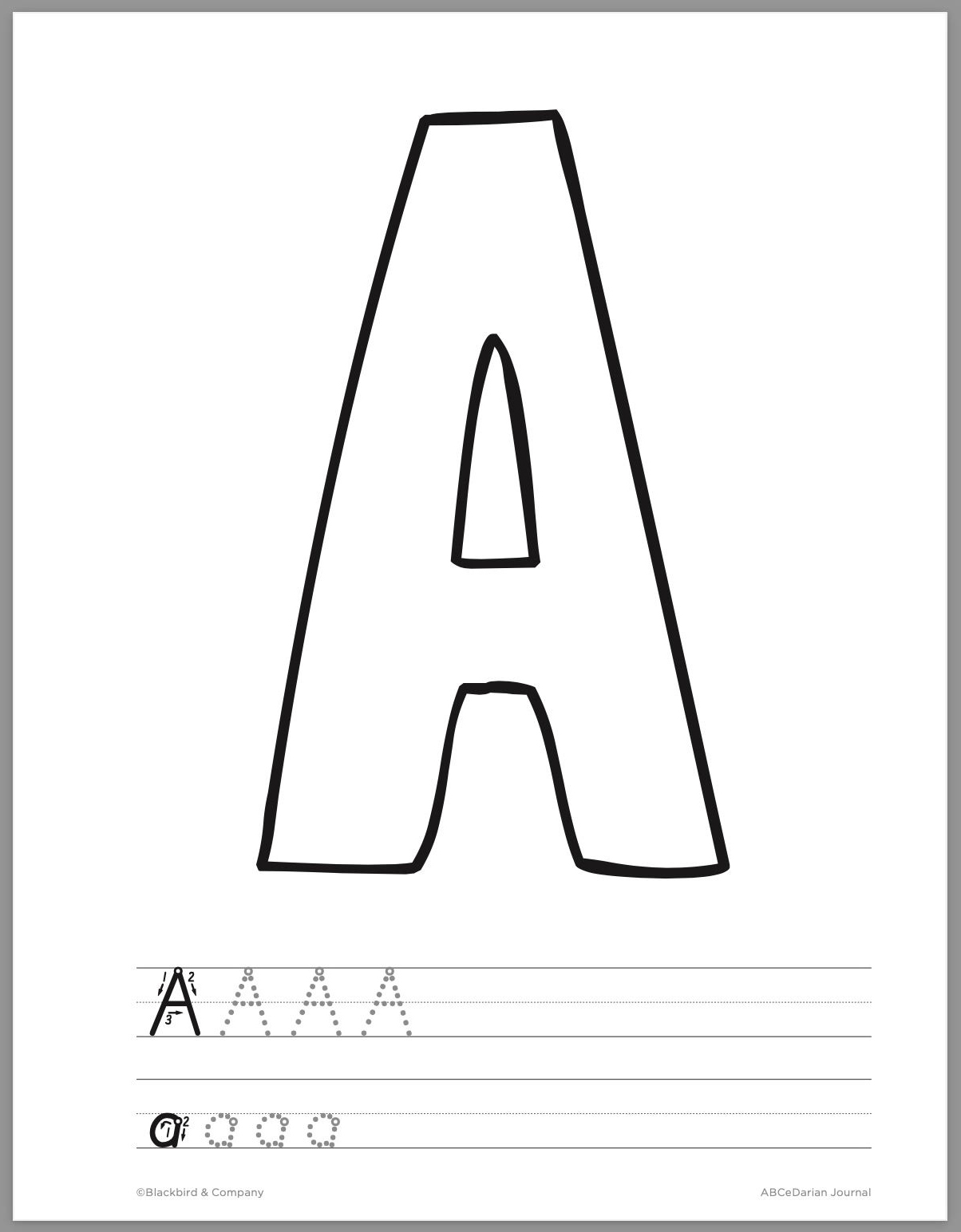
Simply click the “Print Shop” link from the orange bar at the top of the landing page of our website and you will discover four new categories: More for Teachers, Writing Mentor, Penmanship, and ABCeDarian Projects.

But not yet!

Brand new buttons will go live July 20, 2026.

That’s TEN days from today…


~Kimberly

DON’T FORGET TO PLAY BINGO!

Download your Summer Bingo for free on Printshop HERE and submit a picture of your completed bingo sheet below to enter the raffles. Bingo will run June 1st through August 31st—so print out your bingo sheet and get to crossing off squares!


Summer Bingo!

Posted on

Always Be Prepared!

It all began with Little House in the Big Woods. Published in 1932. This book is the first in the series of her memories growing up in the American Midwest during the last quarter of the 19th century. While these books are fictionalized, they are considered by most historians to be primary sources from this period of American History.

I read each and every book in the series back when I was in middle school back in the 70s. About the same time, the TV show was released. I imagine Laura Ingalls Wilder never imagined her stories would impact so many humans in the 20th century and beyond. Even though she lived a long life, she died in 1957, long before the television show.

My two favorite books are The Long Winter and Farmer Boy (in that order). The Long Winter is the tale of how the Ingalls family survived the brutal winter storms in Dakota Territory during 1890. Let me tell you, it is a page turner! Discovering the “twisting of hay” technique alone is worth the read! But Farmer Boy is unique, a stand alone, being the story of Almanzo Wilder’s childhood—the man who Laura later married.

Two of my now adult children adored Farmer Boy as did countless of my students! The standout, of course was the description of food, especially the “stacked pancakes” Almanzo adored. That boy could EAT!


So what has this got to do with being PREPARED?

Absolutely everything!

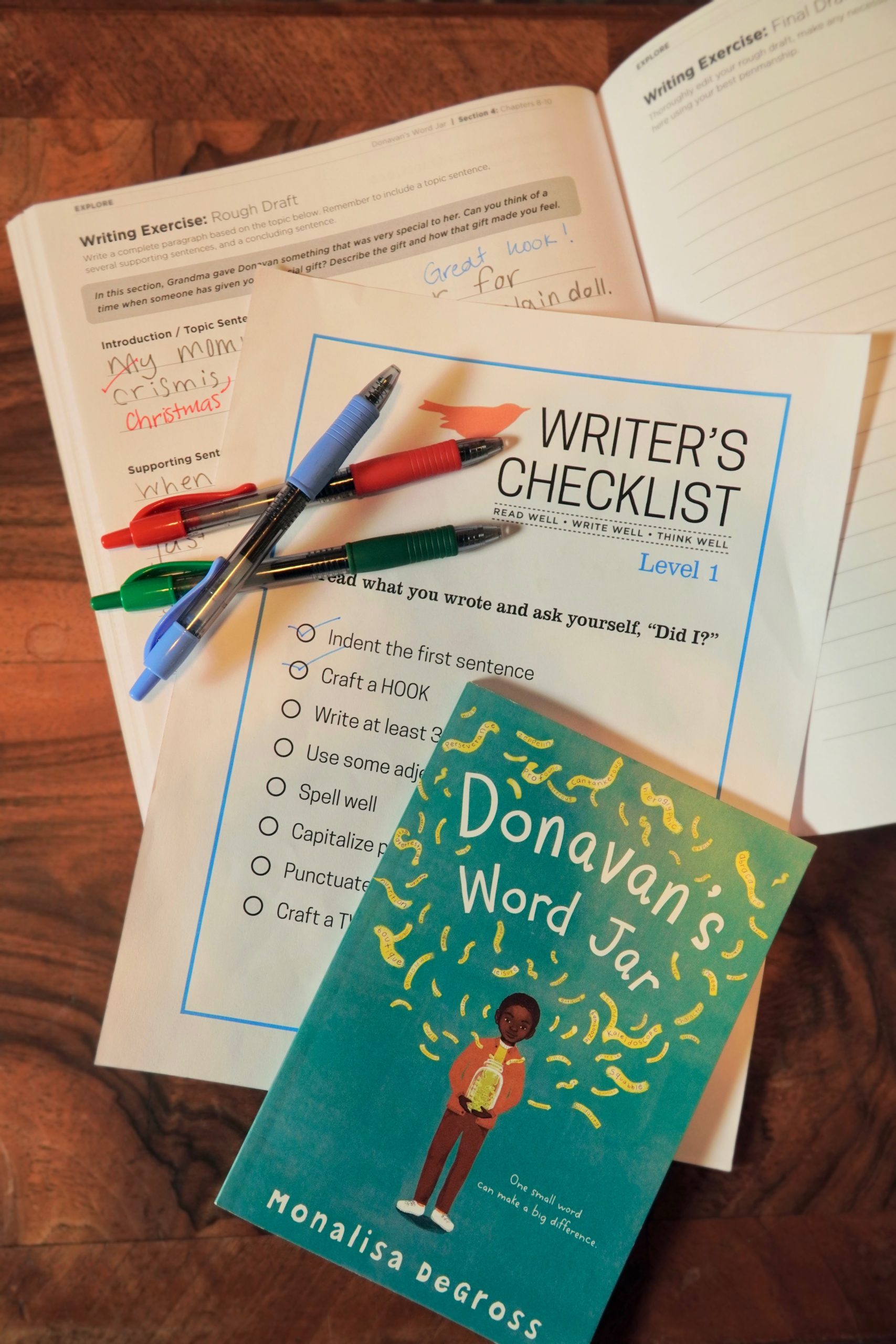
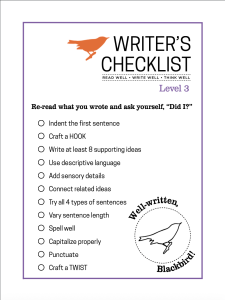
Here, at the dawn of July, Think forward. Read the books (or listen on Audible) you have chosen to explore this coming year. As you read, listen for words that strike your fancy, sentences and passages that underline. Use sticky tabs to mark words, sentences, and passages you want to share. Flip through your student’s workbooks to see what will be expected. Calendar out your schedule. Use the Parent/Teacher button dropdown on the orange bar at the top of our home page. Here you will find suggested Lesson plans for every single one of our ELA unit types. You will also, in this area, find our Answer Keys. Head over to Print Shop and scroll down to find FREE Writer’s Checklists, Character Trait Cards, and a wonderful spelling program.

Be Prepared for Section 5!

earlybird fall bundle

If you and your student are working through the Earlybird Fall unit, please bake some mini apple pies. If you aren’t, find a reason to bake some pies! This is still a a happy fall tradition in our home.

Checkout our Student Project Gallery for inspiration. Every single CORE selection has a Section 5 Project Week. Don’t skip this culminating activity.

Make plans now!

Be Prepared!


~Kimberly

DON’T FORGET TO PLAY BINGO!

Download your Summer Bingo for free on Printshop HERE and submit a picture of your completed bingo sheet below to enter the raffles. Bingo will run June 1st through August 31st—so print out your bingo sheet and get to crossing off squares!


Summer Bingo!