Posted on

The Wonder of Collective Nouns

Collective nouns name a group of people or things.

Whoever came up with the concept of collective nouns had some serious fun! From an army of frogs to a zeal of zebras, these aren’t ordinary-performing nouns. For each group of animals from A to Z, An Erst of Bees: A Wild Alphabet of Collective Nouns features a gorgeous illustration and a sweet, poetic verse to make the creatures come alive. 

For example, did you know that a group of kittens is called an intrigue? Or I bet you can’t guess what a knot refers to—a group of toads! The collective noun for peacocks seems especially fitting: an ostentation. 

Language doesn’t have to be boring. When we take time to examine its quirks, English can dazzle us! So take the time to be dazzled and read An Erst of Bees!


~Claire S.

Posted on

Safety in Numbers

In the case of collective nouns, we might more aptly title this post Wonderment in Numbers!

Believe it or not, collective nouns are rooted in medieval sport! It all began with the hunt, the animals encountered, and a woman named Juliana Berners.

A scurry of squirrels.

A bouquet of pheasants.

A rangale of deer.

Back in 1486, she was the first woman in the English language to publish a book, The Book of Saint Albans. This particular book confesses her thoughts on medieval hunting, hawking, and heraldry—hobbies of noble men. Included in the book is an appendix of over 150 collective nouns for animals encountered during the hunt. These nouns tickled the ears of her readers and, over time the list grew.

The thing about a name is that it reveals something of the very nature of what is being named. Some are named for a behavior characteristic, like a “watch of nightingales,” birds singing long into the night. Some collective nouns are determined by the nature of the work performed, think “a yoke of oxen” and “a burden of mules” and you will see what I mean. Still others are named according to a personality trait, “an unkindness of ravens” and “a murder of crows” are infamously applicable.

Collective nouns caught on in the Middle Ages, but it didn’t stop there. James Lipton, published, An Exaltation of Larks back in the 90s, at the tail end of the 20th century. He reminded us to look back at the origin of this special type of naming, but to also carry the activity of naming forward. The very nature of  the English language is like clay in the potter’s hands. Twenty-six letters enable us to transcribe the 44 sounds that make up all the words in the English language we can possibly imagine. Put those words together to form phrases and sentences and paragraphs and poems and essays and novels and songs! But also, consider inspiring your students to use words in new ways to carry on the sport of naming.

I’m thinking right now of Great-grandma Garnet’s boxes of unorganized photographs—the “whisper of photographs”—and just like that, voilà, a collective noun.


~Kimberly

Posted on

Ars Poetica for April

A poem about “what-is-a-poem” is an Ars Poetica.


Sometimes a poem is as small as a list.

Sometimes it encompasses all the words we need.

Sometimes a poem is restless buttons  in a jar.

But always,

a  l  w  a  y  s

a poem

is translucent,

waiting to unfurl

its magic.


~Kimberly Bredberg

Posted on

Month of Poetry Giveaway

A lexicon is a collection of words.

One of my favorite elementary memories is my Word Box, where I organized the many wonderful words I collected as I read. This month, as we celebrate  National Month of Poetry, we will be giving away two wooden card catalogue boxes, complete with ABC dividers and 3 x 5 cards.

Enter to win below:

National Poetry Month

And that’s not all! We are offering a discount on our Operation Lexicon units, plus all things poetry during the month of April. Using the code NatPoe10 you can pick up Introducing Poetry and Small Forms Poetry too! What better way for your students to start collecting and crafting words than to dive into one of these unique units?

Exploring Poetry will inspire your students to use words well:

Small Forms Poetry will inspire students to explore to poetic forms, the small ones, inspiring them to make ever single word count:

Operation Lexicon inspires students from 3rd Grade…

…through 12th grade to collect words:

Operation Lexicon 11 - Shakespeare

And if that’s not enough to inspire, consider the following CORE Integrated Literature and Writing units that are poetry adjacent:

  • Earlybird, Douglas Florian

  • Level 1, Love That Dog

  • Level 2, The Poet’s Dog

  • Level 2, Inside Out and Back Again

  • Level 3, Out of the Dust

  • Level 3, Locomotion

  • Level 3, Silver People

  • We have wonderful words for ALL!

It’s April! It’s time to dive into the wonderful world of poetry!

A great place to start is “How to Read a Poem” by Billy Collins—start HERE.

~Kimberly

Posted on

Let’s Celebrate Poetry

Poetry begins with the utterance of a single word, but not just any word, a singular word.

Think bevelled. Toothsome. Quintessential and Zenith.

This month, we will explore a vast array of wonderful words and ways you might inspire your students to become word collectors.

With words, we build phrases—another inky night sky, that supercilious salamander, you marvelous prickly cactus.

With phrases we form sentences. Take this one, crafted by Welsh poet, Dylan Thomas about poetry (an Ars Poetica sentence, if you will):

“Poetry is what in a poem makes you laugh, cry, prickle, be silent, makes your toenails twinkle, makes you want to do this or that or nothing, makes you know that you are alone in the unknown world, that your bliss and suffering is forever shared and forever all your own.”

Stay tuned this month as we share all things poetic.


~Kimberly

Posted on

Spring into Writing Wrap-Up

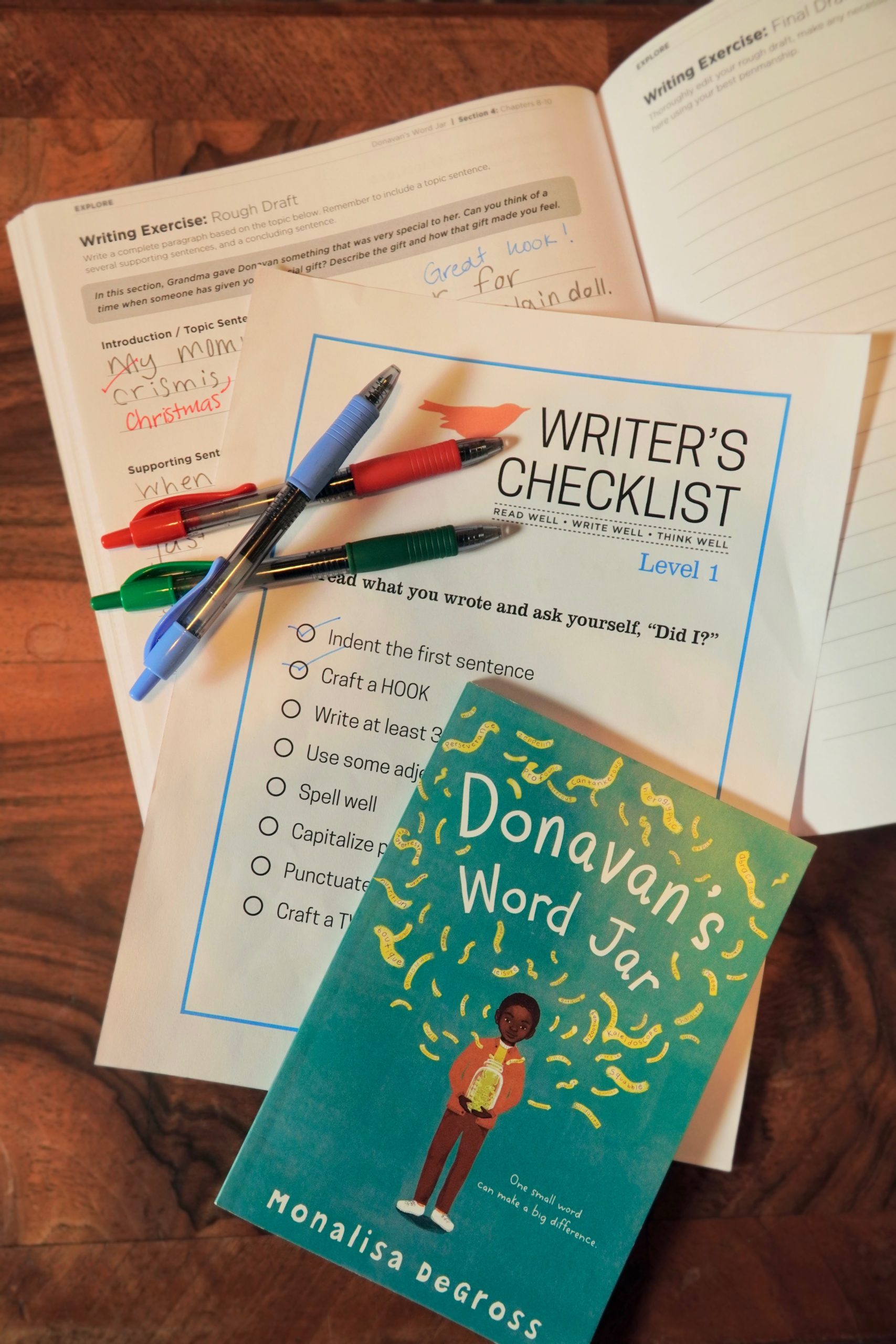
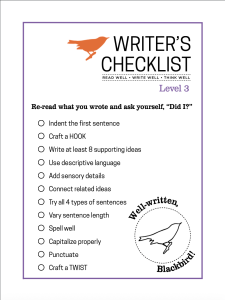
As we teach students to write, we aren’t just mentors; we’re writing architects. Instead of rulers we use the Writer’s Checklist, in place of a drafting table we pen rough drafts, and where architects create art out of concrete and wood and beams, we employ adjectives and verbs and semicolons.

Oh, and one more parallel: the stronger our foundation, the higher we can build. 

That’s why Spring into Writing is a launching point rather than a destination. Seeking to master the art of writing is akin to climbing a mountain and never quite catching a glimpse of its peak. All we can do is put one step in front of the other, taking the journey mile by mile— meanwhile widening and strengthening our foundation. 

The resources we’ve highlighted this month are exactly how you can grow that foundation of skill and ideas. From reading with a perspicacious eye, to writing like a painter with The Writing Mentor, to using the Writer’s Checklist and remediation help and abecedarians, we offer support for every level. We’re here to leap into this tumultuous, beautiful, soul-touching, mind-bending art of writing right beside you.

So to wrap up our March theme of springing into writing, I thought I’d pull in writing wisdom from some of my favorite authors:

  • “I write to discover what I know.” — Flannery O’Connor
  • “There is nothing to writing. All you do is sit down at a typewriter and bleed.” — Ernest Hemingway (debated)
  • “Instead of telling us a thing was ‘terrible,’ describe it so that we’ll be terrified. Don’t say it was ‘delightful’; make us say ‘delightful’ when we’ve read the description. You see, all those words (horrifying, wonderful, hideous, exquisite) are only like saying to your readers, ‘Please will you do my job for me.’” – C. S. Lewis
  • “Ideas are like rabbits. You get a couple and learn how to handle them, and pretty soon you have a dozen.” – John Steinbeck
  • “To be a successful writer, you need at least the following four things: persistence, revision, characters with distinct viewpoints, use of concrete detail.” – Brandon Sanderson

May this spring be the start of something great. Happy writing!


~Claire S.

Posted on

Last Call to Enter our Giveaway!

We are down to the close of our Giveaway!

It’s NOT too late to submit.

Enlist your students to choose a favorite polished draft from this year’s work utilizing Blackbird & Company curriculum, submit the work to our journal of student writing: Reveal. Simple!

We invite writers, Kindergarten through 12th grade, who courageously write from the heart using our curriculum to submit! BUT March 31, 2026 is the deadline!

Each submission will earn your family a submission to our Giveaway!

And the prize? A Solo Stove S’Mores Bundle!

From the very first flicker of the tabletop fire bowl, you’ll be ready to roll into seasonal storytelling with this S’Mores kit from Solo Stove! This tabletop “Fire Bowl” + sticks, fuel, & bamboo tray is sure to add s’more fun to this year’s story making!

Winners will be announced on our social media April 1st!

Posted on

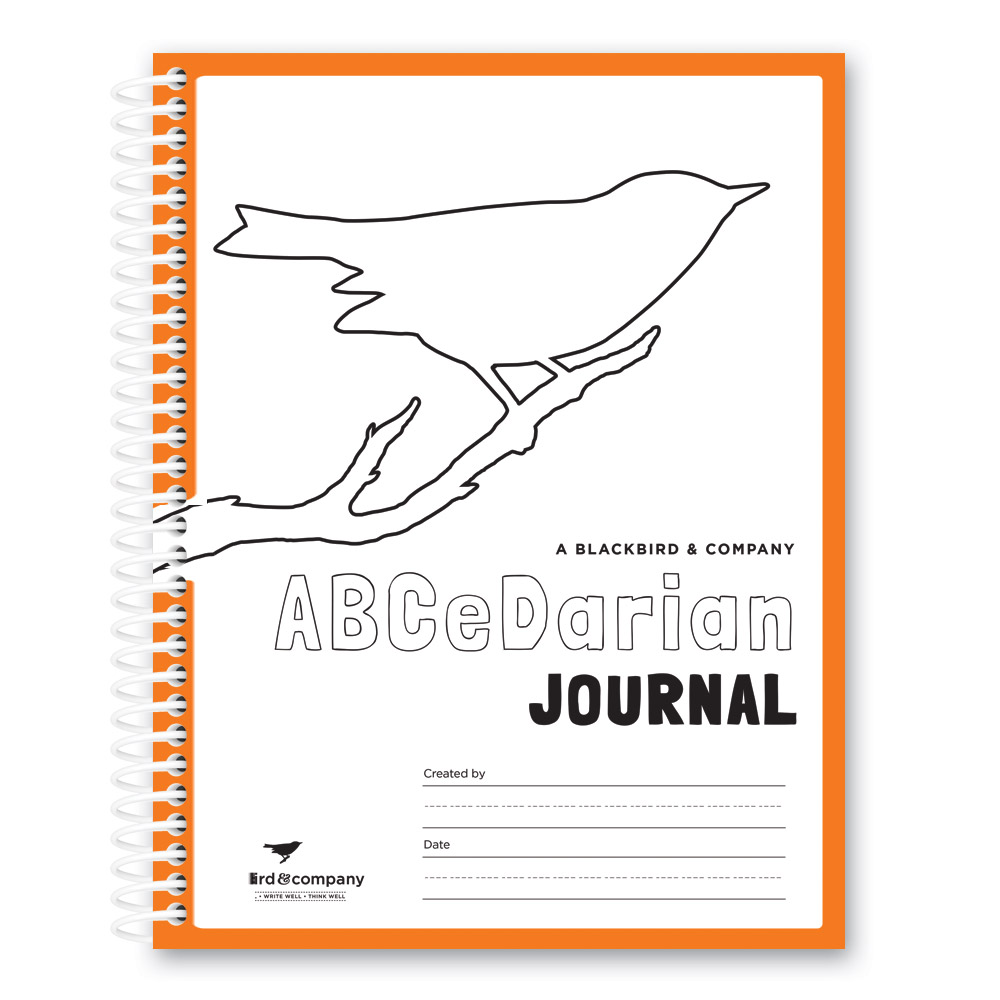
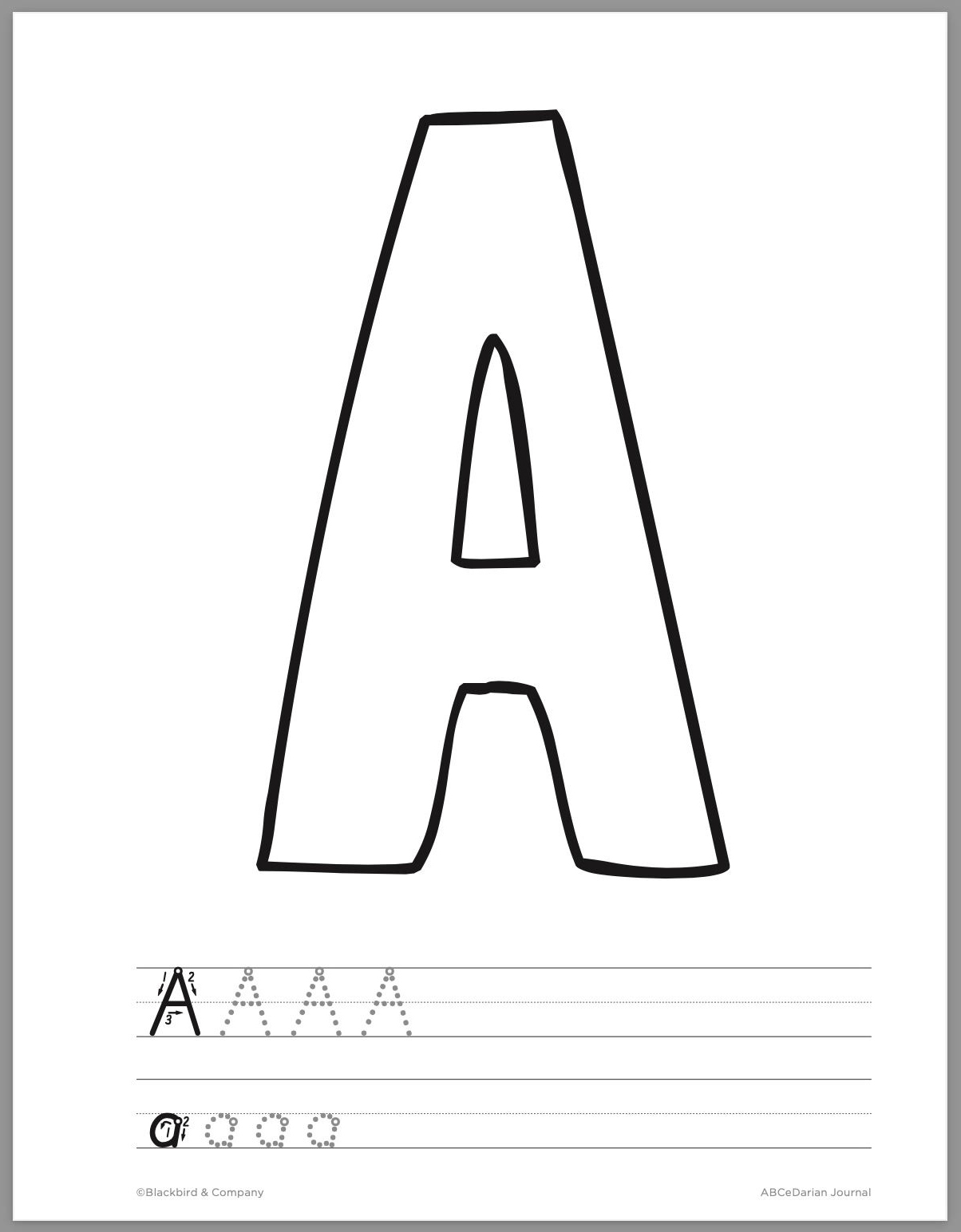
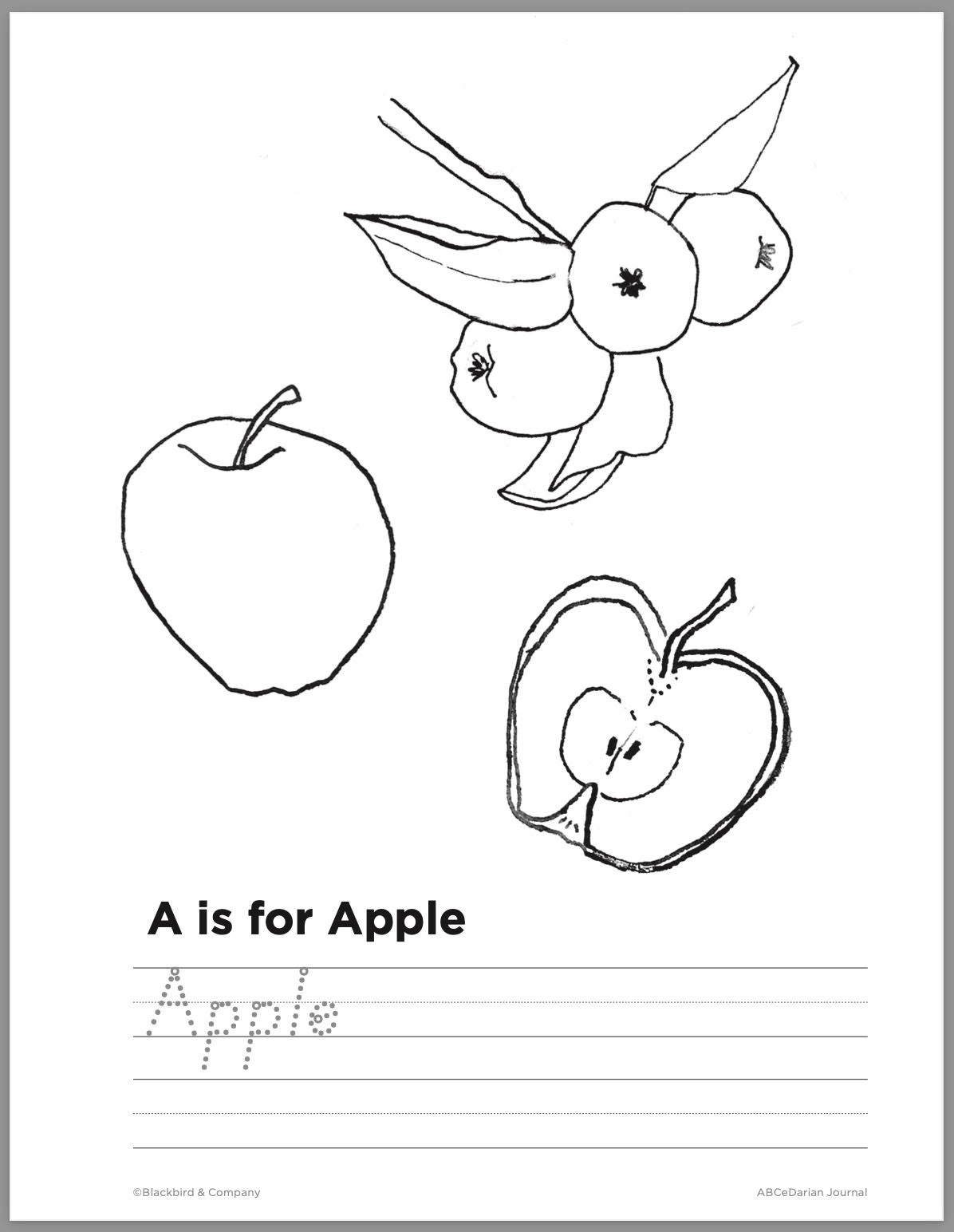
What’s an ABCeDarian?

Of course how I stumbled upon this concept is poetry. The ABCeDarian is actually a very, very old form where every line, or each stanza starts with the first letter of the alphabet, depending on which alphabet is being followed—obviously not always English.  There are many examples in ancient Hebrew, and skipping forward to the middle ages, Chaucer, of course wrote his own, “An ABC” which is a translation of a French prayer modified onto an English ABCeDarian.

Fast forward think Dr. Seuss and his ABCs from 1963 where those two yellow dogs meander through the alphabet. For me, the desire to bridge the lofty poetic form with the likes of Dr. Seuss is HUGE.

Poetry begins in sound. The sounds of language. In English there are 44 distinct sounds—phonemes—created by the 26 letters in our alphabet. So with little ones, we begin here. But here’s the thing: please, PLEASE, let’s be more creative than the tired old ABC song!

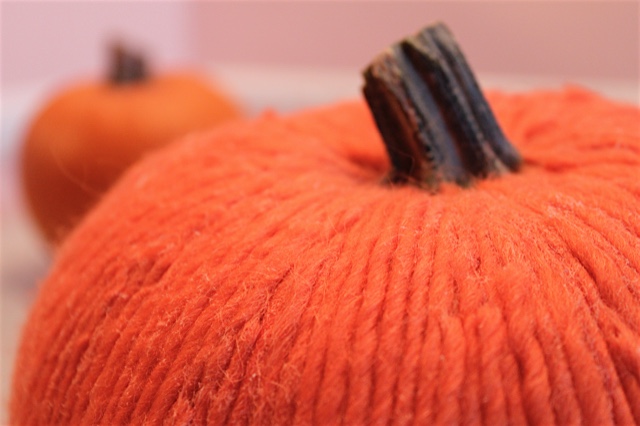
We are very excited to be releasing a slew of ABCeDarian project for primary students on Print Shop. Right now we have a sneak peak, P is for Pumpkin, up for FREE. And this FREE offering won’t be FREE forever, so download while the offer stands. Come summer, we will be dropping an entire alphabet of projects—our ABCeDarian offering!

And we don’t envision the ABCeDarian theme being limited to little ones.  Think sentence writing, word games, poetry and so much more! When it comes to the ABCs the possibilities are limitless.

“My alphabet starts with this letter called yuzz. It’s the letter I use to spell yuzz-a-ma-tuzz. You’ll be sort of surprised what there is to be found once you go beyond Z and start poking around,” so says Dr. Seuss.

~Kimberly

Posted on

Sentences that Shift Gears

To shift gears in a car, you need to press down on the clutch. To go from room to room, you walk through a doorway. To travel from floor to floor, you take the stairs.

To get from one place to another, you need a phase of transition. And writing is no different.

Transitions—between ideas, paragraphs, or even sentences—can be easy to overlook no matter what level the writer is working at. Although writers must use their judgement to determine what places need transitions, as a general rule, every topic sentence should contain a transition. And I’m not talking about “next” or “in addition;” these are transition training wheels. Let’s get less formulaic. 

Once students get to Levels 3 and 4, I expect to see a look back and a look forward in each topic sentence. The look back is the transition. It tells us where we came from, setting up readers to understand the relationship between the previous idea and our new idea. The look forward shows what we’re going to talk about next.

For example, in an essay on the curious incident of the dog in the night-time by Mark Haddon, we might open a paragraph by writing, “Just as the A-level maths exam serves as a symbol of stability in Christopher’s shifting world, Christopher’s system of counting yellow and red cars every morning gives him another measure of control.” The first half of the sentence looks back at the previous paragraph, which must have been about the A-level maths exam creating stability. While the topic sentence doesn’t start with a classic “also” phrase, it has a strong transition. The sentence establishes the relationship between where we’ve been and where we’re going. It looks backwards and forwards.

As writers, we operate with the assumption that we have some pretty smart readers—but that doesn’t mean they’ll always make the same leaps in logic. We writers must make connections between ideas clear and explicit.

Transitions show how you got to where you are!

Remember: look back and look forward in each topic sentence and you will seamlessly HOOK your readers! They will thank you for it!

Posted on

“No Dropped Quotes”

“What do we want?”

“No dropped quotes!”

“When do we want it?”

“Now!”

This is a frequent exchange I have with my students. As an essay teacher, dropped quotes are one of the banes of my existence. A dropped quote is when a writer plops a quote into a paragraph with no context, attribution tag, or analysis. “They look like this, and they confuse readers.” As writers, we can never assume that our readers will follow our same train of thought; we have to guide them through every leap in our logic. 

Here’s the anatomy of a well-integrated quotation:

Context, attribution tag, “Quotation,” analysis (author’s last name and page number).

Example: In The Westing Game, when Mrs. Wexler tours the potential new apartment, she thinks to herself, “Just wait until those so-called friends of hers with their classy houses see this place,” revealing her materialistic and shallow approach to life (Raskin 3). 

In this example, the writer leads the reader through quote interpretation. The reader understands where in the story the quote comes from and what purpose the quote serves in the argument, which is to show Mrs. Wexler’s materialism. 

We introduce this skill, and provide five scaffolded opportunities to practice and master this basic essential of MLA style  in Introduction to Composition: The Essay, Volume 3. So let’s make our reader’s job as intuitive as possible.

So please, “No dropped quotes!” 


~Claire S.