Posted on

Get ready to edit…taking a look at the Writer’s Checklist.

When many of us are faced with a piece of student writing, these thoughts instantly start to fly:

“What do I comment on?”

“What should I expect of my student based on their age?”

“How can I teach my student to self-edit?”

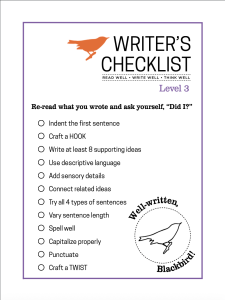
That’s where the Blackbird & Company Writer’s Checklists come in. For Levels 1, 2, and 3, we offer free downloadable checklists on Print Shop that walk you through what edits to make at each level. The 5-minute conference just got easier!

For example, at Level 1, we look for writing three supporting ideas and using some adjectives. By Level 2 we upgrade to writing five supporting ideas, connecting related ideas, and trying out all four sentence types. By Level 3, the hope is that the student can soar and write eight supporting ideas, add sensory details, and vary sentence length. With a little scaffolding, students can climb the ladder to authentic writing!

These checklists aren’t just for teachers and parents—they’re also a wonderful resource to hand to students so they can start practicing the art of the self-edit.

So this school year, print out a stack of Writer’s Checklists. They just might streamline the editing process for both you and your students.

Well-written, Blackbird!

~ Claire S.

Posted on

It’s the dawn of a new school year—who do you choose to be?

Over the last four years or so, I’ve gotten into running, a hobby I’ve always avoided like the plague. This sport has taught me a lot, first and foremost that running is HARD. But it has also shed light on something else: the relationship between identity and goals. 

Here’s what I mean. There’s a difference between people who say they’re “trying to go on runs” versus those who say, “I’m a runner.” The difference boils down to identity. The first group hasn’t incorporated running into their identity while the second group has. When I made the shift from “trying to go on runs” to seeing myself as a runner, I didn’t immediately get faster or run longer. The difference was mental. Motivating myself to run became easier, my running habits became automatic. And that consistency spurred growth. Now, I even kind of enjoy runs sometimes!

Identity-based change doesn’t end with running—it also has everything to do with becoming a writer. 

At this juncture, with the sun setting over summer and rising on the school year, it’s the perfect time to examine identity and goals. This year, who do we want to be? What do we want to achieve? How do we teach our students to intentionally set goals?

One answer lies within the theory of Identity-Based Motivation (IBM) proposed by Dr. Daphna Oyserman, a psychology professor at USC (here’s the article if you’re curious about psychology like I am). She explains the link between our identities and our motivation. Because we prefer to act in ways that are consistent with our identity, we interpret difficulties that arise when we do identity-consistent actions as important or meaningful. The struggle seems worth it. On the other hand, when we do something that doesn’t align with our identity, we see difficulty as a sign that we’re in the wrong place, the struggle proving we don’t belong. 

So for example, when I view myself as a runner, the hardship I experience has meaning because it’s pushing me to become more of who I am. When I saw myself as someone just trying out running, however, every obstacle became proof that I wasn’t cut out for this sport.

The same goes for writing. For a writer, the challenge of getting ideas on the page is important because it shapes the person to become more of who they are. For the “I’m not good at writing” or “writing is boring” student, the struggle inherent in writing is discouraging.

Therefore, our goal isn’t to shape students into people who write sometimes. We want our students to be WRITERS.

Identifying as a writer doesn’t mean you have it all figured out. As Thomas Mann said, “A writer is someone for whom writing is more difficult than it is for other people.” Being a writer means you have something to say—and each student is brimming with wonderful, colorful, vibrant ideas, if only they have the means to express them. 

This year, let’s lean into identity to drive action. Every student is a writer—and we can’t let them forget it.

~ Claire S.

Posted on

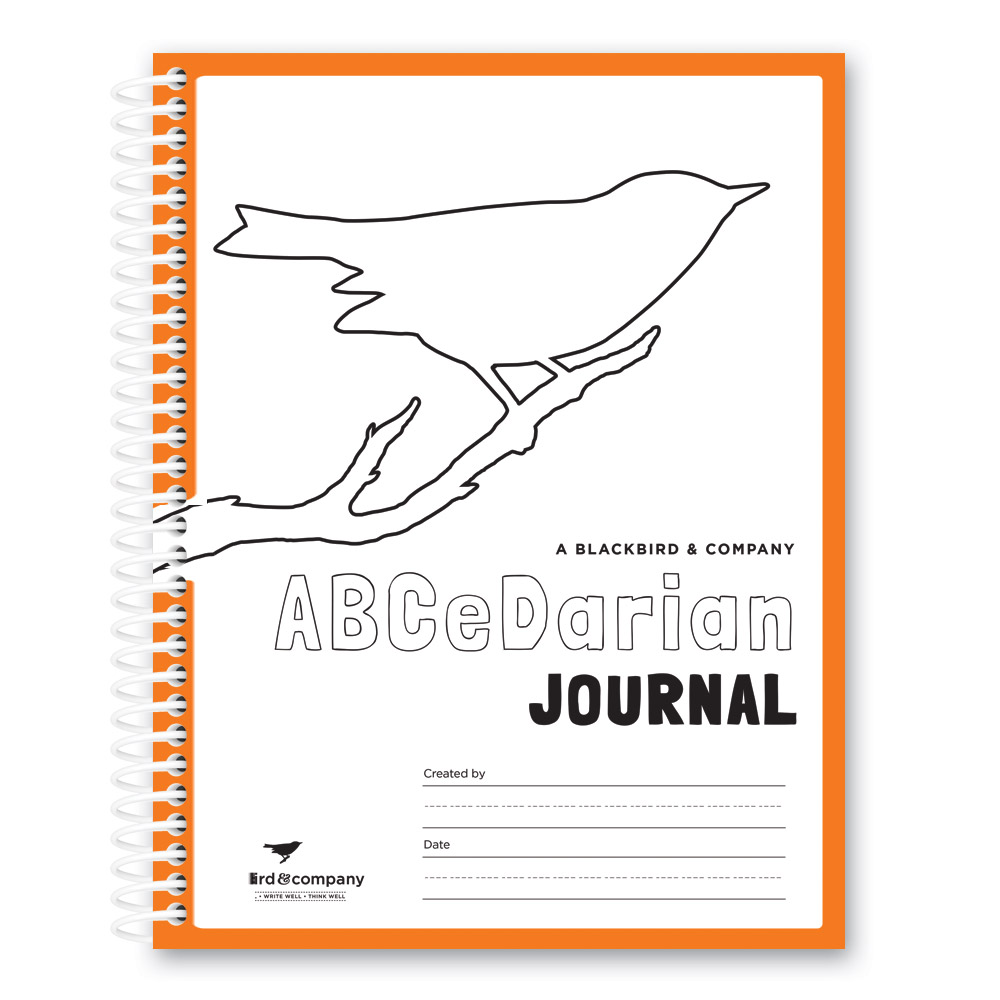
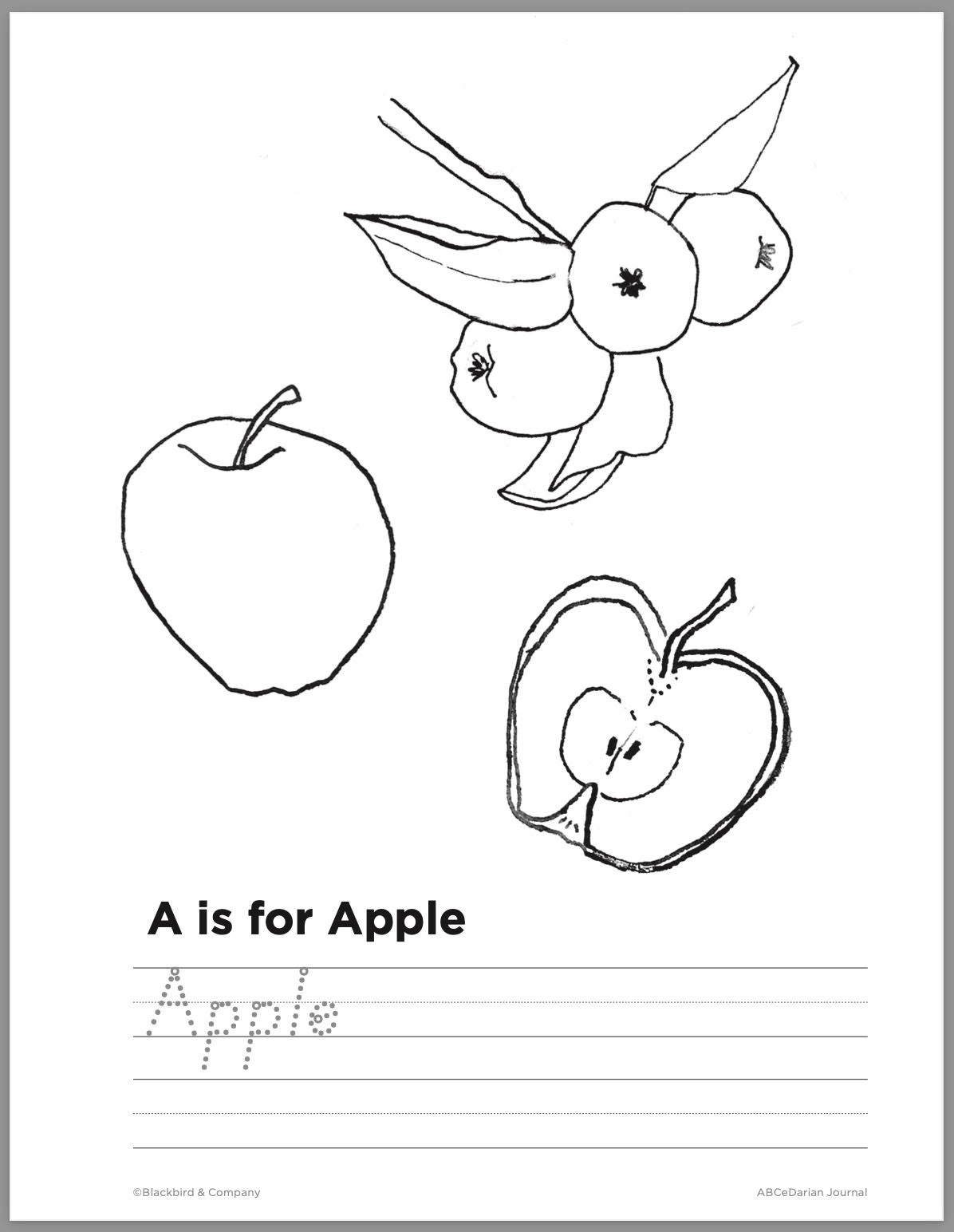
Announcing: The ABCeDarian Journal

ABCeDarian Journal

We’ve created a wonderful journal with hand drawn pictures—yes, hand drawn with dip pen and ink—to guide little ones into the wonderful world of phonics. The alphabet is so much more than that catchy tune we learned as youngsters. I don’t know about you, but when I reach the end of the song, “…now I know my ABCs, oh how happy I will be,” I chuckle because something doesn’t quite add up! Singing the song is fun and all, but the English alphabet is so much more than names of letters. Each letter makes a unique individual sound, and in combination, well the possibilities are magnificent!

The 26 letters of our alphabet make the 44 sounds that, in combination, comprise every single spoken word! Let that settle in for a moment! Not so simple, right?

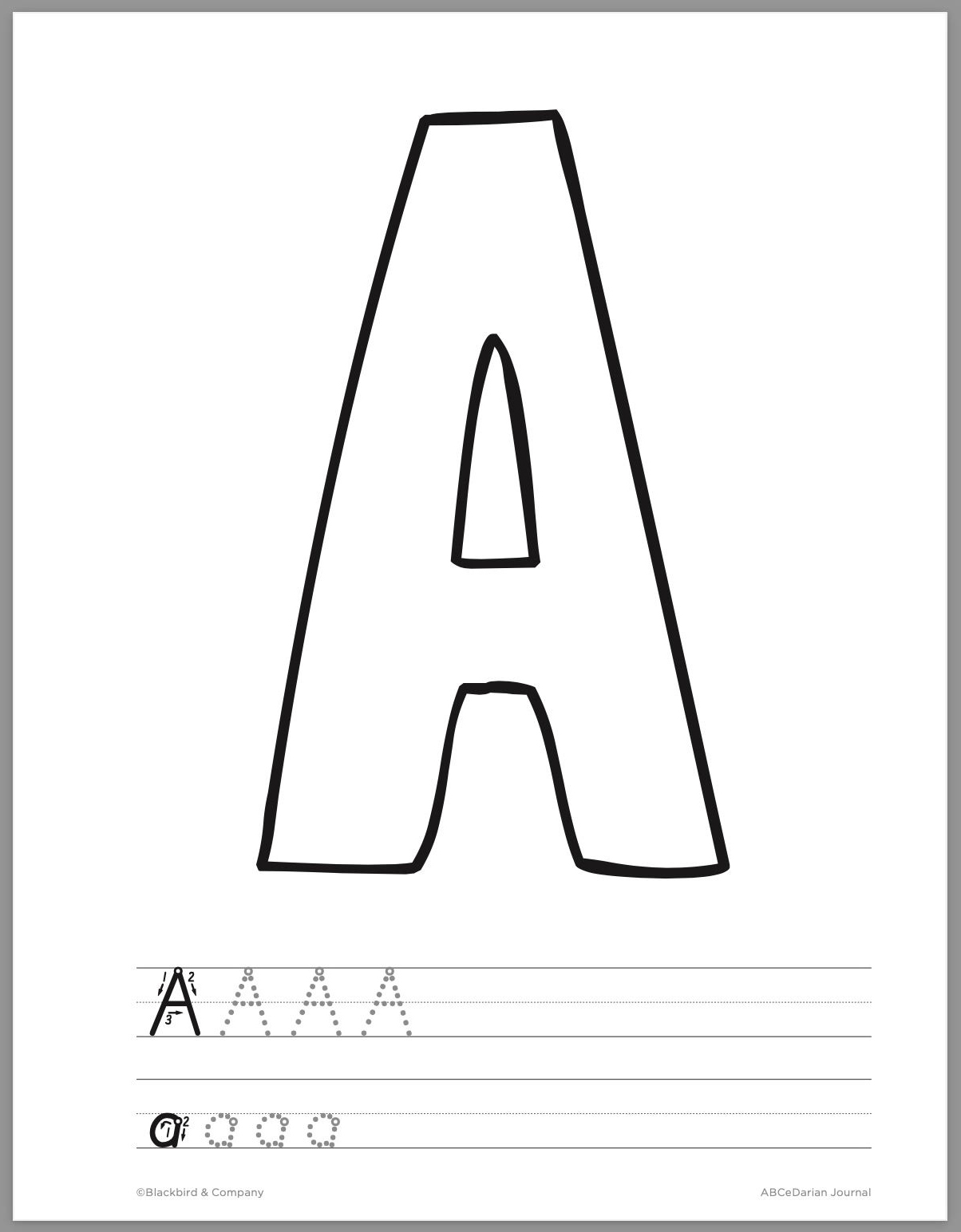
For this reason we’ve created the ABCeDarian Journal for your TK and Kindergarten students to move deeper into the wonder of the alphabet. The will learn to recognize each letter’s shape as they learn to form the letters.


More importantly, they will begin to learn about the sounds that each of the 26 letters make while strengthening fine motor and creative skills!

There are colorful stickers included, and, of course, we have all the add-ons you will need to engage your student—sand tray and alphabet stamps! Click through and get ready for fall!

Posted on

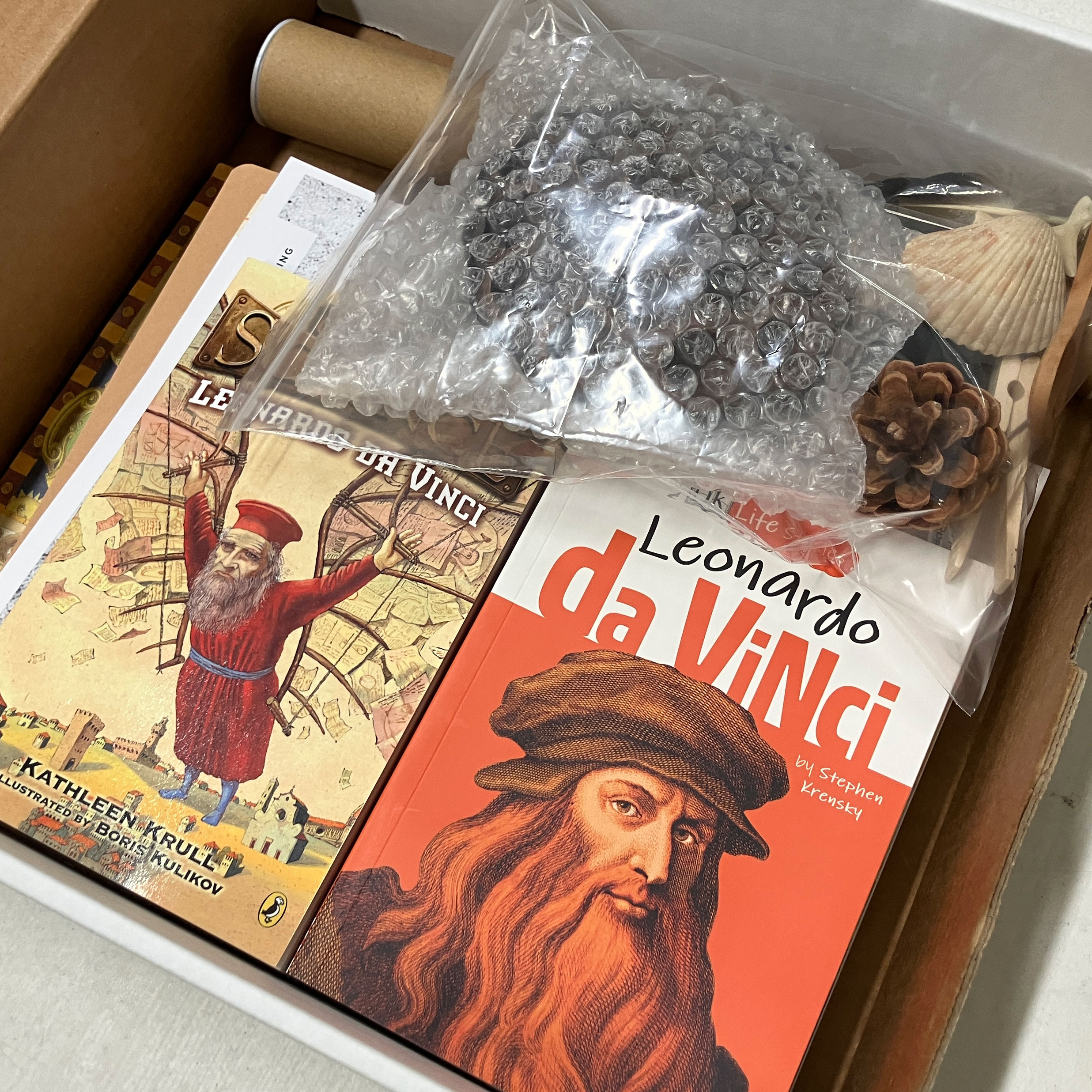
Learning with Leonardo

Look • Imagine • Create

Observation begins with a question: What am I seeing? In a world filled to the brim with stimulation, it is easy to take our senses for granted. Though we are usually quick to have thoughts on things that we taste and smell, sight (of all things) can often be overlooked. We see so many things on a daily basis that it’s easy to forget to stop and really look.

Learn to think and create. This 20-lesson interdisciplinary unit guides students into biographical research of Leonardo. Students will read to discover and write what they glean. Each week they will be guided through observational exercises and learn to draw from the Renaissance Man’s sketchbooks, encouraged each step of the way by our instructional videos that can be accessed at your convenience.

Your student will culminate with an original research paper, a sketchbook of warm-ups + drawings, a focused framable drawing, and a tool kit of skills.This unit is recommended for students 5th grade through adult!

Click through to see one week of the unit in action.


~Kimberly

Posted on

Rules for Summer

Rules? ...for SUMMER?

It’s summer and I am driving my twelve-year-old son and a group of his friends to Junior Life Guard practice at the beach. We pick up the twins and drive to another house to pick up three more. Gracie gets in the car still eating her breakfast. This gets the kids talking about “rules” for eating in the car. There is debate back and forth, should food be allowed, if so, what type of food? Crunchy? Smelly? Soggy? The list is endless, but all agree that mouths should be closed, chewing should be silent, mess should be cleaned up.

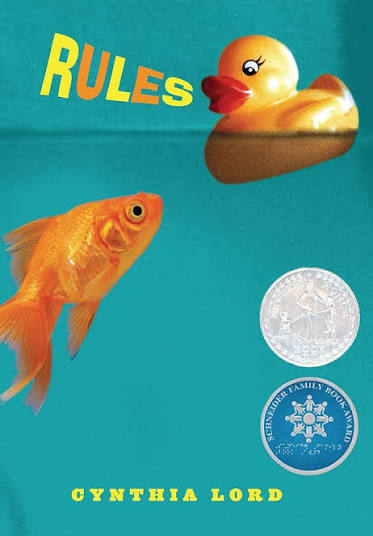
I’m currently reading a book called Rules by Cynthia Lord, in preparation for a brand new Literature and Writing Discovery Guide. The book is about a girl named Catherine who has an autistic brother named David. David has difficulty navigating social situations and needs clear rules to help him know what to do.

Some rules are easy, “Don’t stand in front of the TV when other people are watching.” Some rules are more complicated, “You can yell on the playground but not during dinner.” As you read the book you start to understand how many “unwritten rules” we give ourselves and others—rules that guide our thoughts, feelings and behaviors.

This made me think about the unwritten rules we give ourselves regarding summer. I know I have had them over the years. During my last online Pages Online class for the school year, the students had a whole discussion on what they consider approved summer activities. I remember graduating from college and being repelled by anything I felt was going to “teach” me something for an entire year!

But what if we change the rules? What if we write new rules for summer? Like: “Read everyday while feeling the sun on your face, your bare feet on the earth and your imagination running wild.” After all, when it comes to writing, we learn rules so we, as writers, can break rules! What if learning and play, curiosity, exploration, and fun for our little ones were all the same, not separate, not something to be avoided but embraced. I say learning can be all these things, and so much more—especially early learning! For this reason we are offering, once again, our Extra Play Tool Kit of Learning for TK through 2nd grade students!


Extra Playful Tool Kit of Learning

To begin, click through to discover our brand new collection of projects designed for early learners: Print Shop ABCedarian.

Gross Motor

  • Have your student write the letters they are learning outside with chalk, or paintbrush and water. It’s okay to use big fun strokes.
  • Have your student watercolor or paint letters -tracing a piece of paper.
  • Have your student collect stones, sticks or leaves and make the letters with materials.
  • Have your student write the letters in the dirt with sticks.
  • Put the card with the word or sound out on the floor or tape to the wall. Have your student hop or run or dance to the sound you say.
  • Have your student pick an animal and act like that animal while going to tag the card.
  • Go on a scavenger hunt around the house collecting or naming items that start with the sound you are working on.
  • Have your student make the shape of the letter with his body and make the sound.
  • Have your student throw a bean bag on a letter sounds or words you have learned—use the cards from Hatchling or put words on bigger pieces of paper.

Fine Motor

  • Glue buttons or beads onto a big block letter B written on a piece of 8 1/2 x 11 piece of paper.
  • Engage in a beading activity with pipe cleaners.
  • Draw wavy or zigzag lines for your students to cut, following the lines.
  • Use an eyedropper and colored water to drop into little soap saver suction cups.
  • Find pictures in magazines that start with different sounds, cut, and paste

I Spy Sounds in Books while Reading

Find pictures in books that start with the sound(s) you are working on: “Do you see anything on this page that starts with a ___ sound?” Give your child time and patience. If your child finds a sound but does not start with the sound you asked for respond in an encouraging way, praising the sound they did find. If the sound was “p” but they found “b” you might say: “Wow, you found a picture with the “b” sound,  “ball” begins with this sound! Now ask if you can have a turn too. You can model finding the “p” sound. Look I found something round too, “pizza” starts with a “p” sound.

Moveable Alphabet tips and games

  • The letters in the Moveable Alphabet are organized in alphabetical order to help students process as they see, feel, touch and do. Ask your student to find the letter (or letters) that makes the ___ sound. You can do this weekly after learning sounds, to practice and reinforce. Always have your children find the letters to match sounds and to also put away the letters when possible.
  • Have your student take the letter sound you are working on or reviewing out of the moveable alphabet box. Have your student walk around the room or permitted area and put the letter in front of any object that starts with that sound. You can play this same game with first, middle and last sound. See game below.
  • Put out letters of moveable alphabet in a sequence on the table and have letters that are missing. Have your student fill in the missing letters (examples: a__ c,  d e __,  g __i,  j  k  __).
  • Ask your student to find the first sound in a word. For example, try the word hat (this list can be the same word cards you practice with Hatchling Volume 1 or Volume 2).
  • Ask your student to find the middle sound—this will be the short vowel sound (a, e, i, o, u) in closed syllable words. Closed syllable words have 1 syllable, one vowel, and are closed in at the end by a consonant or consonants. For example, the word “dog” or “stand” are closed syllable words.
  • Play the Magic “E” game. Spell out any of the following words in the lid of the Moveable alphabet:  cap, car, spar, her, them, kit, bit, pin, twin, rod, nod, hop, glob, hug,  cub. Have your student add the Magic “E” to the end of the word and read with the long vowel sound.
  • Play “My Mistake” with your student. Once your child has completed Volume 1C, CVC words (consonant/vowel/consonant words), you can play with the words you have learned and add new ones. Using the CVC objects, spell words and make mistakes. Ask your students to check your words and ask if they are correct. If they find the mistake have them change the letter to make it correct. For example, beside the object “bag” you spell “bog” with the Moveable Alphabet. Have your student correct your mistake.
  • Play “What New Word” with your student.  After completing 1C and 1H in Hatchling, Volume 1, see if your student can make new words out of words they have learned. For example, they learned the word “bag” in Hatchling 1C. How many words can they make if they take away the letter “b” and replace with a different sound (gag, hag, jag, lag, mag, nag, rag, sag, tag, wag, zag)? Let the words be nonsense or part of a longer word or names. Have fun and be playful. The point is you want your student to identify the correct sounds.


Have fun… the thing is, when it comes to summer, PLAY is learning! The possibilities are endless!

Enjoy the “rules” you write this summer!


~Clare

Posted on

Fall is Just Around the Corner!

And its, by far my favorite time of year…

Fall feelings are near!

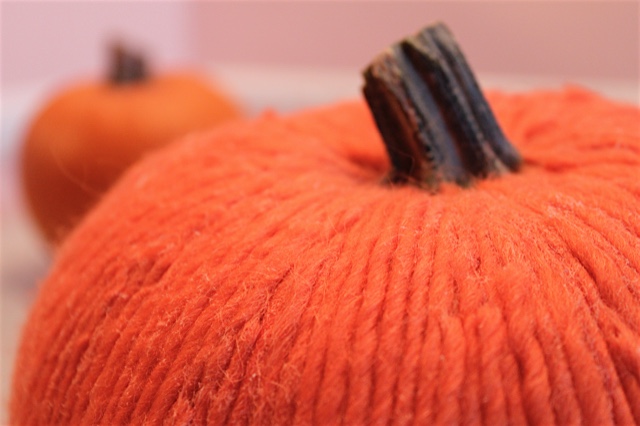
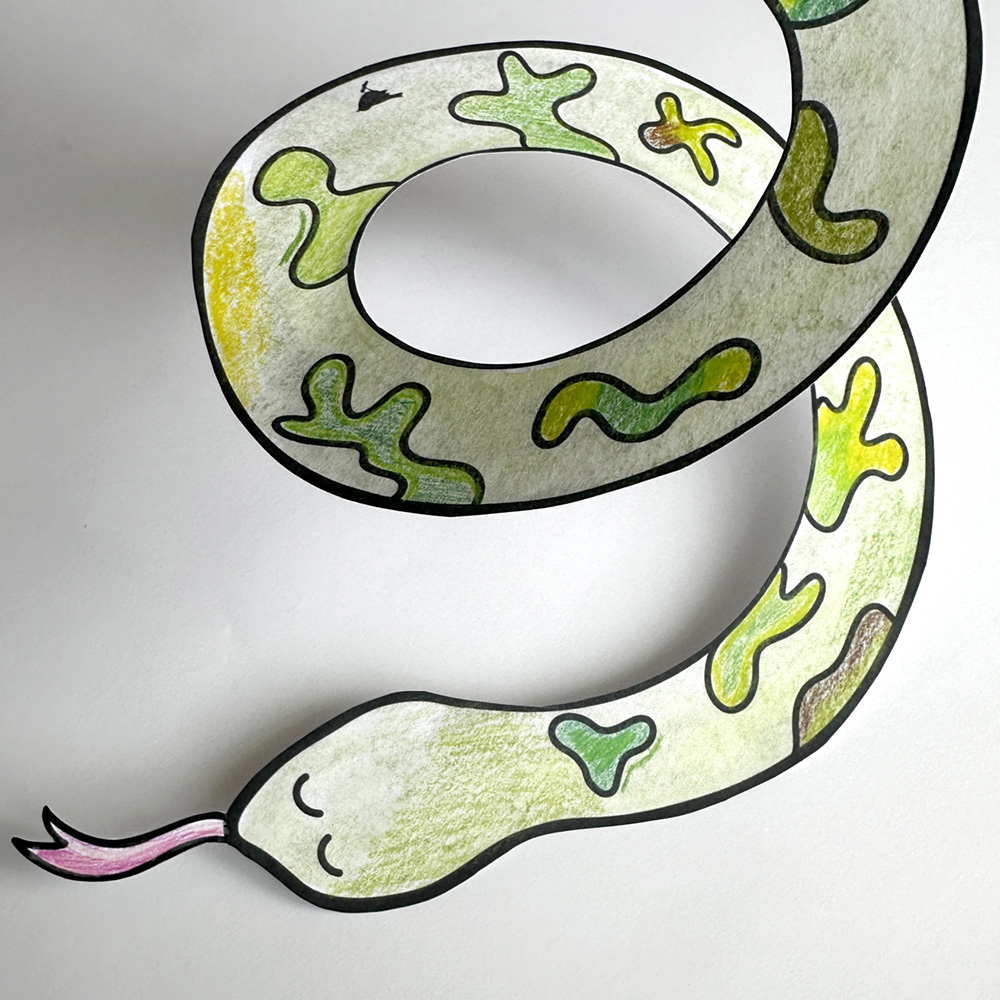
Once upon a time, over two decade ago (wow), our family covered this white pumpkin with orange yarn—one strand at a time. What’s the point of this, you ask? Delight springs to mind. But looking back, it is precisely these types of activities that built patience into my four children. They will be the first to tell you that nothing beautiful happens speedily! This project took many October days to complete in little spurts.  During the process my four exercised their observation skills. They became very aware of the fact that the pumpkin’s shape is organic, non-symmetrical.  They gained fine motor skills applying glue with a brush, cutting a strand of yarn just the right length, and affixing. Ultimately, they exercised grit by seeing this exercise to its conslusion.

Never discount the power of a good craft!

Now, during the last slow days of summer, is the time to get busy preparing.  Whether you are teaching primary, elementary, middle or high school students ELA, we’ve got you!

Primary is Kindergarten, 1st and 2nd Grade

For primary students be sure to check out Print Shop which is chock full of ABCeDarian crafts—crafts tied to the sounds of the alphabet. Why? Because English Language Arts is an art form that requires curiosity, imagination, and hand skills. After all, we believe the best technology for learning to write well is the pencil. Download projects, gather material, and be prepared to begin the school year with ease.

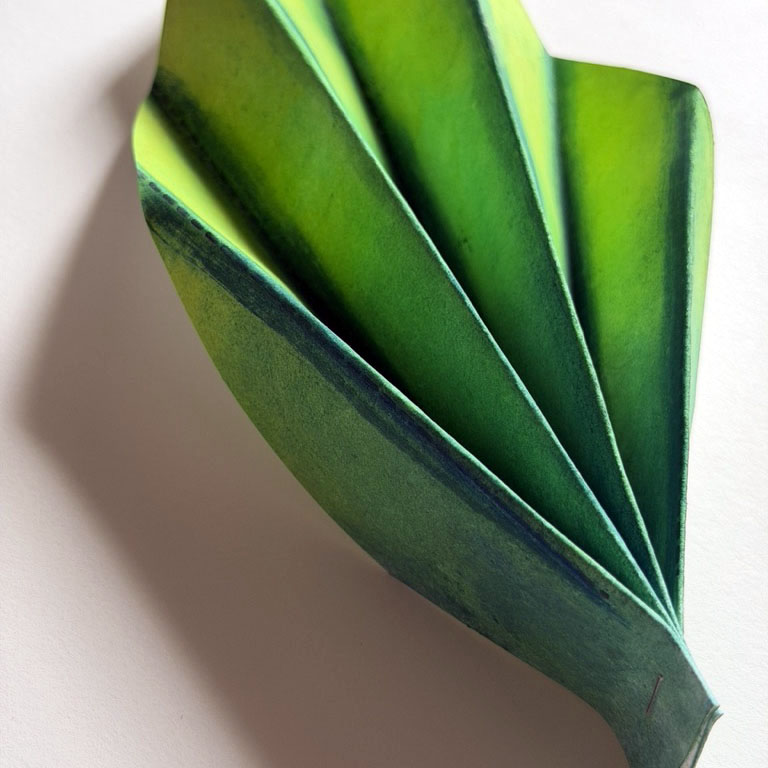
L is for Leaf 01

Elementary is 3rd and 4th and 5th  Grade

Help your students build a rich lexicon—their very own collection of words. Check our our Print Shop introduction to the wonder of words with this Collective Noun downloadable activity.

And begin the 3rd grade with Operation Lexicon Traits of Character to help your students collect a specific collection to describe the rich characters they will encounter as they read stories.

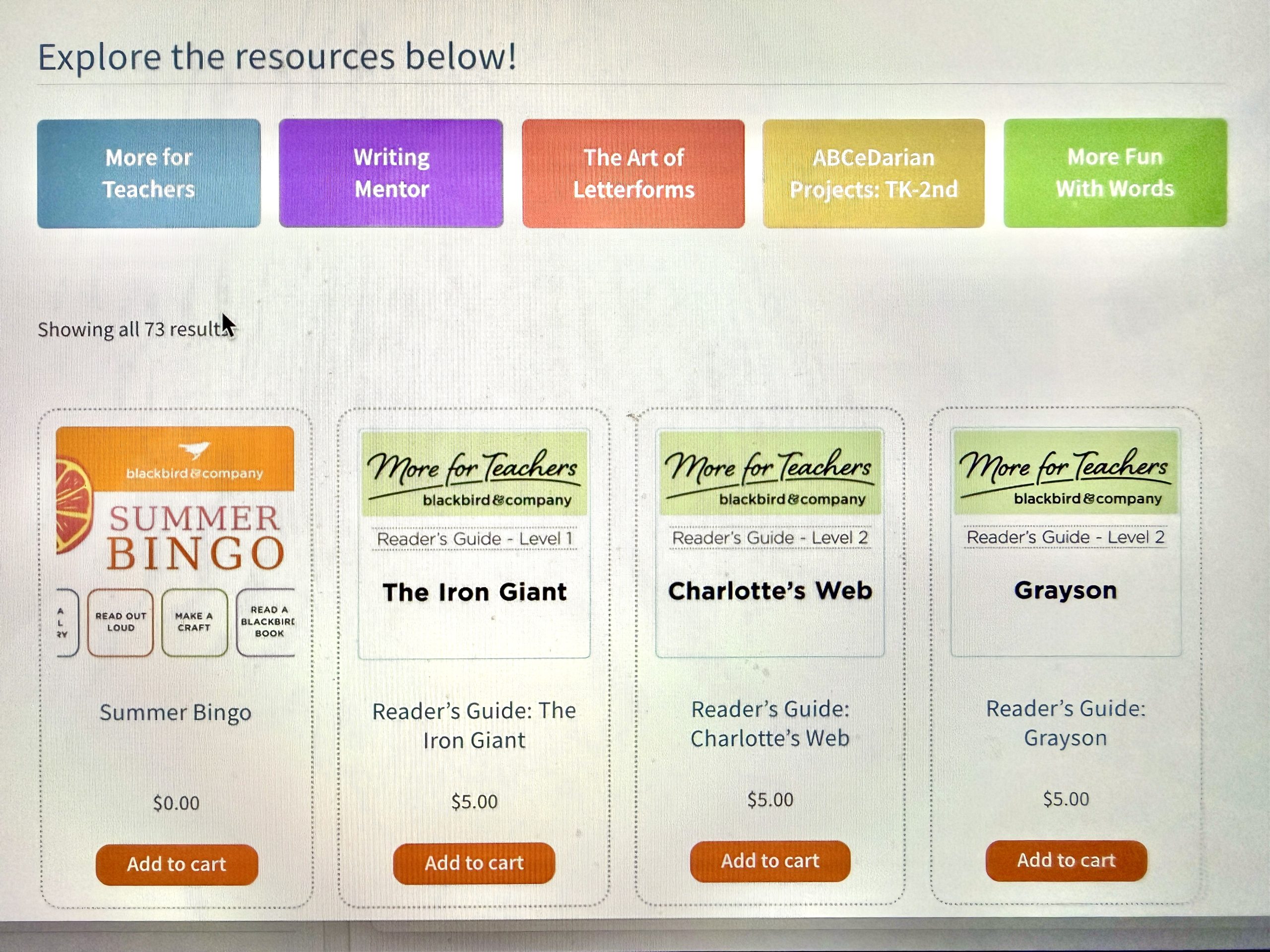
And click through to Print Shop, More for Teachers, and you will discover our brand new Reader’s Guides. These are crafted to walk with you through a close reading, offering some insights that we hope will inspire you and your students.

Reader's guide: Grayson

Middle School is Grades 6 and 7 and 8

In middle school, students are learning to use rhetoric to make their sentences stylish. One True Sentence: Tools of Style, begins in 5th grade and really ramps up in middle school. Amplification? Polysyndeton? Tools of Style help students write better sentences. Print Shop Writer’s Guides offer more practice along the way.

High School is Grades 9 and 10 and 11 and 12

This is where Blackbird & Company students take flight! With CORE Level 4, students will read and explore characters, themes, symbols and motifs, journalling for four weeks and culminating in a literary essay guided each step of the way.

Our Pages Online offer Literature + Writing Level 4, Intermediate and Advanced Composition,  plus Art History / Studio and Music History / Appreciation electives.


Now’s the time to get prepared! Fall is around the corner and this means the start of a brand new school year. We’re here to help!

Posted on

Print Shop Highlight: The Art of the Sentence

Within a paragraph, beautiful sentences steal the show. They glide across the page like a ballerina twirling across a stage; you can’t help but keep your eyes glued to every clause, every comma, every figure of speech. 

These sentences don’t materialize out of thin air, however. Beautiful sentences and flowy paragraphs seem so effortless because writers have learned lessons they don’t often verbalize—or perhaps don’t even know they know!

Although developing one’s voice is a process of trial and error and practice, we’ve developed a line of worksheets to help demystify what makes great writing great. Introducing: The Art of the Sentence.

So far we have released three worksheets (downloadable on Print Shop) within The Writing Mentor line that explore how to craft great sentences. The Art of the Sentence worksheets go as follows:

In about three pages, each worksheet follows a Learn, See, Do structure to scaffold students from learning about sentence length, to seeing examples, to writing intentional sentences themselves. 

We can’t wait to offer more Art of the Sentence worksheets soon to explore ideas like writing an intriguing hook. Keep your eyes peeled for our upcoming goodies!

Let’s take our students’ writing to the next level—we’ll meet you at Print Shop!


DON’T FORGET TO PLAY BINGO!

Download your Summer Bingo for free on Printshop HERE and submit a picture of your completed bingo sheet below to enter the raffles. Bingo will run June 1st through August 31st—so print out your bingo sheet and get to crossing off squares!


Summer Bingo!

Posted on

Romeo + Juliet are Everywhere

One of the significant milestones for student writers is the ability to connect the dots. A big part of becoming educated is acquiring knowledge. In English Language Arts as with all the humanities, students engage in reading and learning from books. Shakespeare is the bedrock of storytelling. We believe a must for students to gain a richness of language alone. Our Operation Lexicon guides students into the vast array of words unique to Shakespeare’s work. This is a great unit to begin in summer before diving into his sonnets and plays larger work. 

Operation Lexicon 11 - Shakespeare

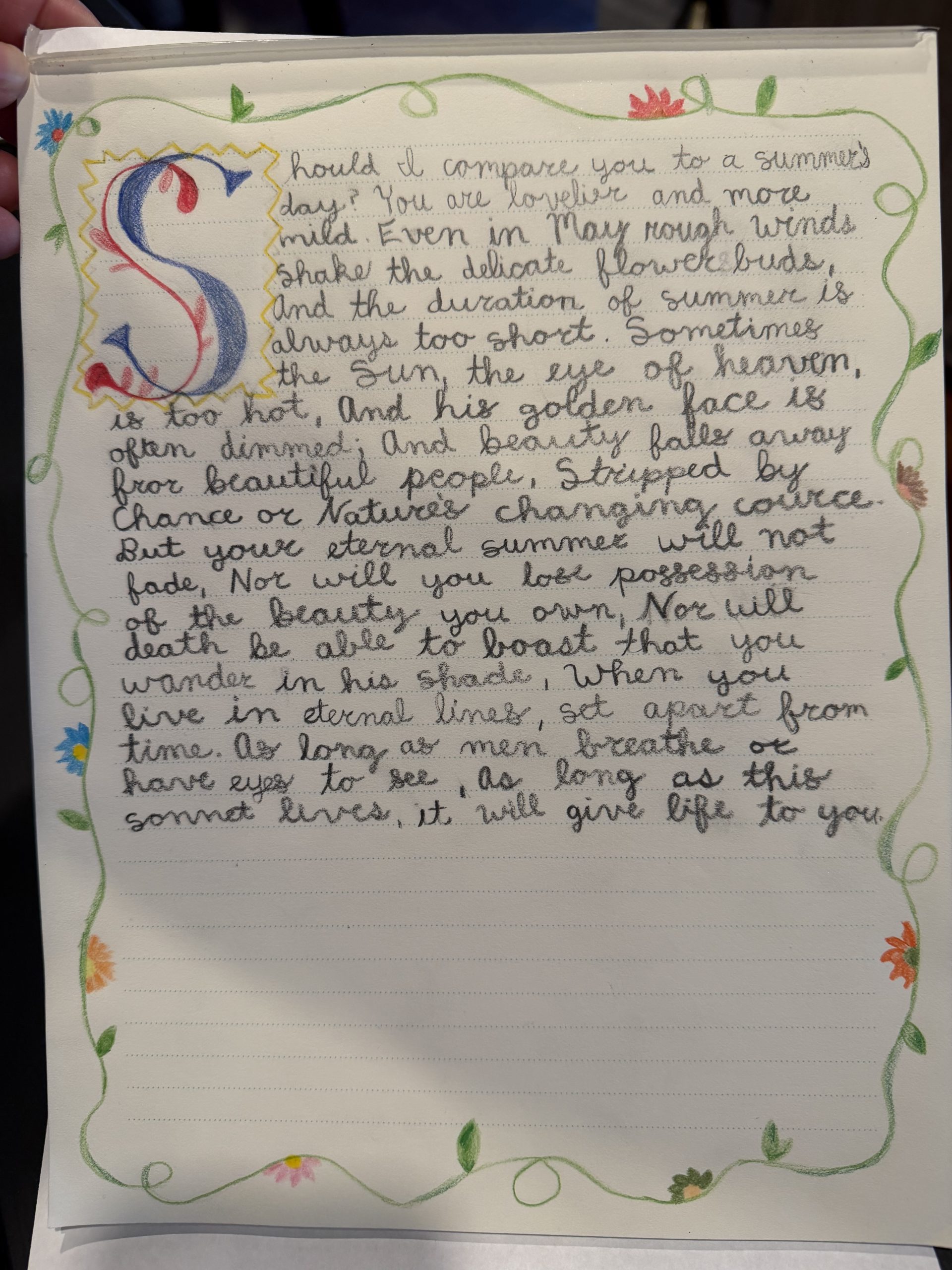
 Here again, our student Kate, during the spring semester demonstrated that she is enlarging her fund of knowledge and understands how to connect dots. One of her projects included diving into the works of Shakespeare. She learned about his life and touched the surface of his work.

To begin, she did a close reading of  one of his well known sonnets, considering both its content and form. After creating the beautiful final project above to showcase the sonnet—a slowly copied work—she read a beautifully illustrated version of Romeo and Juliet. Now she was ready to dive into the world of Shakespeare’s play.

What is tremendous is the connections she made as she enlarged her fund of knowledge and connected the dots in her culminating essay.


Romeo and Juliet are Everywhere

Was any of it worth it? Shakespeare’s nearly 500-year-old play portrays two lovers, Romeo and Juliet, who tragically fall in love despite the deep, destructive resentment between their families. The language tricks, film adaptations across different time periods, and devastating consequences make this play an important work of art.

Shakespeare uses language tricks to add ironic humor to this tragedy. Romeo’s fickle love, ended his love towards Rosaline enabling him to suddenly fall in love with Juliet, setting the tragedy into motion. After Benvolio insists Romeo abandon his obsessive crush on Rosaline, Romeo responds hyperbolically: “Yet tell me not, for I have heard it all. Here’s much to do with hate but more with love. Why then, O brawling love, O loving hate!” (Folger lines 160-168a). It’s silly how Romeo’s feelings for Rosaline changed so quickly, turning into an obsession over Juliet. It’s wild that Romeo is compared to an attractive book holding a bad story, illustrating the complexity of what lies below the surface. Juliet compares Romeo to a beautifully bound book containing a dark heart after he kills Tybalt: “Was ever a book containing such vile matter so fairly bound? O, that deceit should dwell in such a gorgeous palace” (Folger lines 83-85a). Juliet’s statement is both amusing and disturbing regarding her obsessive passion. Shakespeare’s use here of complicated and tricky word play is effective.

Franco Zefrelli, Baz Luhrmann, Rogers and Hammerstein, and even Michael Jackson have reshaped Shakespeare’s play, “Romeo and Juliet,” for film. Baz Luhrmann’s 1996 film brought the story of Romeo and Juliet to life for me with of the casting of Leonardo DiCaprio, the modern setting, and the ’90s styling. While Robert Ebert loved Franco Zefarelli’s 1968 film, “I believe Franco Zeffirelli’s Romeo and Juliet is the most exciting film of Shakespeare ever made,” I don’t agree. I found the film dull. The 1968 film was theater-like, traditional, and Romeo dies first! Nobody can criticize Leonard Bernstein’s music or Stephen Sandhein’s lyrics, which was created for the theater, toured worldwide, and later became the famous 1961 film. This clever adaptation is set in New York’s Upper West Side, where, like The Outsiders, gangs are feuding (the Sharks and the Jets). I found the connections of West Side Story and Romeo and Juliet, and The Outsiders interesting, especially where all three stories encountered complicated relationships, conflict, and overwhelming emotions. And then there is Michael Jackson’s 1982 music video, “Beat It,” yet another adaptation where hostility increases quickly between rivals. Here Michael Jackson steps in, advocating for peace, using music and choreography to communicate powerfully. I wonder how Shakespeare might view all these adaptations?

Let’s talk tragedy. To begin, the fact that the Montagues and Capulets keep their feud going on and on and on to a point in time that no one actually remembers how it started is foolish, destructive, and clear evidence of how pride definitely comes before a fall! It’s frustrating and isolating for Romeo and Juliet, who could not share the fact that they were actually married with their loved ones. In the end, it took the tragedy of death to bring the feud to an end and to bring these families to their senses. How can anyone not connect to Romeo’s and Juliet’s obsessive love for each other and their heartbreaking death? Family conflict, love, and unfortunate spontaneous decisions do not always end well. Tragedy is real and happens every single day. Beware of holding onto grudges!

From 1597 to 2026, Shakespeare’s Romeo and Juliet has informed and influenced millions upon millions of us humans, but the idea was inspired by an earlier work by an English poet, Robert Brooke, who was inspired by an Italian poet named Matteo Bandeblo. There is nothing new under the sun, but Shakespeare made this tragic tale his own inspired by artist who came before him. Retelling Shakespeare’s classic redefines the timeless tragedy for every new generation. I wonder who will come next.

Work Cited

Jackson, Michael. “Beat It.” 1983. YouTube, Michael Jackson – Beat It (Official 4K Video)

Romeo and Juliet, Directed by Baz Luhnmann, 1996.

Shakespeare, William. “Romeo and Juliet.” Folger Shakespeare Library, https//folger.edu/shakespeares-works/romeo-and-juliet/.

Shakespeare, William and Zwerger, Lisbeth. Romeo and Juliet. Michael Neugebauer Publishing, 1996.

West Side Story. Directed by Robert Wise and Jerome Robbins, 1961.


~Kimberly


DON’T FORGET TO PLAY BINGO!

Download your Summer Bingo for free on Printshop HERE and submit a picture of your completed bingo sheet below to enter the raffles. Bingo will run June 1st through August 31st—so print out your bingo sheet and get to crossing off squares!


Summer Bingo!

Posted on

You aren’t teaching literature alone: Introducing Reader’s Guides

Leading young minds through literature can be intimidating—teachers are forced to ask the big questions, like, “What are the themes of this story?” and “How can we learn from these characters?” And that’s not even mentioning the pivoting we have to be prepared for when our students pull questions seemingly out of nowhere!

This is why out of all our wonderful Print Shop materials, the More for Teachers: Reader’s Guides are my personal favorite. 

What is a Reader’s Guide, you may ask? Great question!

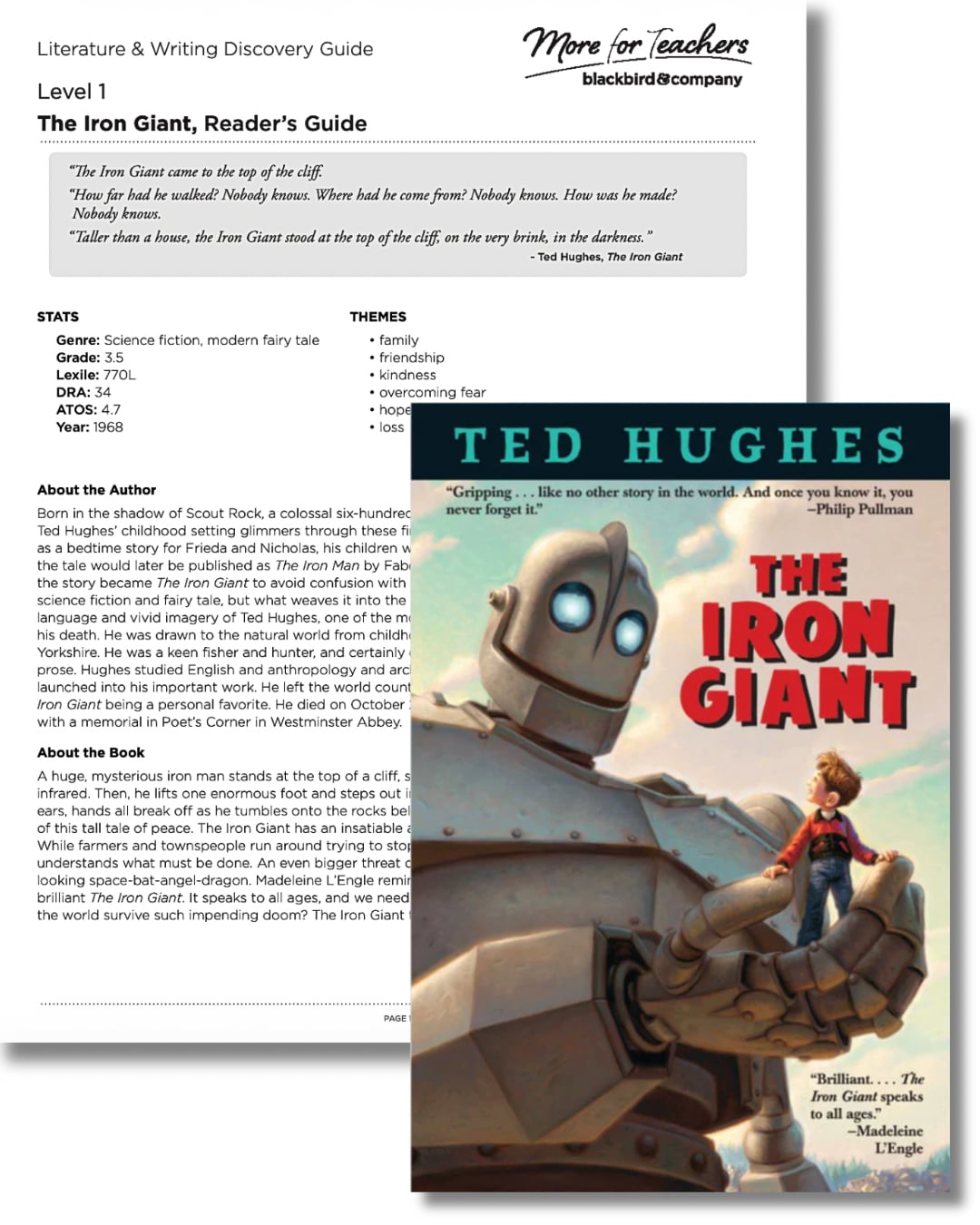
Our Reader’s Guides are a helping hand we extend to teachers and parents, supplementing the guidework students complete in our CORE Literature Discovery  guides. We do the research on the book so you don’t have to!

Each guide includes:

  • Stats (like reading levels) and themes
  • About the Author
  • About the Book
  • Section Synopses
  • Seven Tips for teaching the story!

For example, in the Seven Tips for The Iron Giant, we highlight repetition, figurative language, symbolism, philosophy, and genre in a few pages so that teachers can point these elements out to their students. We aim to make complex literary ideas accessible, to give you some food for thought as you take on the challenge of educating.

So far, we’ve released Reader’s Guides for:

  • All 6 titles from the 3rd Grade Level Collection (Woohoo!)
  • 4th: Charlotte’s Web
  • 5th: Grayson
  • 6th: The Wanderer
  • 7th: The Folk Keeper
  • 8th: Bridge to Terabithia

Think of this as a sampler platter. More is on the way.

So the next time you crack open a literary book, don’t forget its Reader’s Guide. May you be empowered to teach with confidence!

DON’T FORGET TO PLAY BINGO!

Download your Summer Bingo for free on Printshop HERE and submit a picture of your completed bingo sheet below to enter the raffles. Bingo will run June 1st through August 31st—so print out your bingo sheet and get to crossing off squares!


Summer Bingo!