Posted on — 10 Comments

Haiku for a Change in Season

Haiku are the little powerhouses of the poetry world! They are a fun challenge involving the best of word play, mixed with a little finger counting to get the syllables just right! Here's a brief "Haiku 101" to help you and your kids get started.

1. Haiku poems consist of a three-line stanza that has a total of 17 syllables written in the following pattern:

Line 1: 5 syllables
Line 2: 7 syllables
Line 3: 5 syllables

 *Slight variations in syllabication is appropriate as this helps the poet maintain "one thought in three lines"

2. Haiku poems are observations of nature, often making reference to the seasons. 

3. Haiku poems are like photographs, which capture moments in time. A  "haiku moment" describes a scene that leads the reader to a feeling. 

4. Haiku poems were originally written as introductions to longer works of poetry and should be written as one thought in three lines.

Consider these haiku written by the Japanese poet, Matsuo Basho:

Yellow rose petals
Drop one-by-one in silence:
Roar of waterfall.

Within plum orchard,
Sturdy oak takes no notice
Of flowering blooms.

Ready to write? Try crafting three original haiku inspired by any of these photographs. Share them with us in the comments section, we'd love to read them!

3264638084_5723ede8f3

3260995619_b251eeea59
4863479926_7a8838742f
IMG_1758
4863480472_63f7805c1d

Posted on

Pearls in the Sky

Web

I know this has nothing to do with my usual posts, Home Ec, but I just had to share this little garden delight with you.

Almost everyday when I go into the garden, I run into this very industrious spider's web with my head because I can’t see the intricately woven strands. This spider weaves a web to collect a nightly feast between the branches of my apple tree and the vine on the fence. But it’s always in a slightly different place. I’m sure the neighbors can hear me mumbling a malediction as I plow headlong into it on a daily basis!

Today my attitude changed completely as I was greeted with rain and the miracle and beauty of a web adorned with pearls.

Now, was that web the same yesterday and the day before?

Of course it was!

Isn’t it amazing how just a little shift in perspective changes everything?

– Sara

Posted on — 1 Comment

Yes They Can!

This past week my students completed reading the first book of the year, The Family Under the Bridge. I was delighted that my youngest son not only knew what to do but dove into the work headfirst! He began by removing all the sandwich bags from their box in the drawer, piling tape, glue, scissors, colored pencils and a plethora of art paper on the kitchen table. I watched him move from idea to finished product as I washed dishes and prepared dinner. In the end he smiled with satisfaction and proclaimed joyfully, “Tomorrow I will write a report to go with my diorama.” My son just turned 10! Not only is he self-motivated, he is delighted to do the work. Why? Routine.

No matter the subject, establishing a routine is a painstaking process, but once rooted, students thrive. Our literature products are developed with this truth in mind, providing students with the framework to guide them through the discovery process in a consistent manner that will, over time, develop the disciplined routine that leads to self-motivation.

With our approach, each book is read and explored over the course of four weeks. During the fifth week, students develop a creative culminating project with options that provide a variety of ways for them to demonstrate deep understanding of the book. Students not only get a chance to demonstrate their originality, organization, clarity of purpose, and critical thinking skills, more importantly this culminating endeavor will allow them to show off what they have learned in their own, uniquely creative way.

Whether you are using our literature discovery guides in an individual mentoring situation or in a group setting, students really love sharing their culminating thoughts about great stories. Encouraging readers to create final projects with a high level of execution teaches them that their ideas are valuable and builds integrity into their work habits. Connecting your students with other students and the work produced in response to great stories is motivating and raises the bar on the end product. For this reason, we have created a Flickr group where students can share visuals of how great stories spark creativity. We encourage you to join this group, to add your own work samples, and to visit often!


~Kimberly

Posted on

Pages From a Third Grade Observation Journal

Almost exactly a year ago we posted about observation journaling (A Closer Look – Part 1 & Part 2). Working on this kind of journal is an important and holistic endeavor that builds science, reasearch, art, and writing skills. At the end of the year, if done with regularity, you'll find it's not only a precious memento of pictures and words but a rich and informed body of work.

Revisit our posts for a how-to, and be inspired by these pages from Hannah's third grade journal. I especially love how she takes note of her "fore frecels." Precious indeed!

IMG_4712
IMG_4714

IMG_4715
IMG_4717
IMG_4718
IMG_4719
IMG_4720
IMG_4721
IMG_4723

Posted on

No Rules Animal Poetry

Eb_florian_bnd_LRG Douglas Florian is a poet and artist extraordinaire!

Winner of the Lee Bennett Hopkins Poetry Award and recipient of an ALA Notable Children’s Book Award, he is the author and illustrator of many delightful children’s books.

Douglas Florian believes there is only one rule when it comes to poetry, that there are no rules.

Your youngest students can explore scientific and silly facts about creatures of all kinds with our Douglas Florian Earlybird Guide, and even try their hand at writing their own animal poetry. The results are fantastic!

 
Shark

Ate a thousand fish

In the white bathtub

In the night when the people were sleeping

To grow as big as the house

– Jedd, age 5


Whale

Jumped and did a back flip

Under blue and white water

At snack time

To have fun

– Cameron, age 6


Seahorse

Met a friend

At the light blue drop off

Early in dark morning

To not have to wait as long

– Maddie, age 6

Posted on

Creative Writing and The Periodic Table

Table
Paper

A few days ago Søren shared an idea, “am going to write a story using all the letters on the periodic table.”

What in the world? After a summer of focusing on the garden—tilling earth, planting seeds, and harvesting fruit—the periodic table of the elements? But in the end, I realized that Søren’s idea has everything to do with the garden.

Last year I taught chemistry in my guild to a handful of high school students. We read The Periodic Kingdom, and “journeyed through the land of chemical elements” with P.W. Atkins. We watched the periodic table. Yes, watched. This was mad science in action. Chemists from the University of Nottingham have created a short video about each of the 118 elements. Stoichiometry, polarity, and biochemistry entered our discussion, and we concocted reactions in our little make-shift lab, extracted DNA from a variety of sources. But our explorations of the table itself was most amazing. And where was Søren? The little hovering bird was gathering seeds, of course.

So this morning, I woke up, hobbled sleepily into the kitchen to make a cup of tea, and saw our favorite coffee table acquisition from the chemistry class: The Elements: A Visual Exploration of Every Known Atom in the Universe, on the table along with a writer’s toolkit—pen, paper, dictionary.

Søren had an idea and was brave enough to engage the work, even during the last week of summer.

Thanks Leonardo.

Posted on

Our City Garden

Greentomatoes
Tomatoes I’ve been watching our garden grow. The boys have learned so much about attention as they tend this living and growing thing. When little green tomatoes appeared they beamed with satisfaction. And when it was time for the first harvest (which was sizable for these city dwellers) I could not get them to stand still for the photo!

Since the garden was also abloom with basil and zucchini, we decided to make our first meal, Italian-esque. We can dream Tuscany, right?

We set a pot on the stove and waited for the water to boil for the pasta. Meanwhile, we chopped tomatoes and basil and sauteed them in olive oil and a pinch or two of salt. We let the harvest settle into flame just long enough to wilt the vegetables. Then we put the chunky goodness into our food mill and cranked until the base for our sauce emerged.

Shopped
Spinn We poured the tomato basil puree into a sauce pan, reduced it slightly, and added some cream. We served this over our pasta with grilled slices of homegrown zucchini on the side.

Trust me, this was a first for our family.

Seed. Earth. Water. Sun.

Galvanized trash containers and a front yard planter converted to a vegetable garden.

My boys are still amazed.

– Kim

Meal

Posted on

Da Vinci Summer II: Spontaneity

Sir Ken Robinson has all sorts of ideas about creativity:

“You can be imaginative all day long and never do anything.”

“To be creative you have to do something.”

He defines imagination as, “…the process of having original ideas that have value.”

Creativity is is the work of bringing an imagination to shape.

Perfectionism and procrastination have the power to silence an idea by simply stopping imagination in its tracks. I’ve seen it happen over and over and over again. So has Sir Ken:

“If you’re not prepared to be wrong, you’ll never come up with anything original.”

As a mom and educator, I design opportunities for creativity to occur on a daily basis. Other times—and I am thankful for these moments—spontaneity does the work for me.

Last week my two youngest sons, Liam and Søren, spent the day at the office with Uncle Brian who gave them a challenge: Make something.

He provided:
• Gaffer’s Tape
• Bubble Wrap
• Zip Ties

And they spent the next couple hours creating.

They marched into the house that evening beaming with pride in their accomplishment.

Thanks Uncle Brian.

Photo-4
Photo-2
Photo-5
PS I couldn’t help but notice some whispering of you-know-who in their creations!

Posted on

Sweet Tradition

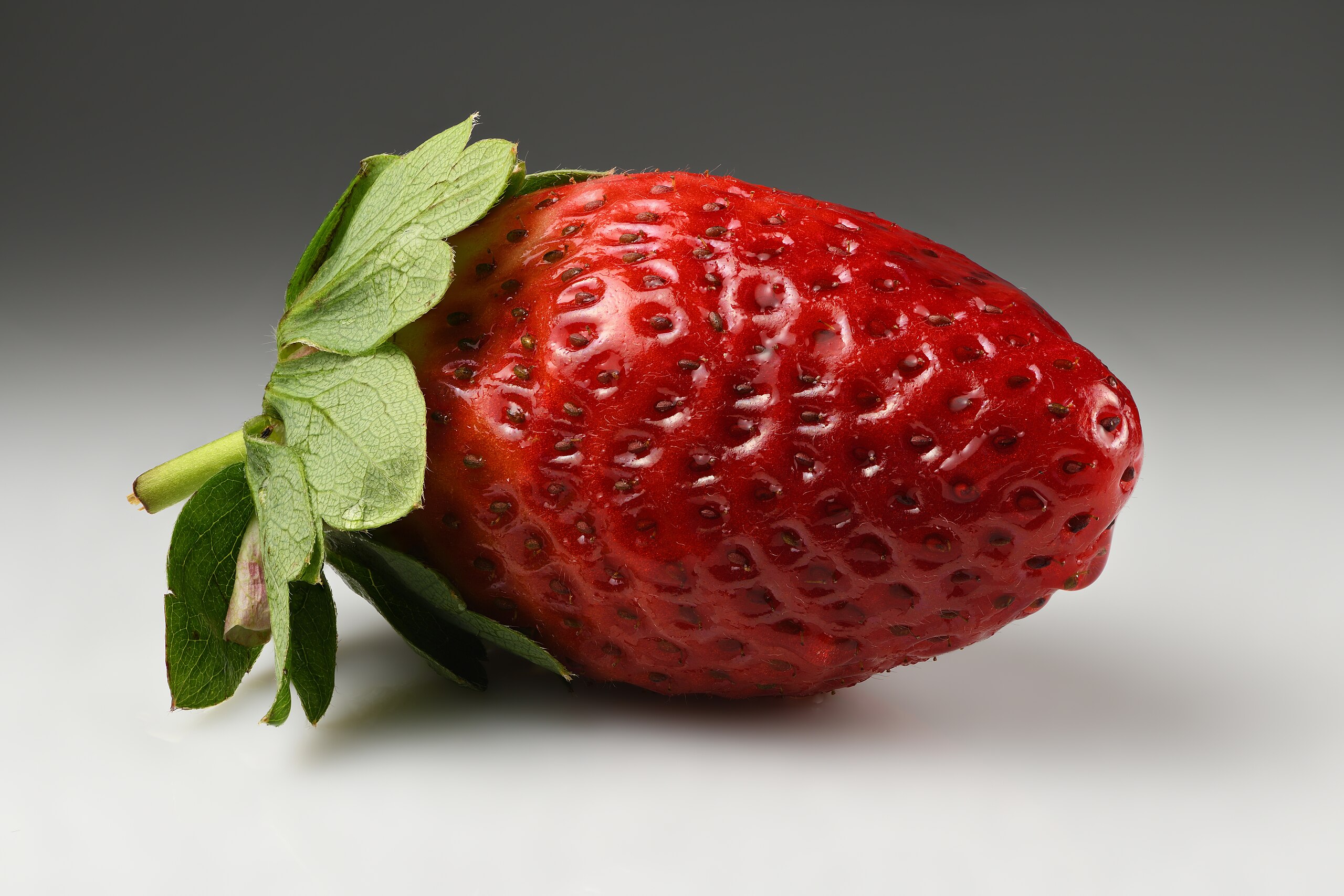
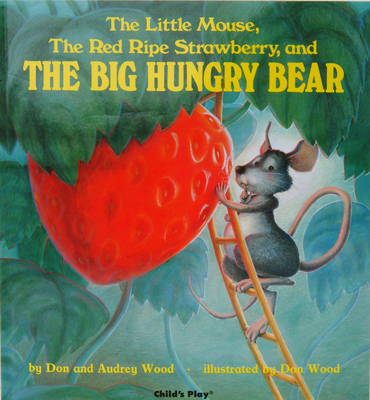
When Hannah was little, one of her favorite books was The Little Mouse, the Red Ripe Strawberry and the Big Hungry Bear. We read this story over and over! The story is clever, rhythmic and provides terrific opportunities for garden and kitchen fun. We grew a pot of strawberries, picked them and popped them into our mouths as we read, we made strawberry shortcake, strawberry tarts, strawberry sundaes. But by far Hannah’s favorite was strawberry freezer jam because she got to SMASH the berries in a bowl.

Recently I pulled the book from our collection of read-alouds, and placed it on the counter next to the supplies for freezer jam. Twenty-one-year-old Hannah was delighted. She flipped through the pages, but “read” the story from memory!

The fruit of tradition is sweet as any strawberry!

This recipe is SO easy and super fun to make…. red ripe strawberries, sugar and pectin… voila! Follow the instructions on the package of Ball No Cook Freezer Jam Fruit Pectin.


~Kimberly